CottonUSA wh

Spotlight on COTTON USA Mills

Sheikh Mustafiz

Using Data to Drive Sustainability and Flexibility

A US Cotton Trust Protocol certified supplier.   Learn more

In a resource intensive industry like apparel manufacturing it is not easy to be sustainable.  Yet there are those companies who are taking on the challenge – and succeeding.

Cute Dress Industry Ltd. has made sustainable manufacturing a priority.  “Our business  philosophy is based on the triple bottom line: people, planet and profit.  These three pillars are integrated in our business model,” said Sheikh H M Mustafiz, managing director, Cute Dress Industry.

“We’re also a data-driven company.  If you go on our website, you will find that our factory is publishing a sustainability report every year.  We are one of the few companies who have all the records of how much water we are using, how much carbon dioxide we are emitting, how much energy we are generating from solar, and so for.” 

One of the things that’s helping Cute Dress meet its sustainability goals is being a member of the U.S. Cotton Trust Protocol® (the Trust Protocol).  Like Cute Dress, the Trust Protocol is also data driven.  By using U.S. cotton backed by the Trust Protocol brands know that they are sourcing products made with more sustainably grown cotton.

“I have a dream to make my factory a ‘smart factory'. We will continue to invest in more automation so that we can have better productivity and we can reduce costs.”

Cute dress logo correct colour for web 292x122

Raw Materials that are Sustainable and Transparent

“Buyers are more concerned now about whether their supply chains are transparent.  Many want organic cotton, but it has become too expensive.  Brands are now switching to U.S. cotton because we can confirm it is sustainable through the U.S. Cotton Trust Protocol. So we started with a few brands. Then we found some of the new brands were also looking for U.S. cotton because of the sustainability and that there are no social compliance issues.  Also the quality of U.S. cotton  is really good.  So joining the Trust Protocol has been very good for us,” said Mr. Mustafiz.  

“We are using the Trust Protocol  as one of our marketing tools.  When I got the certificates from U.S. cotton, I immediately published it to all my buyers with the link to the TrustUSCotton.org  website so that they could learn more about it. We want them to see how great the product can be if they use U.S. cotton instead of organic.”

Sheikh Mustafiz
Sheikh Mustafiz, Managing Director of Cute Dress Industry Ltd.

Focusing on Fewer, but Better

Bangladesh has traditionally been a go-to place for mass market, big volume orders.  However, Cute Dress has taken a new direction and is focusing on high end products that require small orders.

“Our core business is working with niche brands.  They want higher quality and also need smaller orders, often with faster lead times.  We can accept orders of 200-500 pieces.  Assuming that we have the raw materials in Bangladesh, we can complete orders in 15-25 days,” said Mr. Mustafiz, adding “we are working with at least 10 start up brands and supporting them in the hopes that we can grow together.”

Cute dress Solar
Solar panels provide renewable energy
Cute Dress office
A fresh, green office environment

New Technology Drives Quality and Agility

“I have a dream to make my factory a ‘smart factory’. We will continue to invest in more automation so that we can have better productivity and we can reduce costs,” said Mr. Mustafiz.

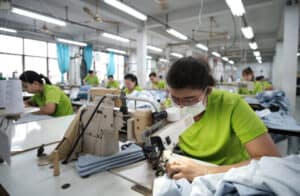
 “In our production system we have what we call a modular sewing line.  We have different sewing lines such as a six machine sewing line,  we have 10 machine sewing line, 12 machines, and 16 machines. So, based on the SMB calculation and line setup, we can determine how to best complete the order.

We even have one module that has four machines, but only two operators, and they are doing seven different operations. So, we have multitasking operators and so we can do small orders like 100-200 pieces using only two or three people,” he said.

Although Cute Dress focuses on small orders, the company produces 300,000 pieces per month, with a workforce of 500-550 people.

Cute Dress is currently installing an ERP system and is looking to add IOT technology.

“We will be installing IoT devices for all sewing machines so that we can monitor which machine is sitting idle or is there any bottlenecks. This way we can manage our production system more efficiently with this data.  We also have digital printing machines to do placement prints.”

“We are currently monitoring all our environmental performances manually, for example we have meters measuring our water water consumption and the water recycling process in our factories. This is all being done manually but  in the future we will go for an automated building management system.

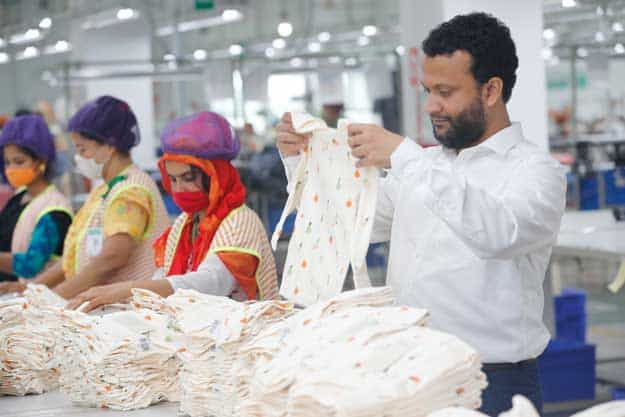
While many view technology as a way to reduce the size of the workforce, Cute Dress sees it as a way to help his workers be more productive – something that will be essential as wages continue to rise.

Sheikh Mustafiz
Mr. Mustafiz has a 'hands on' management style
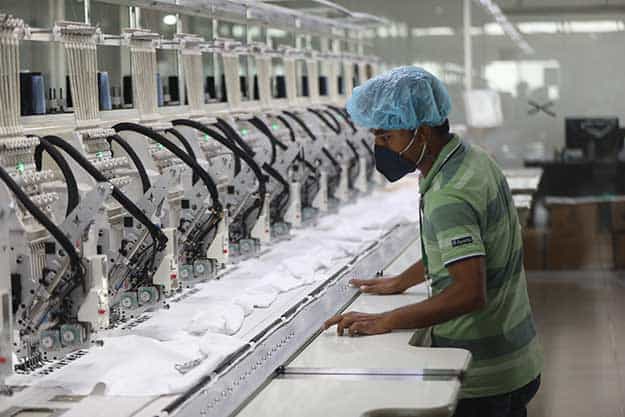
Cute Dress Automation
Automation drives productivity and precision

People, Planet – and Profit

“We set up our company to manufacture value-added products so that we can earn a decent profit and at the end of the day, we can make it more sustainable.  In the end, when you say that you are sustainable, that means you are not only taking care of people and our planet, you also have to make sure that you are making a profit. These three things have to go hand in hand, then you can say, ‘I’m a sustainable factory and that means that I can sustain for a long time’,” said Mr. Mustafiz.

Learn More   www.cutedress.net

Certified Sustainable

The Trust Protocol is aligned with existing sustainability programs including the U.N. Sustainable Development Goals. It brings quantifiable and verifiable goals and measurement to sustainable cotton production, and drives continuous improvement in six key sustainability metrics – land use, soil carbon, water management, soil loss, greenhouse gas emissions, and energy efficiency. The Trust Protocol is designed from the ground up to address the unique regulatory and larger farm growing environment in the United States.

How the Trust Protocol Works​

The Protocol Consumption Management Solution (PCMS) starts at the gin when the participating producer’s cotton is ginned and each unique Permanent Bale Identification number (PBI) is attached. At this point we know the exact gin weight and can create an exact amount of Protocol Cotton Consumption Units, where one Protocol Cotton Consumption Unit is created for each kilogram of Protocol Verified Cotton. This important step provides absolute authentication of U.S. cotton origin, verifying against the USDA database.

Supply Chain Transparency

The PCMS harnesses blockchain technology through a powerful combination of the Trust Protocol platform and TextileGenesis™ system to deliver full supply chain transparency by recording and verifying the movement of U.S. cotton along the entire supply chain.  This creates article-specific transparency for finished products that was not previously accessible to brands and retailers.

Trusted Third Party Certification  

The Trust Protocol incorporates a comprehensive program of verification against Trust Protocol benchmarks, in the form of both second-party and independent third-party audits of grower performance through Control Union Certifications—the latter through allocated on-site visits.

Control Union Certifications has certified over 150 industry standards programs worldwide, including working as a key partner in the early development and piloting phases of Impact Claim Verification Protocol.

USCTP Logo icon

Learn More   https://trustuscotton.org

The COTTON USA Advantage

  • Family growers who are committed to working their fields sustainably and leaving them better for future generations.
  • A long history of innovative harvesting and ginning technologies resulting in higher-quality cotton.
  • One of the highest rates of adoption in the world for Precision Agriculture, which minimizes water and pesticide usage.
  • U.S. farmers operate under voluminous, stringent, and enforceable regulations.
  • A commitment to transparent partnership that is unmatched anywhere.
  • One of the most comprehensive systems for monitoring and measuring all the key metrics involved in sustainability. 

U.S. Cotton Facts

  • 2/3 of U.S. cotton land uses only rain water
  • U.S. cotton water use efficiency has improved by 79% over the past 35 years
  • Cotton is carbon footprint neutral, meaning the plants remove more greenhouse gasses than production produces.
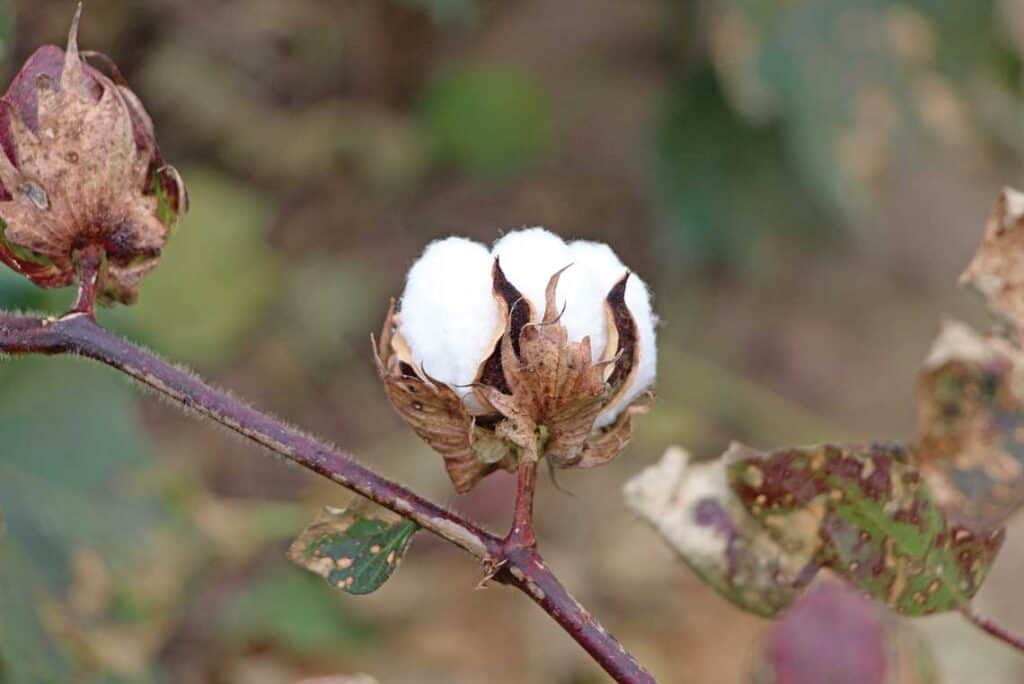
Cotton boll 2

Sustainability Goals

The U.S. cotton industry is building upon the strong environmental gains already achieved over the past 35 years. The aim is to help members meet their current needs while making the world a better place for future generations.

Specific goals include:

  • Reducing by 13 percent the amount of land needed to produce a pound of cotton fiber
  • Reducing soil loss by 50 percent, in balance with new soil formation
  • Increasing water use efficiency (more fiber per gallon) by 18 percent
  • Reducing greenhouse gas emissions by 39 percent
  • Increasing soil carbon in fields by 30 percent
  • Reducing energy to produce seed cotton and ginned lint by 15 percent
CottonUSA

Learn More   www.cotton.org

More COTTON USA Mills

Welcome Back!

Login to your account below

Retrieve your password

Please enter your username or email address to reset your password.

error: Content is protected