






Brands Start to Take Logistics into Their Own Hands
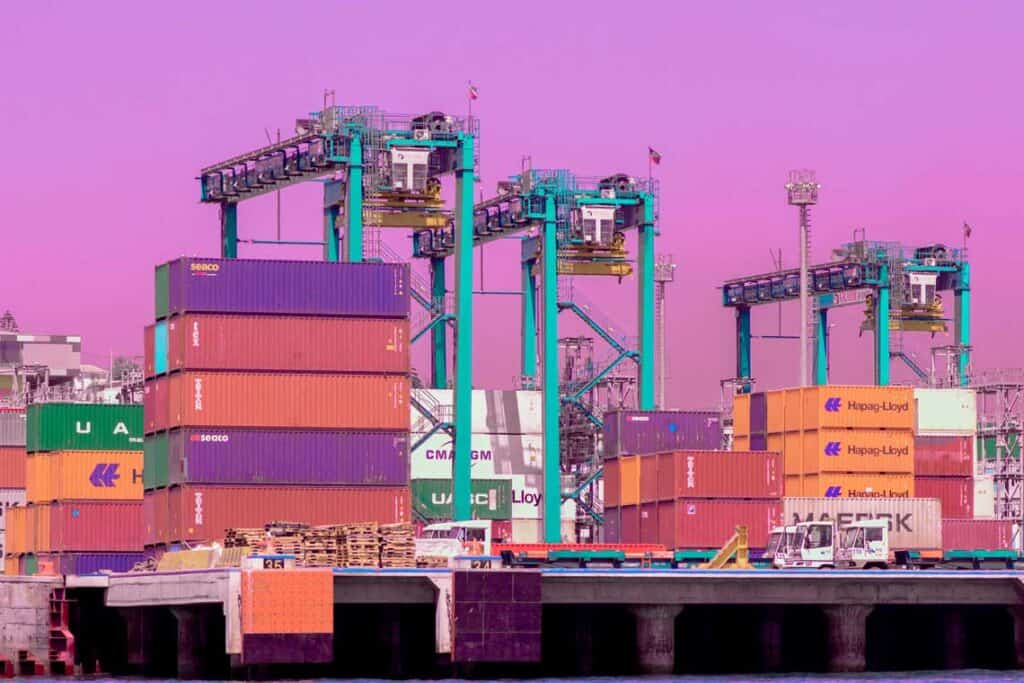
Fed up with astronomical freight rates and inability to secure containers – even at those rates – a growing number of brands are starting to look for alternative ways to get goods from Asia to the US and Europe.
For brands, it’s just bad news all around – and it’s not getting any better.
Few dare to pass on costs to consumers and yet the options for offsetting crazy high shipping costs are few and far between.
And then there’s loss of revenue from being out of stock on a growing number of items.
What’s next for brands; Cost impact on products
All of Southeast Asia is off to a slow vaccination start, raising growing concerns about supply chain security.
LOGISTICS
- The disruption at Yantian is far greater than the 6-day Suez blockage due to the duration – which has already lasted several weeks, according to Maersk. It is causing regional disruptions as carriers seek alternatives.
- Yantain operations were up to an estimated 50% – 75% of capacity yesterday, however currently there are vessel delays of up to 16 days outside the port.
- Equipment shortages are forecast to last through July, especially at skipped ports.
SUSTAINABILITY
Australia is trialing whether shredded cotton products could offer benefits to the soil health of cotton fields, as well as a scalable solution to textile waste.
PODCAST
How A Smart Social Media Strategy is Driving Massive Online Sales
If selling very high end estate jewelry online seems like a bit of a long shot, then you need to meet Alex Alfieri.
He’s built a wildly successful global e-commerce business doing just that – by developing a sharp social media strategy.
Learn what he’s doing – and how you can apply this to your business.
TRADE
The G7 has agreed to collaborate on infrastructure investment projects that would be similar to China’s Belt and Road initiative.
A recently proposed US Country of Origin Labeling Online Act requires sellers to conspicuously disclose the country of origin of products sold over the internet, a requirement that also applies to the internet marketplaces on which these goods are sold.
MATERIALS
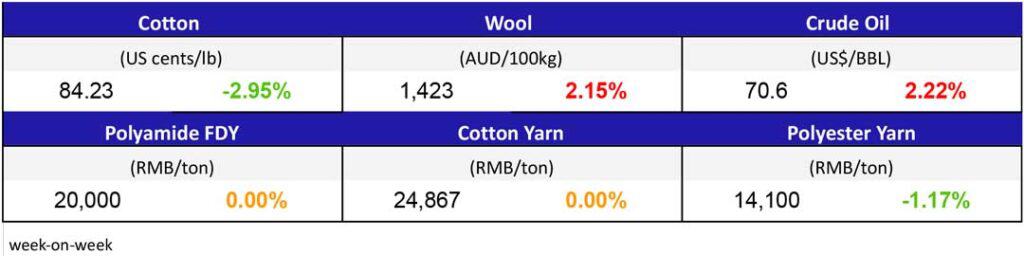
Polyester yarn prices fell 1.2% week-on-week, despite rising crude oil prices. Cotton prices took sizeable step downward, while cotton yarn prices remained stable.
MARKETS
Bangladesh’s inflation eased to 5.26% in May from 5.56% in April. It was also below last year’s 5.35%, according to Bangladesh Bureau of Statistics (BBS) data.
- The nation is targeting an average annual inflation rate of 5.3 percent for the 2021-22 fiscal year starting in July.
China’s official producer price index (PPI) rose to 9% in May from a year earlier, compared with 6.8% in April.
China’s central bank is forecasting this year’s inflation at below 2%. Inflation is “basically under control”, and monetary policy would be kept steady, according to a governor of People’s Bank of China (PBOC).
- China’s interest rates, though higher than major economies, are still relatively low among developing and emerging economies.
India’s retail inflation reached 5.3% in May, after hitting a 3-month low in April, according to the Reserve Bank of India, who noted that inflation was still within its target range.
Turkey’s inflation dropped to 16.5% in May, from 17.1% in April due to the lire’s sharp fall.
YOU MIGHT HAVE MISSED THESE ARTICLES
- A Critical Key to World Trade Rebound
- The Tremendous Value of High Value Brands
- The Rise of China’s National Brands
- A Sustainable Supplier Specialized in Small, Customized Orders
- The Rise of China’s National Brands
- Why Most Digital Transformations Fail
- Rethinking the Way We Define Retail Success
- Creating Brands that Stand Out in Hyper Competitive Markets
- Prints That are Sophisticated and Sustainable
- Is Too Much Data Leading to Worse Decisions?
