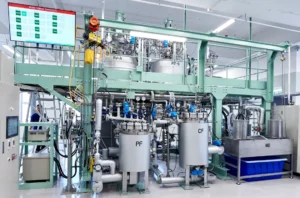
Can Technology Make Circularity Work at Scale?
New technologies, like AI sorting, fiber separation, and automated disassembly, are solving key obstacles so textile recycling can work at
TECHNOLOGY
/ Faster, more precise planning is forcing brands and suppliers to rethink how they operate.
For years, demand planning in fashion has been built on historical patterns – an approach that works best in stable markets. But today’s environment is anything but stable.
Promotions distort demand, trends move faster, and consumer behavior shifts across channels in real time.
As volatility increases, traditional forecasting models are struggling to keep pace.
Now, a new generation of AI-driven tools is beginning to change how brands understand demand – not just predicting what might sell, but why, when, and where it will sell, and what actions to take next.
To continue reading, please login
Related articles

New technologies, like AI sorting, fiber separation, and automated disassembly, are solving key obstacles so textile recycling can work at


AI, predictive data and connected systems are turning supply chain visibility into faster, more automated decisions

AI and better product data are turning 3D from a visualization tool into a connected product-development system

Insights & Analysis