Insights and perspective that shape smarter decisions.
No Result
View All Result
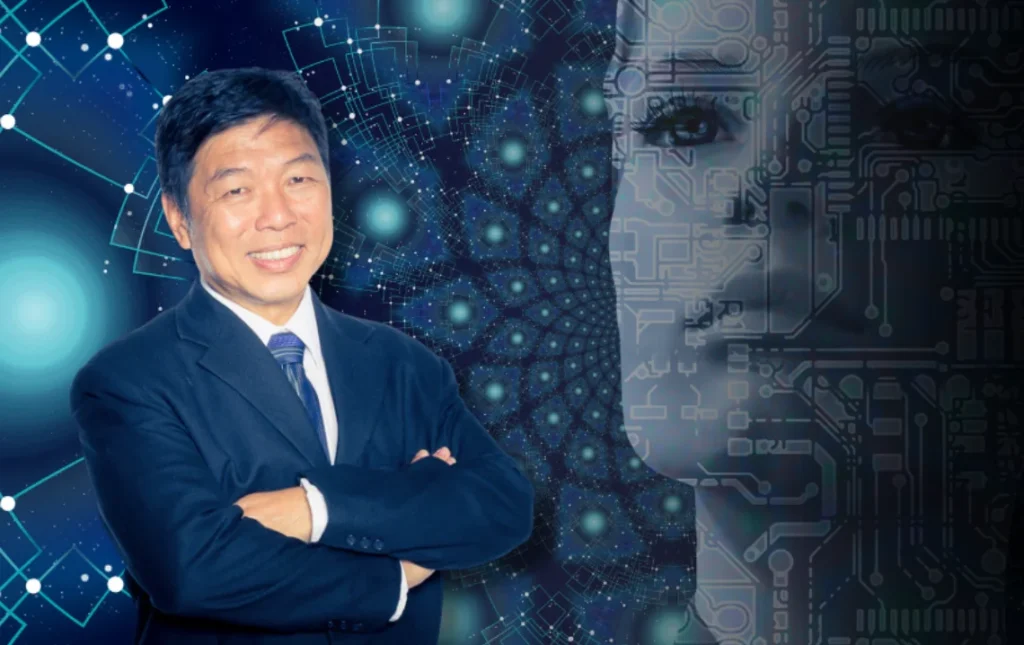
Michael Chua, a leading AI and cybersecurity strategist
Leadership Series
The Hidden Dangers of Agentic AI
Implementing AI isn’t just about technology – it’s about people, processes, and anticipating unintended consequences.
Artificial intelligence has moved from a theoretical curiosity to a critical operational tool. With agentic AI, systems are not just responding to commands – they are making decisions autonomously. Michael Chua, a leading AI and cybersecurity strategist, emphasizes that this shift does not eliminate the need for human oversight. In fact, supervision has never been more critical.
“AI can do a lot on its own, but it’s not infallible,” Mr. Chua says. “Without supervision, the agentic systems may make decisions that seem logical to them but are out of sync with business objectives or ethics.”
The stakes are high. In complex organizations, agentic AI may act faster than any human, but speed alone is not safety. Mr. Chua notes that autonomous systems require carefully designed human-in-the-loop structures to maintain compliance and accountability.
“Without supervision, the agentic systems may make decisions that seem logical to them but are out of sync with business objectives or ethics.”
– Michael Chua, AI & Cybersecurity Strategist
The Critical Need for Human Supervision
“People often think of AI as a magic bullet,” Mr. Chua explains. “You give it data, it produces output, and that’s it. But when AI can make decisions on its own, a human has to be able to intervene if something goes wrong.”
He highlights that human supervisors are responsible for ensuring the AI operates within defined boundaries. This includes monitoring for operational errors, ethical concerns, and regulatory compliance.
Mr. Chua explains, “The design of the whole system has to have security guardrails and other compliance measures. That’s how humans supervise the agent to make sure they comply with all the rules and transaction locks.”
With agentic AI, the concept of accountability changes. Decisions are made in real-time and often at scale. Humans must understand not only what the AI does, but also why and how. “Why and how is important because of AI LLMs. And that’s horrendous because the chain of reasoning has to be documented,” Mr. Chua notes, highlighting requirements already present in frameworks like the EU AI Act and ISO 42001.
The human supervisor is ultimately accountable. “You cannot go to a state where you say, ‘It’s not my problem, it’s AI.’ That’s not acceptable,” Mr. Chua warns.
“Humans need to guide the AI, set parameters, and review outcomes regularly. It’s not about removing the human – it’s about enhancing their capability with AI.”
“Previously, hacking required access to core systems. Now, attacks can occur at the periphery: in augmented data, in third-party tools, in AI-generated content.”