
Leadership Series
A multi-country strategy, integrated capabilities, and real-time visibility are helping Gainway stay resilient as conditions shift.
Between geopolitical tensions, rising costs, shifting sourcing strategies, and increasingly demanding customers, manufacturers are being asked to do more – while navigating a world that feels less predictable by the day.
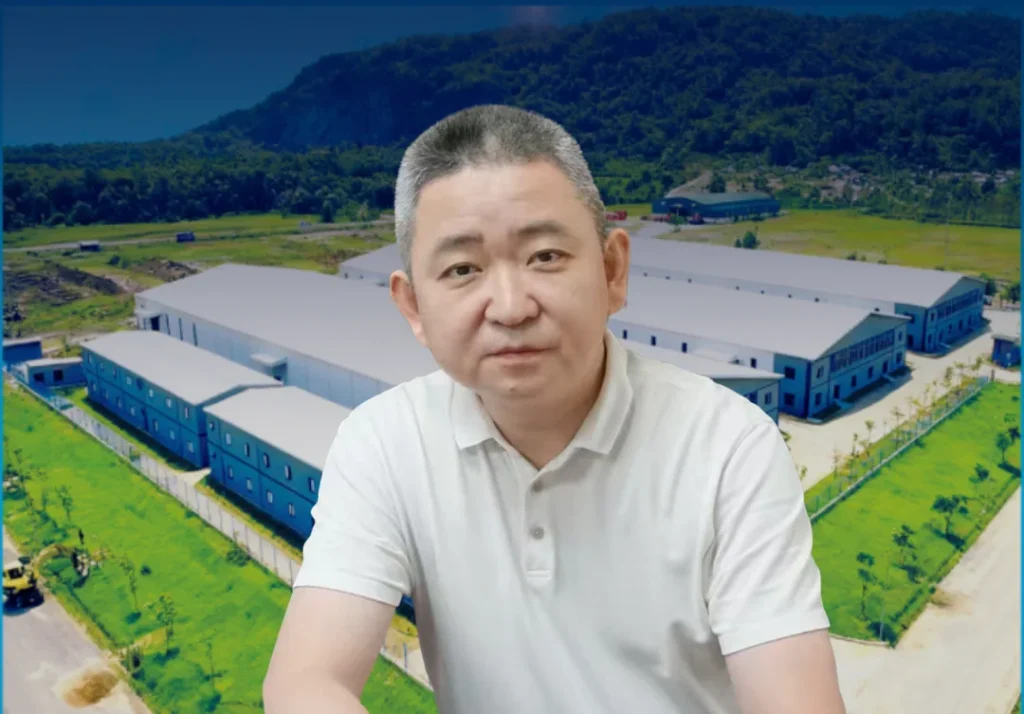
For Gary Liu, Director of Gainway International, the answer was to build a business model that can handle market tremors – and even shocks.
Over the past year alone, Gainway has expanded aggressively – opening new factories in Vietnam and Laos while maintaining operations across multiple countries. This expansion has added capacity, but also given the company greater flexibility in how it can handle orders.
Starting out as a lingerie and intimate apparel producer, Gainway has expanded its business and now includes high performance activewear, helping make it a ‘one stop shop’ supplier.
The goal is not simply to spread production – but to build a system that can continue operating even when conditions change.
If there is one theme that runs through Gainway’s strategy, it is balance.
Our goal is to be “Stable but competitive,” says Mr. Liu.
To achieve that balance, Gainway has spread its manufacturing footprint across multiple countries, including China, Vietnam, Laos, and Myanmar.
Each location offers different advantages – and different risks.
“China is quite stable for energy supply,” Mr. Liu notes.
However, “China is quite expensive,” Mr. Liu explains. “Fewer people want to work in the apparel industry so we face some worker shortages.”
In contrast, smaller or emerging production countries can be more vulnerable to disruptions.
He points to recent challenges in some Southeast Asia countries where rising fuel costs have had unexpected consequences.
“Some workers cannot attend the job because they don’t have enough gasoline for their motorcycle,” Mr. Liu says.
To stay competitive, Gainway has expanded in Southeast Asia, with two factories now operating in Vietnam and a newer facility in Laos.
The company has an annual capacity across all of its factories of 30 million pieces. In Vietnam, if the second factory is fully running, Gainway can produce about 2.5 to 3 million pieces per month in the country.
“Our newest Vietnam factory is running well,” Mr. Liu says. “We started last October… now we have 500 workers there.”
The Laos factory, launched more recently and is already attracting interest from customers looking for lower-cost production.
“Some customers are moving the production to Laos for their more competitively priced styles.”
But diversification is not simply about cost. It’s also about managing risk.
“The geographical and political issues are becoming greater areas of risk,” Mr. Liu says.
In today’s environment, relying on a single country – or even a single region – is increasingly seen as a vulnerability.
The goal is not simply to spread production – but to build a system that can continue operating even when conditions change.
While sourcing strategies are shifting, so too are customer expectations.
Where brands once focused primarily on price and quality, they are now asking suppliers to take on a much broader role.
“We have positioned ourselves as a ‘one stop’ supplier,” Mr. Liu says.
That ‘one-stop’ model has become central to Gainway’s strategy, which is built around four key pillars.
The first is design.
“We have a European design team based in the UK so they are quite close to the customer,” Mr. Liu explains. “They can study the local market quite frequently.”
This proximity allows for faster feedback loops – and more relevant product development.
But design is only one part of the equation.
Today’s customers are also placing greater demands on materials.
“They have more and more requirements for the fabric,” Mr. Liu says. “Not only beautiful, good quality, but the materials also must meet environmental standards.”
To meet those expectations, Gainway has invested in dedicated fabric sourcing and innovation teams.
These teams don’t just identify materials – they ensure compliance with increasingly complex regulations, particularly in Europe.
More >>


