Retail has hit a rough patch after two years of surging spending during the pandemic.
For manufacturers, just as they were getting back on their feet after battling unprecedented challenges over the past two years, brands are starting to put the brakes on orders – and in some cases are canceling.
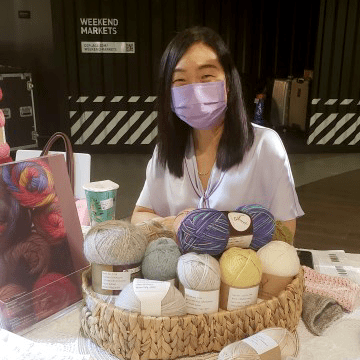
“Business has been very tough this year with orders down 30-40% from last year,” said Evelyn Shi, business development director at Deer King Yarn.
She pointed to US-China trade tensions, soaring logistics costs and record high materials costs as the key pressures that have impacted the company’s business.
Just about every supplier has faced the same challenges, with most confessing that they had few alternatives but to ride out the storm.
While there’s industry wide concern, knitwear seems to be best positioned to survive, and in many cases thrive.
Esen (part of GTIG) found a way to meet steep customer demands. “We offer fancy yarns at below $5 /kg,” said Louis Wei, general manager, noting that products that were special and well priced was the ‘secret sauce’ to succeeding in the current market.
“Our business has remained stable. It’s not easy, but business is still the same as last year,” he said.
Still, even when sales volumes are strong, profits could be squeezed – and that’s something all suppliers are facing. It’s a situation that is not likely to ease in the near future as brands are now trying to figure out how to keep their costs down as retail is now staring down a consumer that has, at the very least, a heightened sensitivity to price.
In other words, other than the luxury sector, consumers either actually have less disposable income to spend on discretionary items like fashion in the face of rising food and gasoline prices – or they feel that they need to be more careful about spending fearing that inflation and economic instability might eventually hit them.
Thus margins, for the entire supply chain, are likely to feel increased pressure in the next six month to a year.
“Customers want to touch and feel new items. Everyone has been energized by being able to once again attend Spinexpo and get involved in creating new products.
Vivian Tam, manager at Sawada (Japan)
Strategic Advantage for Brands
Knitwear has several strategic advantages for brands.
The category’s key advantage is flexibility. At a time when consumers are demanding a lot more creativity and personalization, coupled with brands wanting to shift towards smaller order sizes that can be replenished quickly if needed, knitwear is, in most cases, better able to offer solutions.
Years ago spinners instituted stock programs and these have expanded in scope over the past five years. They’ve also reduced minimum orders, with most setting MOQs at a generous 1 kg. Flat knitting has also benefited from ongoing investment in automation.
For spinners the burden has become even heavier since extreme prices for materials means that their investment in maintaining stock has become more expensive – and riskier. But for brands, it’s a huge opportunity.
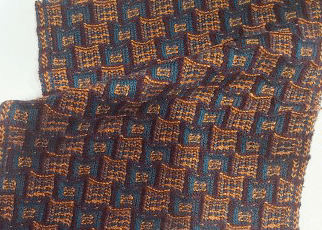
Add to that the limitless creativity that can be achieved by cleverly twisting even basic yarns, and the newness that can come through new stitch constructions – all with low minimum orders – and knitwear clearly has a huge competitive advantage in today’s market.
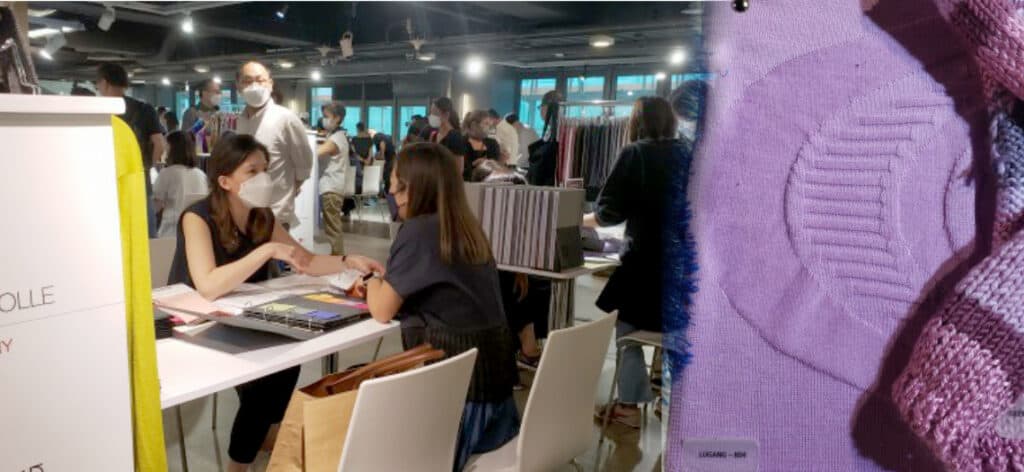
Thus, it was no surprise that brands flocked to the recent SPINEXPO Hong Kong (July 20-21), looking for new inspiration and frankly happy to be able to finally touch and feel products after two years being forced to rely too often on digital samples.
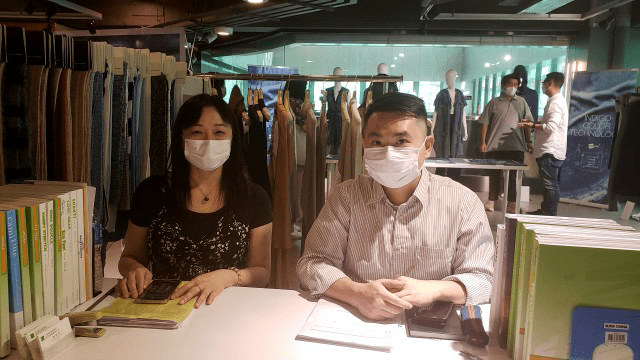
“Customers want to touch and feel new items,” said Vivian Tam, manager at Sawada (Japan). “We’ve been very busy at this fair,” she added, noting that everyone was energized by being able to once again attend Spinexpo and get involved in creating new products.
“It’s very exciting to participate in an exhibition after a very quiet two years,” said Evelyn Shi, business development director at Deer King. “The quality of visitors here is very good.”
Why Newness and Quality will be Critical at Retail
Brands are facing the double challenge of a tougher retail market and rising costs. To convince consumers to make a purchase, and hopefully pay a higher price, then products need to shine. Basics will be competing with any brand that can offer something with greater personalization and better quality. Thus dumbing down a product will be a fast track to the markdown rack for most brands.
At the same time, this has paved the way for investing in newness, creativity and quality. Consumers are no longer to buy for the sake of buying. Finances aside, in Western markets in particular, there has been a growing trend towards ‘fewer but better’. Now with rising concerns about the economy and geo-political tensions, it’s easy to see how this mindset will prevail across an even wider segment of the population.
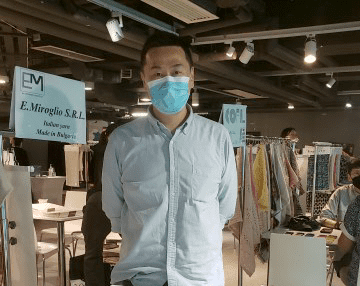
“Customers are looking for fancy yarns. They want different structures,” said Herman Wong, representing E. Miroglio.
His sentiments were echoed by many other spinners, who stressed that buyers were specifically looking for “something new.”
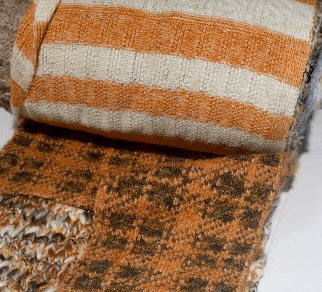
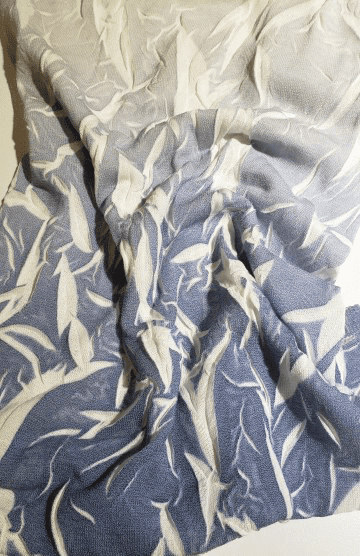
Chunky yarns, textured surfaces and space dyes were the best sellers for most spinners for autumn 2023.
Every spinner said that buyers were looking for sustainability touchpoints in yarns. “Brands are looking for products that are eco-friendly or have some recycled materials, ” said Evelyn Shi. “Sustainable, recycled and biodegradable products are in big demand,” added Zoe Chen at Winning Textile.
Winning Textile had also introduced a new viscose yarn with stretch properties already in it. With this yarn there was no to blend with elastane, Ms. Chen explained.
It was one of the few yarns that featured new function properties, whereas most spinners had focused more on expanding their offering of sustainable yarns and fancies.
Business Outlook
Spinners were divided as to how they thought business would fair for the coming season. While some felt that business was “good and getting better”, others were saying “stable… possibly worse, but not better”. However, the cautious outlook was tempered by a feeling of optimism, unlike in other seasons where suppliers were clearly pessimistic about market conditions.
“Our business is better now, but the global situation is not stable,” said Herman Wong, adding that they were approaching the coming season with caution.
“Business is better than last year,” said Van Li at Sawada. “This year was tough, but next year will be better,” said Zoe Chen. “We had a lot of really good feedback from brands so we feel more confident now.”
“We expect business will be stable or even a little worse because buyers are keeping their inventories very low,” said Louis Wei.
Still, there were serious concerns about soaring materials costs, with cotton and wool prices remaining at painfully high levels.
From Massive Exhibitions to Local Fairs
After an era of trade fairs being consolidated into mega events, brands and suppliers have been increasingly appreciative of the smaller, local fairs that have resulted in response to the pandemic.
“Smaller local shows are better for us. We can have a closer connection with customers. People are more relaxed,” said Herman Wong.
Travel has become very expensive as a result of rising fuel prices thus local fairs offer an additional benefit, especially to brands who might have limited travel budgets.
“It’s good to have a fair in Hong Kong. It’s very convenient for buyers since they don’t have to travel to attend the fair. We’ve been very busy and met lots of new customers here,” said Zoe Chen.
The general consensus was that even once the pandemic was well behind us, both buyers and suppliers hoped that these ‘boutique’ fairs would remain.