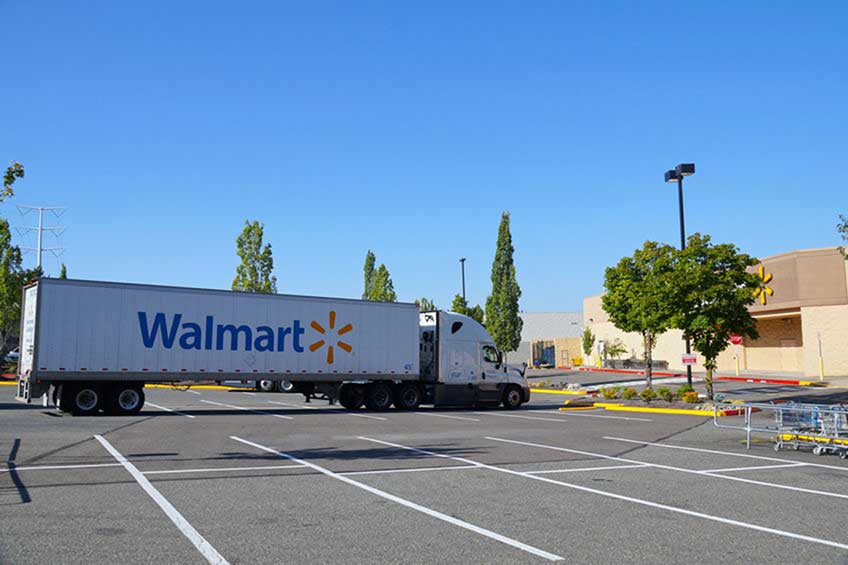
Lessons from how Walmart turned a 'lazy asset' into a sales driver.The question of how to drive sales is not new. It has simply become more challenging in the face of lockdowns, social distancing and economic uncertainty.Most people recognise that the old playbook doesn't work for the new economy. Even before the pandemic it was returning paltry results.Relying on e-commerce alone is not enough. The field is too crowded and the margins are not as good as the hype would have you believe.Realizing that the usual promotions and discounting have become ineffective, and that e-commerce has become an expected channel, alongside physical stores, the top companies are being forced to think out of the box -to take a radical new look at what they have and find ways to turn liabilities into assets.Today's Mandate: Must Find New IdeasIn this new scenario no idea is stupid or too crazy. No asset is off limits. Even the worst liabilities are put on the drawing board and examined with energy and enthusiasm. The creative team is now comprised of everyone who works for the company - from boardroom to back room.When you’re in survival mode, hierarchies and territories fall by the way side.A simple idea that works will now get recognition, even if it doesn't include any tech wizardry.From Pariah to Profit DriverThe most recent example of brilliant, out-of-the-box thinking comes from Walmart.The company saw a golden opportunity in its parking lots (car parks)! What is classically seen as a ‘lazy asset’, a necessary but not particularly productive part of the company’s retail footprint, was repurposed as a marketing tool and indirectly, a sales driver.The winning idea was to turn the stores' parking lots into a drive-in movie theatre. Going to watch the movie also means going to a Walmart store - and perhaps making a purchase while you're there.Driven-ins are not a new idea. They were a favourite summer pastime back in the 50’s and 60’s. A big screen was set up in open space (a field, parking lot, etc) and a movie was projected onto the screen. People would drive into the space and park their cars in rows and then watch the movie - from the comfort of their car. Today technology now enables movie-goers to listen to the sounds track on their car radios.Drive-in movie theatres not only sold tickets to watch the show, they also ran concessions selling food and beverages.Right now, drive-ins give people the opportunity to get out of their homes and enjoy a movie, while still social distancing. It’s a simple low tech, low cost idea with a big ROI.While parking lots are a text book example of a ‘lazy asset’, companies have many others - once they start to really look for them.Parking lots are a must-have for retailers outside of major cities. And larger parking lots equals ease-of-parking, which translates into more customers (who wants to shop at a place where you have to waste 30 minutes looking for a parking place?).Lazy assets often have other benefits such as uniqueness. While a parking lot is not something special, only a few super stores (like a Walmart) or malls have lots that can readily double as a drive-in theatre. Any competitors can rent movie projectors, but only a few can provide the ‘venue’.The opportunities to turn what we already have into profit drivers apply to more than simply parking facilities.Classic examples of lazy assetsIntellectual Property that has been created by the businessCustomer Order Data that has never been mined for business intelligencePartner Relationships that haven't been examined for business extensionsProducts that could be leveraging service revenueProduct (or Services) that could be packaged with other products (or services) to create a unique offeringAssets that could be contributed to form an allianceThe Inverse Pareto PrincipleThe famous principle recognised that "20 percent of our assets generate 80 percent of our ROI". Twenty percent of our customers account for 80 percent of our sales, and so forth.However TechRepublic points out that 80 percent of our assets utilise only 20 percent of their capabilities.While the Walmart example shows out-of-the-box thinking and repurposing of assets at its best, there are many other opportunities as well.An asset as simple as a desktop workstation that's generally left on in the evening is a lazy asset, and video production companies have used exactly these assets to augment their video "render farms" when office workers have gone home, said Tech Republic. A lazy asset is a physical or intellectual (includes goodwill and brand value) asset or a capability that is key to your core business but that most of the time is under-utilised. Road Map for SuccessTake inventory of your most valuable assets and your most expensive assets. These are usually areas where you have a competitive advantage or where the barrier to entry is high.Brainstorm on a massive scale. Involve everyone in the company. Brainstorm with customers too.Keep a running log of every idea - regardless of how mundane they might beTrial and test as many ideas as possible.Consider combining two or more ideas (sort of like the way chefs create fusion dishes).Don’t overlook the old fashion ‘suggestion box’. Just because it’s not hi-tech doesn’t mean it’s not valid. Be careful not to over think the process. Keep it fast and simple.