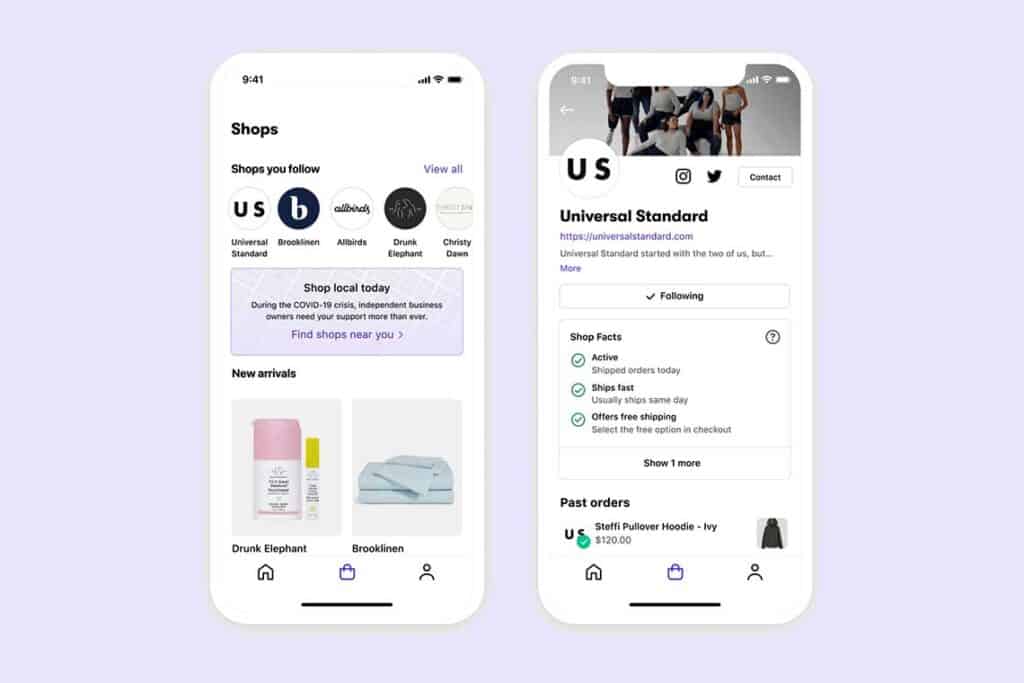
When Shopify rolled out its Shop app a year ago it looked like they were joining the movement to launch their own marketplace. Facebook launched Shops. Pinterest has a shopping function. So did Instagram. Twitter has said it is rolling out a ‘buy button’. Tik Tok is also adding shopping. However CEO Tobi Lütke said that’s not the plan. “There’s an absolutely obvious playbook for Shop that I think everyone can see,” said Tobi Lütke, CEO of Shopify, during the fourth-quarter earnings call. The "obvious playbook" Mr. Tobi referenced was most likely a marketplace. However he said that this wasn’t what the company had in mind. <h3><b>What Shops Doesn’t Do</b></h3> The app doesn’t allow searching for “jeans” and discovering all Shopify merchants in the category. It doesn’t have rich content like video. There are no reviews or social features. It won’t let users make a purchase. <h3><b>What Shops Does Do </b></h3> Instead, it “helps merchants strengthen their relationships with buyers with the ultimate goal of increasing customer lifetime value.” However, the app does little more than delivery tracking (the functionality Shopify’s Arrive app had, the app Shop replaced), and thus it is unclear how it increases LTV for merchants. Its most recent updates included expanded functionality around Shop Pay, like managing installment payments. Designed to bridge the gaps in online shopping, Shop offers users the ability to discover local businesses, receive relevant product recommendations from brands, check out and track all of their online orders. <h3><b>Focusing On The Back End</b></h3> Shop Pay, a one-click accelerated checkout, has processed over $8 billion in sales, while Arrive, an app to track delivery, has been used by 16 million shoppers to track their ecommerce orders. Shopify said that it would continue to develop the app this year into a “must-have shopping companion that fosters buyer loyalty and retention.” Shopify, it seems, doesn’t want Shop to be where users start their shopping journey. A decision supported by the fact that despite avoiding helping its merchants acquire customers, total sales on Shopify added nearly $60 billion last year to reach $119 billion. Despite its reach, Shopify analysts agree that it would struggle to compete against discovery leaders like Instagram and TikTok. It wouldn’t be able to replace Amazon or other retailers because it lacks the depth and breadth of Amazon’s selection. There is no gap in the market a Shopify marketplace would fill. Thus Shopify will wisely remain positioned between the merchant and the consumer. It is likely to focus on expanding up what it does best - omnichannel and infrastructure features like payments and fulfillment instead.