







SCS Dec 08
No peak season this year; Digital Twin technology could be key to reducing supply chain risk; Polyester prices fall on weak demand

Share This Post

“When someone’s salary depends on things not changing, expect them to not want to change.” – Milton Friedman, Nobel Prize winning economist

LOGISTICS

Freight Rates Dec 8

The traditional increase in bookings for December and January shipments out of Asia is nowhere to be seen as brands and retailers struggle with surplus stock levels and weakening demand, per the Journal of Commerce.

On Asia to Europe routes, increased demand and a higher amount of blank sailings in the coming period will result in tighter space pre-Lunar New Year. Rates are still under pressure but not going down as much anymore due to a more balanced supply and demand situation, said Flexport.

Transpacific ocean rates fell sharply again last week on easing demand and congestion. As empty containers accumulate at Chinese ports, Asia – US West Coast rates fell by more than 25% last week to a level 5% lower than this time in 2019, said Freightos.

Carriers plan more blank sailings for Q1 2023, most notably out of Vietnam. The goal is to curb both excess capacity and continue to improve schedule reliability, per Flexport.

Indian Subcontinent pricing and capacity continues to benefit shippers as rates drop and vessel space remains available, per Flexport.

With inflation and inventory build ups subduing demand for air imports, air cargo peak season has now officially failed to materialize. Freightos Air Index rates from China to N. America and Europe of $5.49/kg and $4.64/kg, respectively, are down more than 40% compared to the end of November a year ago, said Freightos.

MATERIALS SOURCING

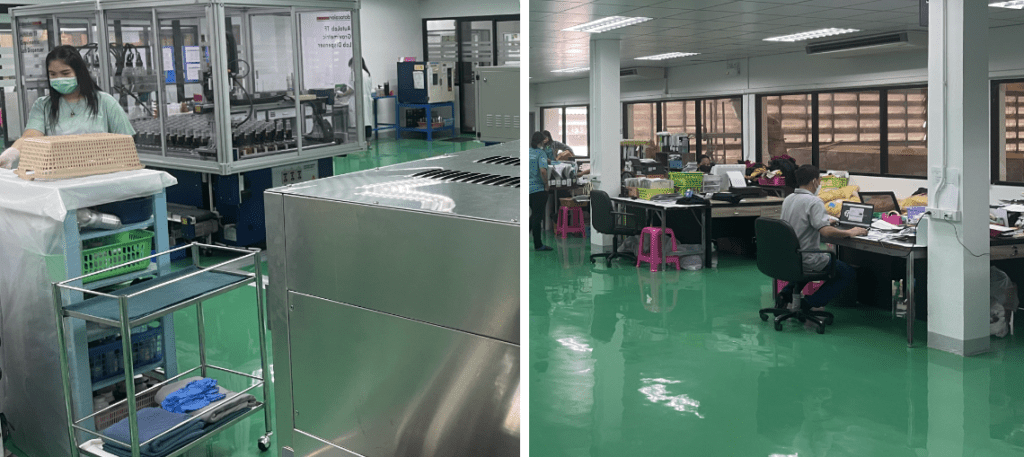
Thong Thai Textiles fty Hero

Cost-Saving Vertical Production – with a Focus on Sustainability

“We’re a lean factory so we want to use just enough inputs for the production. This way we can reduce waste and have less CO2 and less water consumption per kilogram of fabric we produce,” said Chet Vongsuraphichet at Thong Thai Textile.

Instead of trying to expand their capacity, knit garment specialist Thong Thai Textile is focusing on making their processes more lean and sustainable. 

In addition to its dyeing facilities, it operates three garment factories in Thailand and one in Myanmar.  Read More

PODCAST

Solving One of the Biggest Challenges in Renewable Energy

One of the biggest challenges standing the way of greener energy is finding ways to store that energy.

While we know that there have been huge advancements in EVs, how far have we come in developing batteries that can store sufficient energy so that long haul trips are possible?

In this podcast Dr. John Cooley, co-founder and chief of products at Nanoramic Laboratories, talks about some of the newest developments that are literally powering EV technology.

He has over 10 years of experience in leading fast-paced product development in electronic systems, power systems, and energy storage devices.

You’ll Learn:

  • The biggest challenges facing the EV battery industry.
  •  What is Neocarbonix at the Core and what sets it apart from other Li-ion battery technology?
  • What could be the next big thing in green energy. 

🎧 LISTEN TO THE PODCAST

SUPPLY CHAIN TECHNOLOGY

Digital twin Hero

How Digital Twins are Making Supply Chains More Resilient, Less Risky – and Reducing Costs

Shocks to supply chains are not only occurring more frequently, the impact they have is also more intense.

No matter how you look at it, managing supply chains is getting even more complex.  To stay ahead of the market, management is needing to lean into more advanced tech resources. 

New use cases for digital twin technology are helping reduce risk, including being able to better evaluate sourcing opportunities – and to do it in a few hours, rather than in weeks.  Read More

MARKETS

Global recession fears rose this week after data showed that key services sectors shrank again last month in the UK, the eurozone and the US.

MATERIALS

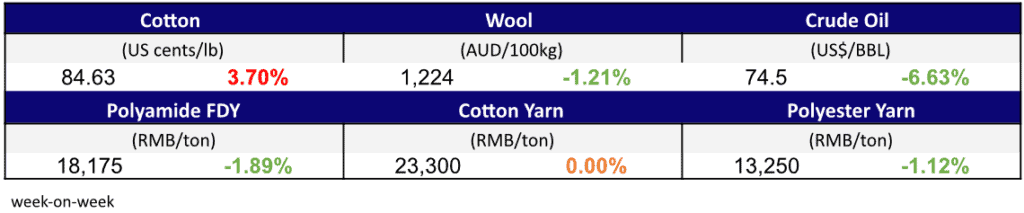
Materials Prices Dec 8

Oil prices fell to lows not seen since January this week on continued fears of weaker demand.

Polyester fiber and yarn prices declined on lower demand in key global markets.

Subscribe To Our Newsletter

Get updates and learn from the best

More To Explore

Welcome Back!

Login to your account below

Retrieve your password

Please enter your username or email address to reset your password.

error: Content is protected
