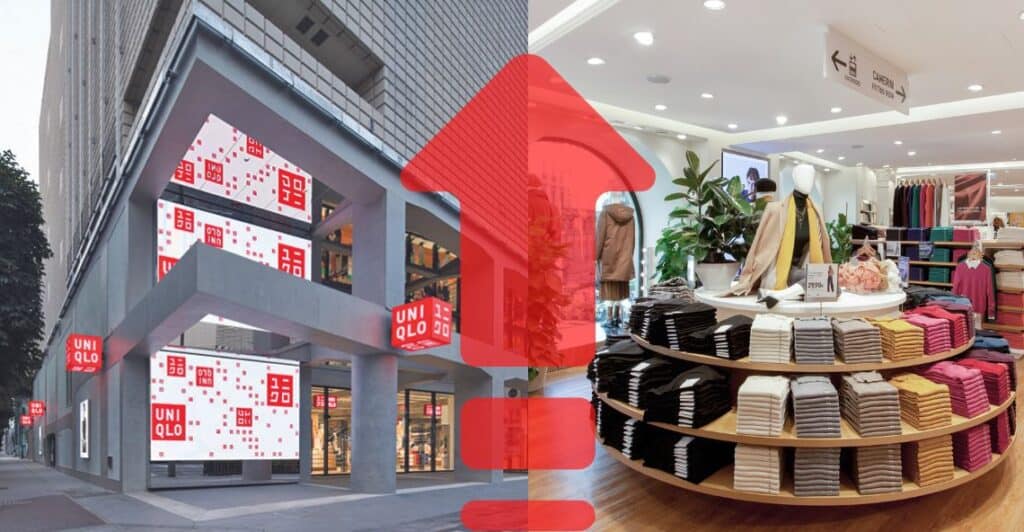
Despite tremendous success in its home market, Uniqlo struggled to be successful in Europe and the U.S. Now, the flagship brand of Fast Retailing (Japan) is one the increasingly few brands that are making a profit. Fast Retailing, Uniqlo’s parent, reported large increases in both revenue and profit in the first nine months of fiscal 2022, with revenue rising to 841.2 billion yen ($5.8 billion), up 13.7% year-on-year and operating profit increasing to 132.7 billion yen ($914 million), a 35.8% year-on-year increase, according the company’s financial statement. Its current success tends to overshadow the company’s years of trial and error. In reality, Uniqlo failed in key international markets before ultimately getting it right. The brand entered the United Kingdom market in 2001, opening 21 stores within two years. It was its first expansion outside of Asia. Its failure was attributed to trying to grow too fast and poor store management, according to founder Tadashi Yanai. The brand closed most of those stores by 2003. Uniqlo faced similar failures in China and the U.S., before ultimately finding the right approach for each market. <h3><b>Keep On Keeping On</b></h3> Patience and persistence has paid off. Uniqlo has become a top brand in China’s hyper competitive apparel market, with a strong online presence and an estimated 850 stores nationwide. After a rough start, Uniqlo is expected to show its first profit in its North America business when it releases its financial results for the full year ended August 31. The group currently has 59 stores in North America. When Uniqlo first debuted in the U.S. in 2005 it was seen as an outlier amongst other retailers offering trendier apparel. At the time, American consumers wanted fashion-driven apparel that replicated international designer styles at cheaper prices. Uniqlo’s minimalist look was seen as boring and its prices were too high compared with fast-fashion. Over time, Uniqlo’s function-first apparel won over consumers who were starting to appreciate the brand’s keep-warm garments. As more consumers sought out apparel with performance properties, Uniqlo’s fortunes improved. It now plans to open 30 stores each year in North America with a target of having 200 stores in the region. <blockquote> <strong>#1. Put a Brand on It. </strong> Many brands offer apparel with functional properties. Uniqlo actually branded their performance materials. When consumers thought about garments that would keep them warm, Uniqlo’s HeatTech was top of mind.</blockquote> <h3><b>Being Unique but Wearable</b></h3> Uniqlo differentiates itself from some of the other brands targeting the affordable fashion segment through its extensive investment in fabric development and its own style concept. While other brands look to the runways for style direction and then replicate it using low cost materials, Uniqlo marches to its own drum. The brand has become known for quality. And while its styles are not trendy, most have just enough of a fashion element to avoid becoming commoditized. It took time for consumers to discover Uniqlo and come to appreciate its products, but once they did they became fans. <blockquote> <strong>#2. Quality Counts.</strong> While other brands look to cut back on materials, Uniqlo invests in them. They’ve used this investment to create product differentiation.</blockquote> <h3><b>A Technology Company</b></h3> Uniqlo sells apparel but according to founder Tadashi Yanai Uniqlo is a technology company, not a fashion company. What he is referring to is a business model where product planning and development is more like the long term cycles of a tech company, then the quick response, fast turnaround model of fashion companies that aim to get from catwalk to retail as fast as possible. Uniqlo plans products as far forward as a year ahead, and keeps collections to fewer but more essential pieces. <h3><b>Protecting Prices</b></h3> The pandemic was both a blessing and a curse. It forced stores to close but created the opportunity for Uniqlo to move away from discounting, a retail practice that has ruled American retail, and increasingly UK retail for decades. For most retailers, using promotions to drive sales is a hard habit to break. "Our competitors offer discounts of 50% or 60%, but we have basically stopped that," Daisuke Tsukagoshi, North America Region CEO, told Reuters. The brand is trying to train customers to get used to flat pricing. It has a better-than-average chance of succeeding due to the level of product differentiation and value it offers. Uniqlo is one of the first retailers to shift its focus driving bottom line profitability - even if that means slower revenue growth. <h3><b>From Asia Centric to Global View</b></h3> As a Japanese company Fast Retailing was more aware than many brands of the massive opportunities in China’s fast growing retail market. The company announced its intention of opening 100 Uniqlo stores each year with the goal of having 1000 stores nationwide. These would sit alongside its e-commerce business. Uniqlo was also an early entrant into Southeast Asia and South Asia’s emerging retail markets as well. Despite its success in Asia, Fast Retailing was still set on establishing itself in Western markets. Founder and Chief Executive Tadashi Yanai has set the goal of overtaking Inditex as the world’s biggest apparel retailer and it would be difficult to achieve this without a presence in the US and EU. The brand has been able to find that balance between building where it has natural advantages (Asia because it understands the market. China, where it sources most of its products), while also trying to cultivate new markets. <blockquote> <strong>#3. Slow, Strategic Diversification. </strong> Many brands either cling to their comfort zone (their home market) or jump into new markets too quickly. When success takes longer than expected, they exit as quickly as they entered. Uniqlo is more willing to rethink, revise and try again.</blockquote> <h3><b>Leaning into Logistics</b></h3> Fast Retailing also came out of the pandemic with much leaner inventory management. The company set up an automated warehousing system that linked inventory at its physical stores and e-commerce shops. Uniqlo has also increased use of air freight to cut lead times for popular items and surmount logistics logjams that resulted in goods being stuck in transit or piling up at ports. The company has struck the right balance between staying true to its core vision, while listening to consumers and strategically adapting to market conditions. Despite being a publicly traded company, Fast Retailing takes a much longer term approach to growing its brands and investing in its manufacturing and distribution model. With less pressure on short term results, it has the space to analyze, test and adapt. This is likely to be increasingly advantageous as brands and retailers face what looks like more challenging times.