Sritex Group
Behind every great yarn, fabric and garment is great raw materials.
“Raw materials are the key. If we have the right materials, we can produce good quality garments,” said Abhay Agarwal, Business Development Director at Sritex.
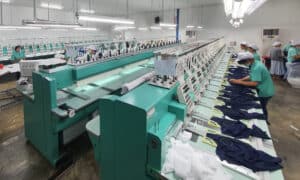
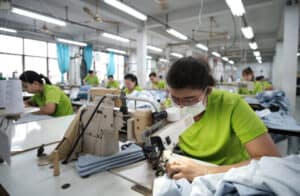
Sritex is one of the largest vertically integrated textile groups in Southeast Asia. Its comprehensive manufacturing capabilities go from spinning to weaving, dyeing & finishing, printing and through to garment manufacturing.
The company is listed on Indonesia’s stock exchange and is part of the Q45 index, which is comprised of the country’s 45 most liquid stocks.
Military Precision
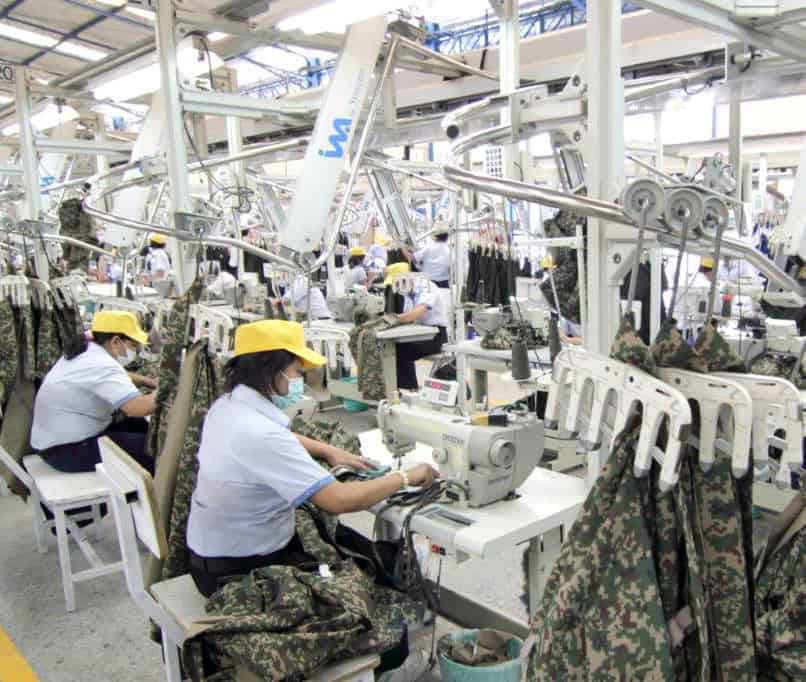
Sritex has the unique advantage of being a key supplier of uniforms to many of the world’s military. This has been a significant driver in the company’s quest to achieve outstanding quality.
“It is not easy to manufacturer for the military. They have very stringent requirements. Because we have supplied uniforms for the military in 40 countries, we have to be able to produce garments that meet a wide range of specifications.
The technical specifications can be very different for example for an army in a very hot climate from one that operates in a very cold or very wet climate. Even within the same country’s military, specifications for its army uniforms will differ from those of its navy or air force We need to be able to deliver exactly what they require across this broad and demanding spectrum,” said Mr. Agarwal.

In addition to its military contracts, Sritex’s customer base for yarns, fabric and apparel covers about 100 countries. The consistent quality that has made the company a leading supplier for the military carries over into all of its products.
“Because we are a vertically integrated operation we have better control over the entire production process – from spinning all the way to garment manufacturing. We can not only achieve higher quality standards, we can also ensure that our production is more consistent,” he said.
We have supplied uniforms for the military in 40 countries, we have to be able to produce garments that meet a wide range of specifications - those technical specifications can vary widely.
Abhay Agarwal, Business Development Director
From Technical Developments to Design Innovation
Through working on military contracts Sritex has also become an expert on developing and manufacturing performance materials and garments.
“We have a great R&D team that is continuously working on new product developments. Many of the products we developed for the military are then interpreted for the work wear market and the consumer market. Properties like flame-retardant, anti-microbial, water-repellent, durability and others are carried forward into non-military materials and garments,” said Mr. Agarwal.
Currently, Sritex is working on developing a self-cleaning fabric. The company was the first in Indonesia to develop a range of personal protective equipment (PPE), for Indonesia’s healthcare sector during the COVID-19 outbreak.
It has also invested in its own print design studio and is adding a fashion design studio as well.

Meeting Growing Demand for Premium Products
Its reputation as a supplier of premium quality products has resulted in Sritex being Indonesia’s largest exporter of textiles to Japan, USA and Europe. The company is also a key supplier to mills and garment manufacturers in China, Korea, Bangladesh and other Asian countries, as well as to its domestic market.
Its apparel exports are mainly to the EU and U.S. markets. The soon-to-be-ratified EU-Indo free trade agreement will be a boon to Sritex. One of the main obstacles for apparel exporters is the agreement’s ‘country of origin’ requirement. As a vertically integrated company with its entire production in Indonesia, Sritex is ideally positioned to profit from this new trade deal.
Growing consumer demand for better quality will help to create growth opportunities for companies like Sritex that offer premium products.
Now that U.S. cotton has introduced its new trust protocol where cotton sustainability is certified, it supports our efforts to provide our customers with the level of sustainable products they are requesting.
- Abhay Agarwal
The foundation of Sritex’s premium products is high quality raw materials.
“Our business model requires that we have a reliable supply of high end cotton. We only purchase machine picked cotton because it has less contamination. We also need cotton where there is uniformity of the cotton fiber. Further, we need a large quantity and we need to be able to purchase cotton all year round. U.S. cotton can meet this criteria,” said Mr. Agarwal.
“U.S. cotton is graded using the HVI system so we know exactly what quality we are getting. Because the U.S. has a large crop and it’s good quality, we know we can get the kind of cotton we need, when we need it,” he added.
“Now that U.S. cotton has introduced its new trust protocol where cotton sustainability is certified, it supports our efforts to provide our customers with the level of sustainable products they are requesting,” he said.

Powered by People
Like many companies, Sritex is gradually moving to greater automation. However, Mr. Agarwal insists that Sritex is using automation to empower rather than replace workers.
“We are looking to balance automation with human resources. It’s still the people who make Sritex what it is,” he said.
It is rightly said that Sritex’s success is not achieved in a day’s work. It was through perseverance and relentless efforts under the dynamic leadership of the Lukminto brothers, that Sritex Group has become an international scale textile and garments manufacturer.
Learn more www.sritex.co.id
The COTTON USA Advantage
- Family growers who are committed to working their fields sustainably and leaving them better for future generations.
- A long history of innovative harvesting and ginning technologies resulting in higher-quality cotton.
- One of the highest rates of adoption in the world for Precision Agriculture, which minimizes water and pesticide usage.
- U.S. farmers operate under voluminous, stringent, and enforceable regulations.
- A commitment to transparent partnership that is unmatched anywhere.
- One of the most comprehensive systems for monitoring and measuring all the key metrics involved in sustainability.
U.S. Cotton Facts
- 2/3 of U.S. cotton land uses only rain water
- U.S. cotton water use efficiency has improved by 82% over the past 35 years
- Cotton is carbon footprint neutral, meaning the plants remove more greenhouse gasses than production produces.
Sustainability Goals
The U.S. cotton industry is building upon the strong environmental gains already achieved over the past 35 years. The aim is to help members meet their current needs while making the world a better place for future generations.
Specific goals include:
- Reducing by 13 percent the amount of land needed to produce a pound of cotton fiber
- Reducing soil loss by 50 percent, in balance with new soil formation
- Increasing water use efficiency (more fiber per gallon) by 18 percent
- Reducing greenhouse gas emissions by 39 percent
- Increasing soil carbon in fields by 30 percent
- Reducing energy to produce seed cotton and ginned lint by 15 percent

Learn More www.cottonusa.org