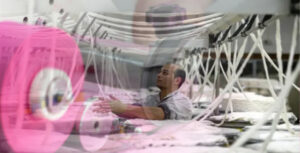
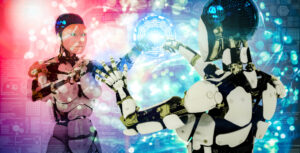
Digital twins have long been used in engineering to identify vulnerabilities by performing ‘digital stress tests’ on a structure or a system. They also allow companies to better understand the dynamics of their supply chains - and to predict supply chain problems. Basically, a ‘digital twin’ is an exact digital replica of a physical (real life) system. The concept of a digital twin was pioneered by NASA as the organization famously used one to help rescue members of the Apollo 13 mission after it experienced mechanical issues. This decades old concept is now finding new relevance as a way to test supply chains in other industries. What is different now is the concept of integrating real-time data and inputs from the real world. This is being powered by expanded capabilities of<a href="https://insidefashionlive.net/why-blockchain-is-only-part-of-the-solution/" target="_blank" rel="noopener noreferrer"> data analytics, connected sensors, IoT and AI</a>. As our supply chains become increasingly digitized, maintaining a ‘digital twin’ is becoming more feasible. Thus, digital twins are now being used in a wide range of industries from healthcare to consumer goods. For the textile industry, this includes the <a href="https://insidefashionlive.net/five-innovations-that-will-transform-the-fashion-industry/" target="_blank" rel="noopener noreferrer">ability to track and trace raw materials and finished products</a> from the factory all the way through to their final destination - in real time. This greater level of transparency enables the digital twin to identify both potential problems and suggest alternatives. <blockquote> Basically, a ‘digital twin’ is an exact digital replica of a physical (real life) system.</blockquote> <h3><strong>How It Works</strong></h3> <ul> <li>A model of a company’s supply chain is set up in parallel to its actual supply chain.</li> <li>While prescriptive models work with real data, a digital supply chain twin takes this capability further in that inputs are fed into the model in real time.</li> <li>As a factory processes an order, the order and associated transactions are automatically fed into the supply chain digital twin.</li> <li>All inputs must be entered in order to accurately simulate a real world supply chain. This includes things like if a machine that’s working on the order at the factory level goes or if the transit time on imported raw materials is delayed. </li> <li>Provided the model has intelligence such as the duration of the outage or when the ship will dock, the digital twin in the supply chain can determine the right corrective action and support supply chain optimization.</li> </ul> <h3><strong>Key Benefits of a Supply Chain Digital Twin</strong></h3> <ul> <li><strong>Dynamic optimization:</strong> Models aren't static, offering the ability to continuously optimize supply chain performance.</li> <li><strong>Greater insight:</strong> Digital twins offer greater insight into supply chain performance and its response to different inputs.</li> <li><strong>Supply chain transformation:</strong> The ability to understand the how and why of the supply chain opens previously hidden opportunities for transformation and growth.</li> </ul> When considering a digital twin supply chain solution, it's essential to evaluate how applications offered can meet your supply chain needs, according to <a href="https://www.riverlogic.com/" target="_blank" rel="noopener noreferrer">Riverlogic</a>, a US-based solution provider that provided the following guidelines for deploying a digital twin in your company. <h3><strong>Deploying a Digital Twin</strong></h3> <ul> <li>It is critical is to be able to model your supply chain accurately.</li> <li>Must replicate constraints and be able to accommodate trade-offs.</li> <li>Digital twins need intelligence and the ability to analyze structured and unstructured data.</li> <li>The digital twin should be able to analyze multiple scenarios to provide the right actionable information.</li> <li>Modeling tools should allow you to revise and update digital twins easily.</li> </ul> <h3><strong>What’s Next?</strong></h3> While the textile industry is at the very early stages of implementing digital twins, other industries are already envisioning a more advanced concept known as the ‘digital triplet’, according to <a href="https://www.nec.com/en/global/insights/article/2020022510/index.html" target="_blank" rel="noopener noreferrer">NEC</a> research.