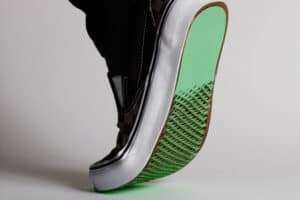
Auburn University researcher Young-A Lee and her research team have developed a promising biodegradable material alternative to leather using the byproducts of fermented green tea. Dress shoes are typically made from a combination of rubber, leather and synthetic materials that take decades to decompose. Ms. Lee proposed testing the viability of a sustainable, multi-layered cellulosic material as an alternative to traditional footwear materials. Her team hypothesized that the biodegradable and traditional materials would have similar properties when it came to how comfortable, durable and thermal-resistant the shoes would be for the wearer. Ms. Lee found that a green tea-based cellulosic material behaved the same way as leather, without the same negative environmental side effects. However, a single layer of this material may soften in rain or snow and lose its durability. But by layering this material with other ecofriendly fabrics, a much more durable product can be created. The combination of an outer shell of cellulosic material with a hemp-based fabric on the inside, bonded together with recycled resulted in an ecofriendly product comparable to the style and durability of a leather dress shoe. A shoe prototype was designed its thickness, weight, air permeability, thermal comfort, tensile strength and wettability was tested to see how it compared to commercially available leather. The sustainable model proved to have the potential to be used as the entire shell of the shoe due to its lightness and airflow capability coupled with the durable nature of the fermented green tea-based material. In terms of thermal comfort, the sustainable model provided similar or even better results than the leather model. The next step is human wear trials of the materials. The research was funded by an Environmental Protection Agency-funded grant