
PT Embee Plumbon Tekstil
Being flexible and offering consistently high quality products has made PT Embee Plumbon Tekstil a leading international yarn supplier.
The Indonesian spinner produces a variety of yarns, but is best known for its contamination-free compact yarn and its cotton/poly yarns.
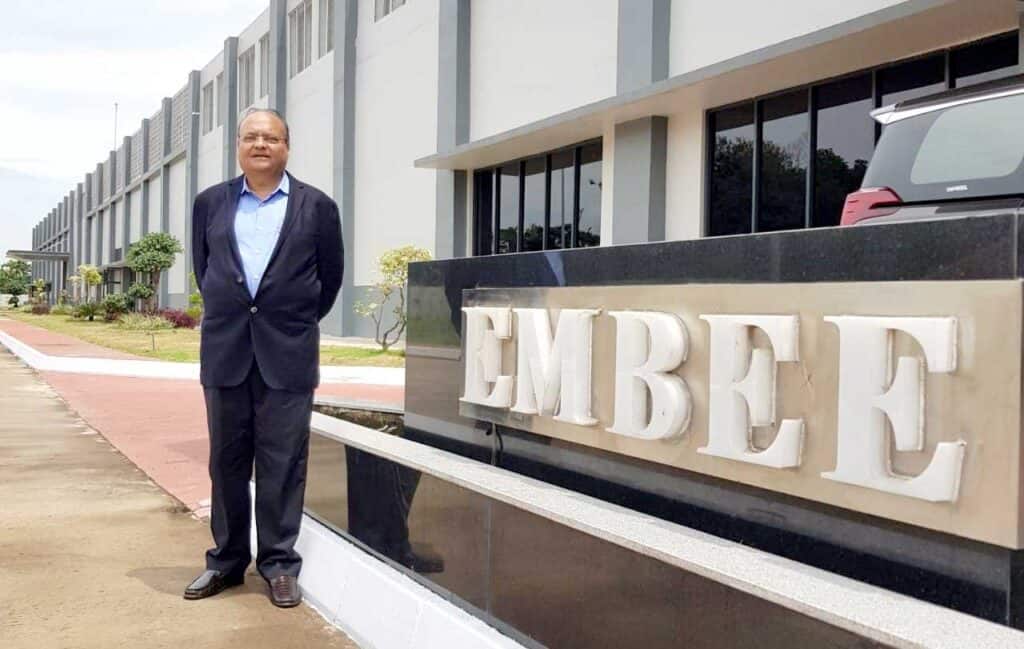
“Our motto is ‘more reliable’. All of our yarns are available all the time, not some of the time,” said Vijay Agarwal, President Director. “This is part of the commitment we make to our customers.”
This is particularly important when customers want shorter lead times. For mills, maintaining availability of a wide range of products requires a strong supply chain and very agile production management.
“Our customers purchase big volumes of yarn and they also want high quality products. We need a good partner for raw materials who can provide us with a stable supply of high quality fiber. U.S. cotton is that perfect partner,” he said. “We have built a long term relationship with U.S. cotton because we know that they have sufficient supply, and the right quality, to meet our needs.”
“Our motto is ‘more reliable’. All of our yarns are available all the time, not some of the time,”
Vijay Agarwal, President Director

Since 1998, Embeetex has grown from 30,000 spindles to 240,000 spindles in two locations. The company consumes around 50,000 tons of cotton per year and its mills run 24 hours a day, 365 days a year. With this kind of non-stop production, it is essential to have a reliable source of raw materials.
“U.S. cotton can support us if we have an urgent need. They work with us to ensure that we have a reliable and flexible supply of cotton. This is essential in a market where demand is not always predictable,” said Mr. Agarwal.
Quality that International Customers Can Rely On
Part of providing high quality products is being able to find a stable sources for raw materials that can meet strict quality standards.
“U.S. cotton is tested and certified by the USDA (U.S. Department of Agriculture) so we know that it meets our quality requirements. Other cheaper cotton is not tested like this,” he said. “It’s important for us to use cotton with very little contamination so that we can produce our contamination free yarn without a lot of waste or production problems.”
“U.S. cotton also has better quality control than other cotton sources. They take feedback from their customers and use it to improve. Their research is ongoing – even improving the material that the cotton bales are packed in,” said Mr. Agarwal.
We are audited each year by Uster, which provides certification for the quality of our products based on global benchmarks. We have had this certification for the past 16 years and have achieved Uster’s “gold standard”.
U.S. cotton has better quality control than other cotton sources. It's tested and certified by the USDA so we know that it meets our quality requirements.
Vijay Agarwal, President Director
The Advantage of Automation
Being a high quality supplier requires a continual improvement of the production process.
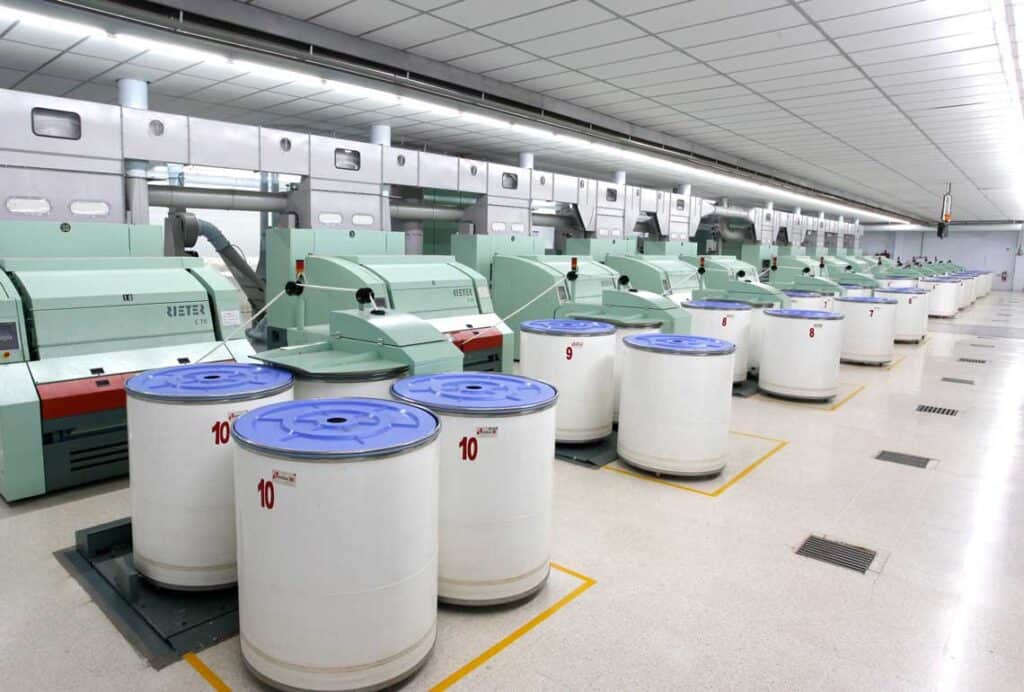
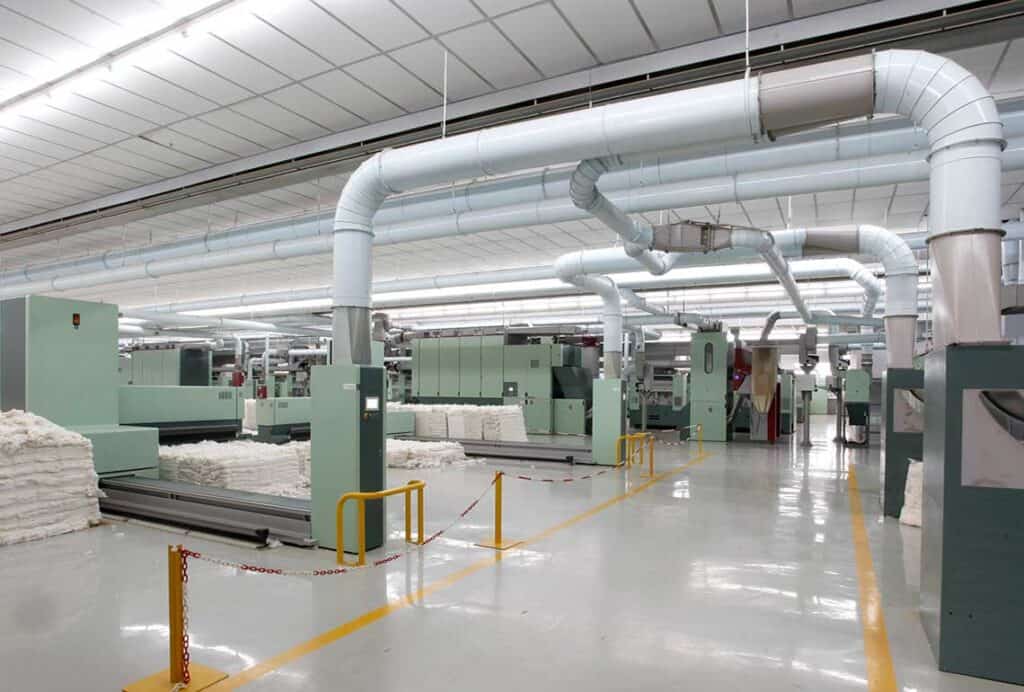
“During the past 10 years we have replaced, upgraded or modified a lot of our equipment to keep up with the latest technology. Our technicians also have regular training. All new workers must go through six months of training. Then we also have weekly and monthly training so that they are always learning and increasingly their knowledge,” said Mr. Agarwal.
Embeetex’s newest facility has 40,000 spindles and uses Rieter (Switzerland) state-of-the-art Individual Spindle Monitoring system (ISMS), an integrated data automation and monitoring solution. Each machine is connected to a central computer and is known as the ‘spider web’. A dashboard allows the mill’s management to monitor the performance of 150 machines at the same time.
“We can see the performance of each spindle during the last 24 hours and can make immediate corrections, if necessary,” he said.
Embeetex is the only mill in Indonesia that is using ISMS.
Identifying New Growth Markets
Right now Embeetex exports about 40 percent of its production to Europe, 30 percent to other markets, with 20 percent being sold in its domestic market.
The company expects exports to Europe and the US to remain strong, however they see significant growth opportunities in Asia.
“In the next few years we foresee 10-15 percent growth in our exports to Asia. Previously we were not selling to China, but now about 6-10 percent of our exports are to China. Indonesia is more competitive, so China can import yarn from us for a lower price than what it would cost them to produce it domestically,” he said.
At the same time, ‘country of origin’ rules that are part of many free trade agreements are boosting demand for yarns sourced from ASEAN nations.
Learn More www.embeetex.com
The COTTON USA Advantage
- Family growers who are committed to working their fields sustainably and leaving them better for future generations.
- A long history of innovative harvesting and ginning technologies resulting in higher-quality cotton.
- One of the highest rates of adoption in the world for Precision Agriculture, which minimizes water and pesticide usage.
- U.S. farmers operate under voluminous, stringent, and enforceable regulations.
- A commitment to transparent partnership that is unmatched anywhere.
- One of the most comprehensive systems for monitoring and measuring all the key metrics involved in sustainability.
U.S. Cotton Facts
- 2/3 of U.S. cotton land uses only rain water
- U.S. cotton water use efficiency has improved by 82% over the past 35 years
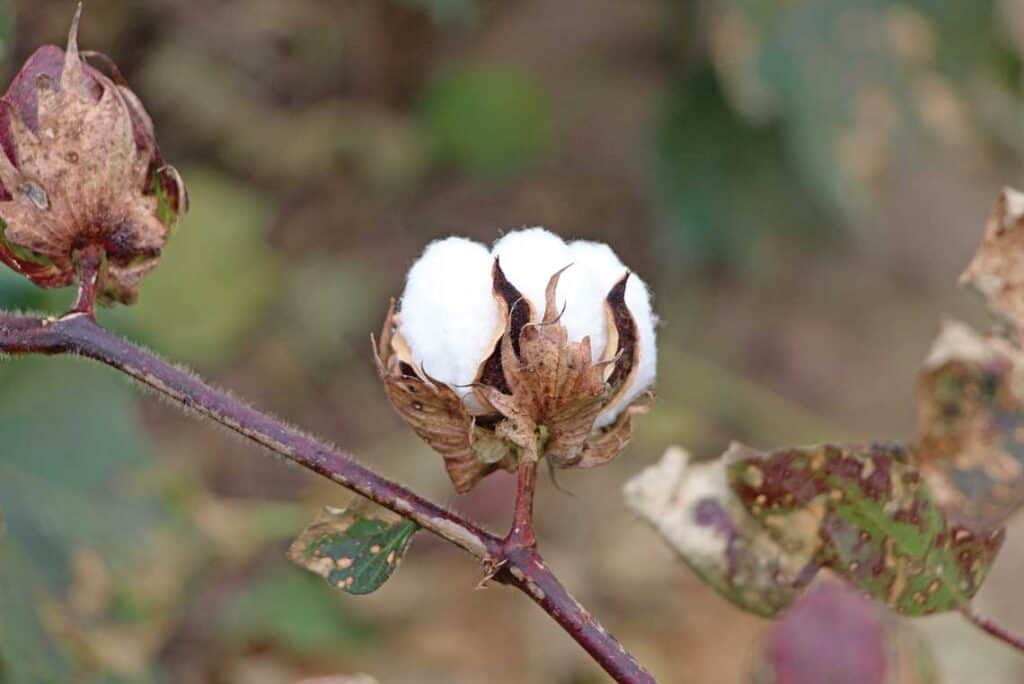
- Cotton is carbon footprint neutral, meaning the plants remove more greenhouse gasses than production produces.
Sustainability Goals
The U.S. cotton industry is building upon the strong environmental gains already achieved over the past 35 years. The aim is to help members meet their current needs while making the world a better place for future generations.
Specific goals include:
- Reducing by 13 percent the amount of land needed to produce a pound of cotton fiber
- Reducing soil loss by 50 percent, in balance with new soil formation
- Increasing water use efficiency (more fiber per gallon) by 18 percent
- Reducing greenhouse gas emissions by 39 percent
- Increasing soil carbon in fields by 30 percent
- Reducing energy to produce seed cotton and ginned lint by 15 percent

Learn More cottonusa.org