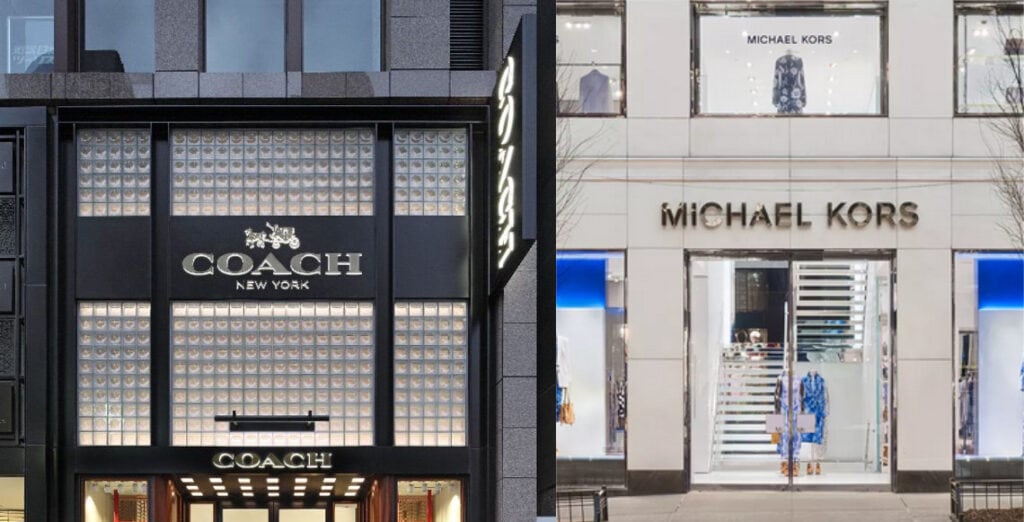
When Tapestry (USA) acquired Capri Holdings (UK) in August the headlines heralded a new heavy hitter entering the global luxury arena that could be worth $12 billion in annual revenue. That will not be easy to do in a playing field that is ruled by behemoth LVMH, which reported revenue of $86 billion for the first half of 2023, and established leaders Kering and Richemont, as well as powerful brands such as Chanel and Hermes - all vying for the same consumers. LVMH and Kering have the advantage of large portfolios of successful brands. But more brands is not the decisive factor since single brand companies including Chanel, Hermes, Burberry and others continue to grow sales, profits and successfully enter new markets. By comparison, the Tapestry/Capri portfolio could be seen from one perspective as an aggregation of weak brands. And brands that are more ‘affordable luxury’ rather than top of the market luxury. Both companies reported disappointing results for the recent quarter. Capri’s Q1 2024 revenue decreased 9.6% to $1.23 billion, while net income fell 76% to $48 million. Tapestry did fare much better. Sales for both Q4 2023 (ended July 1) and for the full year were flat, while most other luxury or higher end brands were seeing solid sales growth. What most analysts will be watching is whether Tapestry can re-energize sales at Michael Kors, Capri’s lead brand. That could take more than an overall rebound in the global economy. It might involve re-evaluating in which demographic and which global markets the brand has its strongest appeal - and thus greatest chance for success. <b>DEFINING LUXURY. </b> Tapestry’s brands (Coach, Kate Spade, Stuart Weitzman) and Capri’s Michael Kors brand are essentially ‘affordable luxury’. That’s a category that is under a lot of pressure right now as the affordable luxury consumer is now either saving up for high end luxury - or opting for lesser known brands that offer more quality and uniqueness. <b>WEAK FOUNDATION. </b>Michael Kors, which accounts for about 60% of Capri’s revenue, reported revenue for fiscal 2023 (ended April 2023) fell 4.2%. The brand’s revenue fell 13.8% in Q1 2024 (ended July 2023). Coach accounts for about 75% of Tapestry’s revenue. Sales for the brand rose 1% in fiscal 2023, but grew 3% in Q1 2024 (ended July 2023). <b>SOFTENING MARKET. </b>Tapestry relies on the US market for about 61% of its sales, however that market has cooled off. Prada reported H1 sales rose in all markets except the Americas where they slid -1.1%. LVMH reported a lackluster 3% increase in the Americas, compared with global growth of 17% in H1. In the same period, Richemont said sales rose in all regions, except the Americas where sales fell -2%, while Burberry’s sales in the Americas fell 8%. Ralph Lauren’s North American revenue fell 10% to $632 million. <b>POTENTIAL GAINS. </b> The biggest gain is likely to be Capri brands benefiting from Tapestry’s digital platforms. <b>REDEFINING THE COMPETITION. </b> As Europe’s top luxury brands look to drive sales, more are starting to eye the younger, aspirational consumer - that market which has been the domain of ‘affordable luxury’. Even Chanel has recently stated they are looking to attract consumers with ‘investment purchases.’