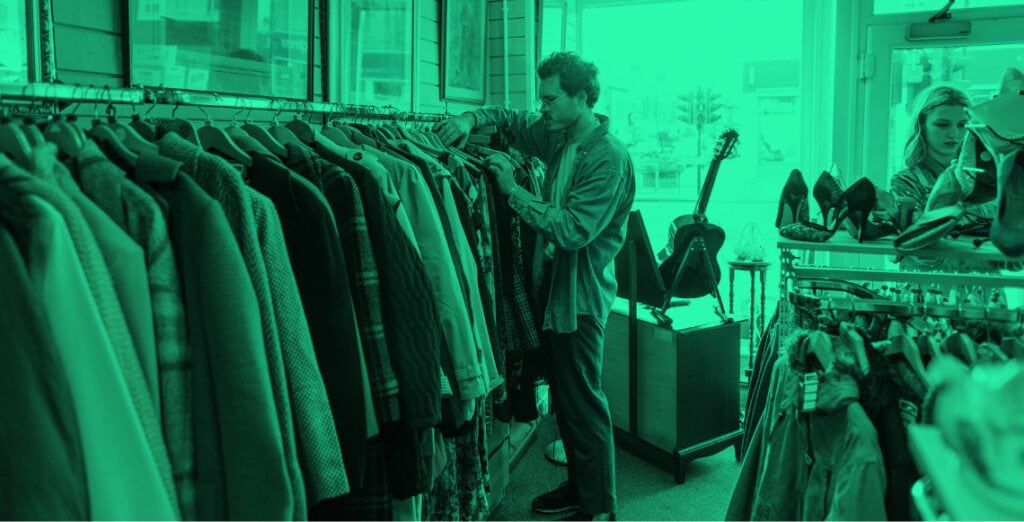
Resale has become mainstream, taking what was a niche mainly owned by consignment shops and bringing it into even up market stores. Initially, platforms like Depop, Farfetch, Poshmark, and The RealReal made resale trendy. Having gained mass acceptability, a growing number of brands and retailers are jumping on board. Levi’s, Lululemon, and Nike all launched in-house resale programs. There are a few factors driving this trend. Younger Millennials and GenZ saw resale as an opportunity to find unique fashion at bargain prices. With more time than money, ‘thrifting’ became a form of entertainment. The ‘treasure hunt’ aspect and the thrill of finding that to-die-for garment kept shoppers coming back for more. This, coupled with heightened environmental consciousness, and more recently tighter budgets due to inflation, has even Baby Boomers checking out the resale racks. <blockquote> Unreliable inventory is one problem that is keeping resale from surging.</blockquote> With the rise of online resale sites, it has become easier than ever to find good quality, gently-used items at a fraction of the cost of buying new. However recent research is showing that while demand for resales is still strong, it is not growing as quickly as many forecasters had predicted. Consumers’ participation in the resale market is virtually identical to where it was a year ago, according to research from Morning Consult. <h3><b>Insufficient Supply</b></h3> One of the biggest constraints to resale is finding new inventory. When resale first gained popularity, consumers were encouraged to empty out closets, attics and basements. This was a bonanza for resale retailers, thrift stores and resale platforms. But where is the new inventory going to come from? Consumers can resell the garments they purchased at resale - as well as any new ones - however that supply will start to deplete, especially as a certain number of garments become too worn to resell. Brands are rapidly entering the resale space, but scaling operations is another challenge. Since there are more buyers than sellers, and sellers also tend to buy, resale’s growth depends on pulling more sellers into the fold. Brand-supported peer-to-peer models can only be compelling if the platform has a sufficient number of sellers supplying inventory, but right now sellers aren’t always meeting buyers’ demand, said Morning Consult. <h3><b>A Less Organized Sector</b></h3> Another issue is inventory management. Without a typical supply chain - or even a traditional wholesale market supporting it - retail has no control at all over its inventory. ”The challenge for brands and marketplaces doing resale is creating a journey that quickly and successfully matches shoppers with other products they’ll love (in the right size), so they’ll be motivated to buy something else and not bounce,” said the Ecommerce Times. This is particularly difficult for the apparel sector, where size plays a key role. Another obstacle is finding a way to standardize product descriptions. This is particularly important for online marketplaces in order to help consumers quickly find the products they are looking for, as well as provide the retailer with in-depth data analysis. Increasingly solutions such as visual AI-based deep tagging analyze items based on a wide range of visual attributes and automatically produce every possible relevant tag using standardized keywords. However, for retailers used to managing inventories of new garments, resale is likely to be loss-leader to draw in consumers who hopefully will shop the entire store - not just the second hand rack.