WEEKLY WISDOM
“Everyone has two eyes, but no one has the same view.”

Why Indie Brands are Likely to Survive
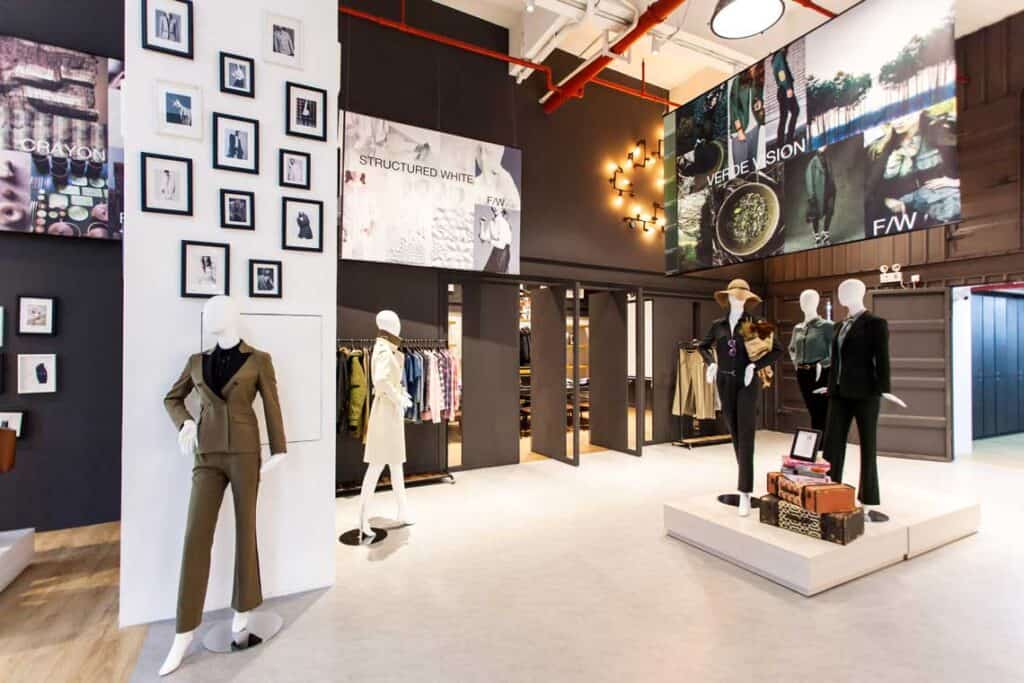
“We started working with D2C (or digital native) brands a bit earlier than most, so we’ve had more experience working with them. Today, more than half of our sales are from digitally native brands. I think that that’s really reflective of where we’re going to be seeing things going in the future,” said Stanley Szeto, executive chairman of Hong Kong-based Leverstyle.
For over two decades he has been pioneering ways to build greater efficiency into apparel sourcing.
“I think certainly there’s a demand from the consumer for better quality and for more uniqueness. That’s where we’re seeing opportunities coming from the indie brands. They are much better at targeting smaller consumer niches,” he said.
The ability to understand what a subset of consumers want, and to deliver on it, has been a core factor in differentiating indie or D2C brands.
China is becoming the proving ground for on-demand manufacturing.
“During last year’s Double Eleven shopping festival (November 11) we were fulfilling some orders for apparel brands. A lot of garments that were sold were not made yet. The materials were ready and the factory capacities were booked, but the garments were not made until those orders were taken,” said Mr. Szeto.
Listen to the podcast

What’s going on in apparel, textiles and footwear …
RETAIL
UK Consumer Spending Rebounds in July
Total retail sales rose 3.2% in July year-on-year, according to the British Retail Consortium (BRC).
- Analysts are watching to see if the increase is simply pent up demand, or a longer lasting retail rebound.
U.S. consumer spending on apparel rose 5.7% month-on-month in July, but is still 20.9% below 2019 levels, according to the U.S. Census Bureau.
- The apparel consumer price index saw men’s and boys clothing prices increase 0.5% month-on-month in July, but are still 5.2% below 2019 levels.
- Women’s and girls apparel prices rose 1.3% month-on-month in July, but are 9.5% below last year.
- U.S. retail added 258,300 jobs in July, 1.8% increase from June, according to the Bureau of Labor Statistics. Jobs at apparel and accessories retailers showed the biggest gain, up 15% in July.
Rent the Runway (USA), one of the first apparel rental subscription companies, will permanently close all of its stores (CNBC).
- It will focus on online and its network of drop boxes (for apparel returns) that include partnerships with Nordstrom, West Elm and WeWork.
- Much of Rent the Runway’s business focused on special occasion dresses. However the pandemic put an end to most events, a situation that’s not likely to change for another 12 months.
- The company claims that most of subscribers put their subscriptions ‘on hold’.
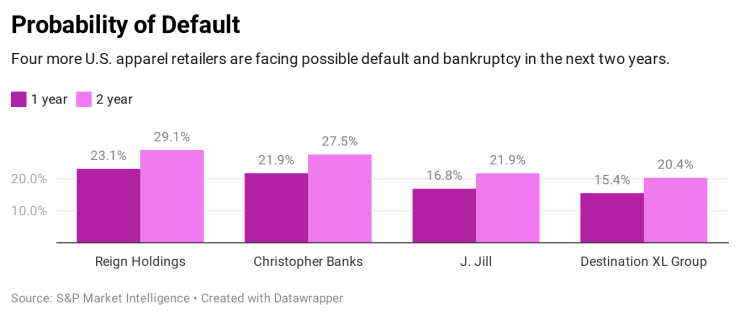
Four U.S. apparel retailers are on the S&P Global bankruptcy ‘watch list’ .
CHINA MARKET
China’s Hainan Island sees surge in domestic tourism
Despite a plummet in overall tourism in the first half of 2020, Hainan Island’s duty-free sales hit $279 million in May, up 147.9 percent from the previous year.
- On China’s Labor Day holiday (May 1) saw returning domestic tourists spend $28 million in Hainan’s duty-free shops, far exceeding expectations, Charles Chen, president of CDFG told China Daily.
- During July, an estimated 281,000 tourists visited the island, up 42.71% year-on-year (General Administration of Customs)
- The increase allowance for duty-free purchases, from $4,300 to $14,400 per person (effective July 1) helped to drive the jump in domestic tourism.
SOUTHEAST ASIA RETAIL
KL East Mall (Malaysia) is now set to open to the public on November 25.
- The new mall, owned by Sime Darby Property Bhd, was first slated for an official opening in March but was delayed due to the Covid-19 pandemic.
- The mall has a net lettable area of 384,210 sq ft.
- It is positioned to be a cultural hub for Kuala Lumpur. Tenants include a cinema, skating rink, gym, and supermarket, as well as consumer brands including H&M.
FINANCIAL
Walmart, Kohl’s, and Alibaba will report earnings this week.
FINANCING RETAIL
Europe to get new regional payment system
A group of 16 major European banks has announced the implementation phase of a new unified payment scheme for consumers and merchants called the European Payments.
The goal: a pan-European P2P payments and a digital wallet that is faster, more efficient and more competitive than the many services that are already available in the market.
Lightspeed Capital (Canada) is a new service that’s providing financing to U.S. retailers to help them buy inventory, invest in marketing or manage cash flows.
- Retailers using Lightspeed Payments can get financing of up to $50,000 per retail location.
- Lightspeed uses retailers’ history with its payment system to approve financing offers.
- A percentage of daily sales will automatically be repaid against the borrowed amounts, keeping repayment flexible to suit the needs of the business.
- The service is part of an integrated payment system supported by Stripe (provides credit card merchant services).
Do you have something to share? Ideas, suggestions, news or events … You can reach us here.

Did you misse any of these articles?
- The Next 18-Months: Global Analysts Outline Potential Risks
- Who’s Watching You?
- EU Retail Trade Rebounds, but Apparel Lags
- Suppliers Face EVFTA Conundrum
- CEO Survey Points to Q4 Recovery
- Retail Bankruptcies: Bad, but Not as Bad as Before
- Making Garments that Consumer Want to Buy
- BNPL is Helping to Drive Retail Sales
- How Power Brands are Taking the Battle for Consumers Offline
- MIcro Sales That Add Up to Millions