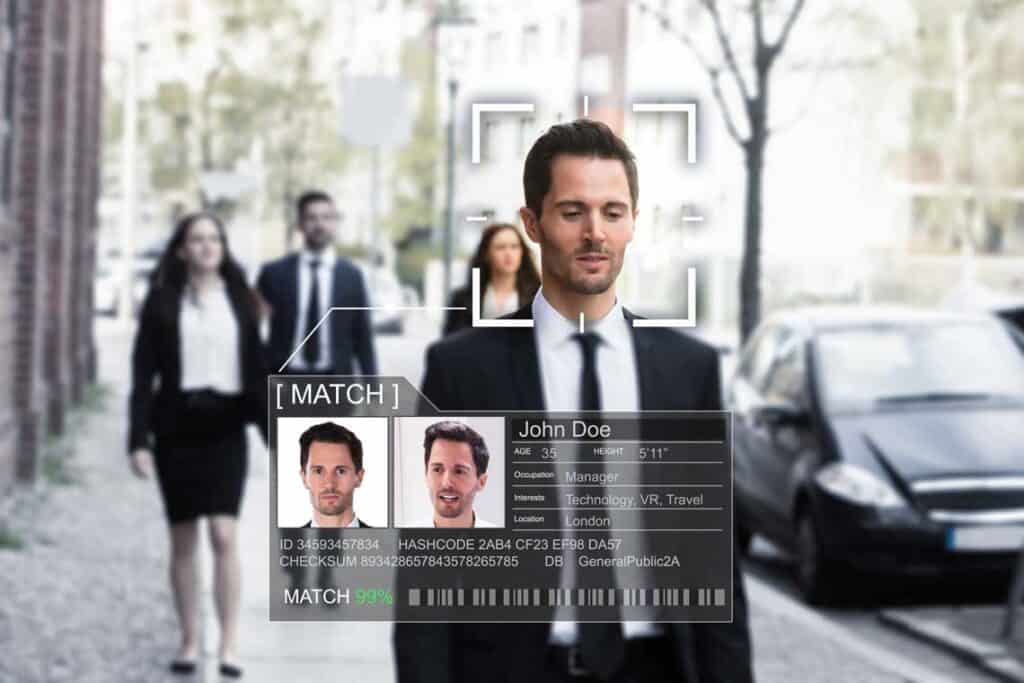
Who's watching you?It’s a question that an increasing number of consumers are asking.The race to use AI, data tracking, heat maps and other technology to ‘read the minds’ of consumers has started to pit shoppers against shop owners.Brands are eager to better predict what consumers want. That’s nothing new. For decades businesses have analyzed what products sold best and tried to determine what factors influenced sales to peak or plummet.However as technology gives us more sophisticated tools to do this, we are able to cross the line between what sold and who actually purchased it in a way that is increasingly eerie.This, in part, prompted researchers at the University of Chicago (USA) to develop software that ‘cloaks’ images to fool machines. (read on for more details)It seems that consumers are increasingly wary about who’s watching them.This is likely to lead to a new set of compliance issues that retailers will need to addressWhat We’ve Known All AlongStores have been able to track individual customers purchasing patterns ever since the advent of credit cards, which provide a clear summary of who bought what - and when.Store loyalty cards, which are scanned at the point of purchase, do the same.Consumers are aware of this and accept it. There’s still enough degrees of separation.The belief is that retailers use that information to get a big picture as to what is selling and use it to plan future purchasing. Of course they have figures as to what sold each day, without relying on credit card or loyalty card data.Nonetheless, most people don’t expect that data will do this in a more personal way.The problems seem to begin when that data is being used to specifically target individual shoppers.When they click on an advertisement online or visit a website and then ads for a certain product or retailer now appear on every other web page they visit, the consumer starts to get angry.People quickly figured out that they were being ’tracked’ and they didn’t like it. This led to nearly 40 percent of consumers around the world using ad blocker software as of 2019 figures.The browsers including Firefox and Safari have launched their own ad blockers and ‘no track’ options.From e-commerce platforms to social media, technology has enabled the owners of those platforms not only to see macro views of traffic and user engagement, but also to see exactly who is doing what - and then use that data to create what the site owners or retailers refer to as more ‘customised’ or ‘personalised’ user experiences.Not Just Another E-commerce ProblemWhile social media and e-commerce have been the first to use this technology, and as such have taken most of the heat for alleged wrong doings, physical retail is now employing similar technology - and facing similar consumer backlash.In July, Macy’s (USA) was hit with a lawsuit for the use of controversial facial-recognition software made by startup Clearview AI, Bloomberg reported.While the software is primarily used for law enforcement purposes, a number of retailers are starting to use it as well.The idea is that by using data captured by ‘watching’ shoppers (along with advanced algorithms) they can better understand what a customer might be interested in.Currently, stores that have security cameras are, in many countries, obligated to post signs letting customers know that they are being recorded. Customers accept this since it is part of a security system designed to protect the store owner from theft, not collect data about shoppers.The Consumer Strikes Back (with some help from science)While litigation might be more of a U.S. thing, consumers aversion to being constantly tracked is a global issue. And no one likes it.Most consumers don’t sue, they simply stop doing business with you.This is more than simply a retail problem. Across many industries, there is growing backlash from consumers to facial recognition technology.Researchers from the University of Chicago (USA) have invented a new way to fool face-detection tech. Named Fawkes, the software tool “cloaks” photos to trick the deep learning computer models that power facial recognition, without noticeable changes visible to the human eye.“The purpose of Fawkes is to provide individuals with some power to fight back themselves, because right now, nothing like that exists,” said Emily Wenger, a third-year PhD student and co-leader of the project, in the UChicago News.The tool is free and, according to the researchers, has already been downloaded over 100,000 times.Take-Away for Brands and Retailers: Collecting and analysing data will continue to be a key way to better understand what our customers want.However, like other dangerous substances, it needs to be handled with extreme care. Attention needs to paid not only to what consumers are searching for and/or are buying, but also to how they react to target ads and promotions.