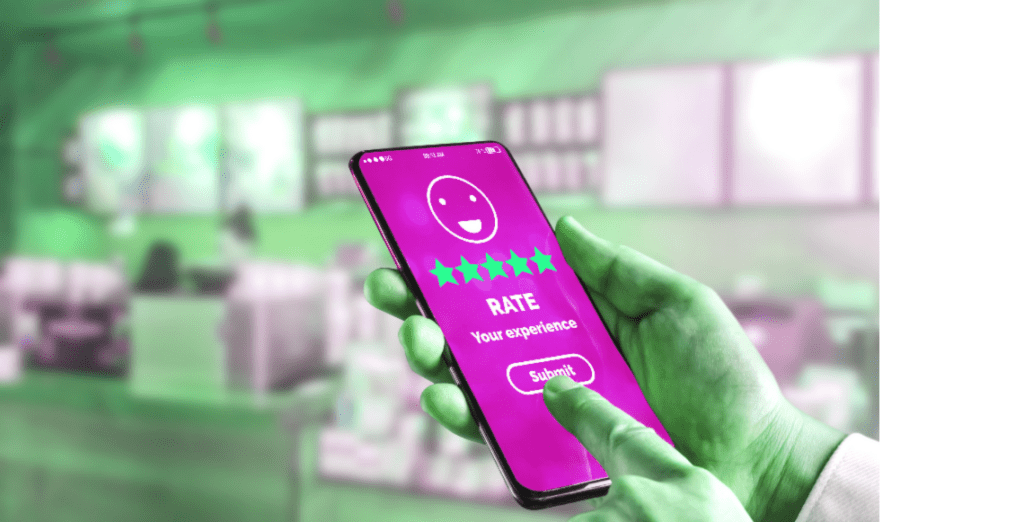
A big part of running a successful business is being able to retain your existing customers while continuing to attract new ones. That’s become even more important as customer acquisition costs across all channels are at record highs. Investing in retaining those customers you already have could be the smartest growth tactic a company could employ. For many companies. The question is how to do this effectively. Loyalty is something every company wants, but nowadays few are able to achieve this. This leaves most companies spending more and more budget to acquire customers who quickly hop to the next brand or chase the newest offer. One of the first steps to achieve this is to first gain a better understanding of your customer. This means going a lot deeper than the standard demographics that most brands and retailers already use. “When we talk about marketing efforts, everything is getting personalized. That's a big shift that I've seen in the last three years across every sector, whether you're talking about automotive, about banking, or about retail. It doesn't mean that the products themselves cater to individual needs, especially at this point, but on the marketing side, we are helping brands to address individual consumer needs,” said Rajv Lamba, CEO and co-founder of SurveySensum, a company that helps brands collect consumer data better and faster - and make it more actionable. “We're seeing a fundamental shift in terms of the way data is being collected. Telephone surveys, face to face, or a poll, is being replaced by more WhatsApp based surveys where you can reply at your own convenience. <blockquote> “Machines are now able to read and predict, what we call it the entire text and sentiment analysis or voice analysis, based on what customers are entering in an open field.” <cite>Rajv Lamba, CEO and co-founder of SurveySensum</cite></blockquote> <img src="https://insidefashionlive.net/wp-content/uploads/2023/01/Rajiv-Lamba-headshot11.jpg" alt="" loading="lazy" srcset="https://insidefashionlive.net/wp-content/uploads/2023/01/Rajiv-Lamba-headshot11.jpg 800w, https://insidefashionlive.net/wp-content/uploads/2023/01/Rajiv-Lamba-headshot11-300x300.jpg 300w, https://insidefashionlive.net/wp-content/uploads/2023/01/Rajiv-Lamba-headshot11-150x150.jpg 150w, https://insidefashionlive.net/wp-content/uploads/2023/01/Rajiv-Lamba-headshot11-768x768.jpg 768w, https://insidefashionlive.net/wp-content/uploads/2023/01/Rajiv-Lamba-headshot11-75x75.jpg 75w, https://insidefashionlive.net/wp-content/uploads/2023/01/Rajiv-Lamba-headshot11-350x350.jpg 350w, https://insidefashionlive.net/wp-content/uploads/2023/01/Rajiv-Lamba-headshot11-750x750.jpg 750w" sizes="(max-width: 800px) 100vw, 800px" width="800" height="800"> “The surveys are across multiple touchpoints. For example, the moment you open a bank account, the moment you close a bank account, rather than somebody calling you and bothering you, they send you an SMS or they send you a Whatsapp. This is less intrusive, because I'm not expecting you to give me feedback straight away. It lets you give feedback. But I'm not disturbing you. I'm not irritating you by calling you again and again,” said Mr. Lamba. <h3><b>Better Data Backed by Better Analytics</b></h3> New more customer friendly survey apps are making it easier for brands to reach consumers - and for consumers to respond. Still, once brands have that data on hand it needs to be analyzed. That’s another place where the train can jump the tracks, so to speak. Being able to truly understand customer sentiment often requires allowing them to give text or voice feedback, rather than choosing a response from a multiple choice list. Analyzing multiple choice responses is easy, which is why companies often favor them. Being faced with feedback from customers ‘in their own words’ is a lot more challenging. “Machines are now able to read and predict, what we call it the entire text and sentiment analysis or voice analysis, based on what customers are entering in an open field.” <blockquote> “There’s an important shift from what is called “recall surveys” to what we refer to as “moment of truth surveys. We are trying to get feedback as close as possible to when the experience occurred - at the ‘moment of truth’."</blockquote> An open field on a survey is one that allows a customer to enter their opinion, rather than choose from a multiple choice list. “The machine is able to give you real time analysis. Previously, as a market research consultant, I used to do that in three weeks because I was manually coding everything. Now the machine learning algorithm, which is reading the data, is giving you a live summary of what people are writing, or what people are saying. These are some of the advancements which have happened in the last three to four years, especially in Asia when it comes to faster feedback, less intrusive methods, and the entire area of text and sentiment or voice analytics,” said Mr. Lamba. <h3><b>The Moment of Truth</b></h3> Typically companies survey customers at some point after the customer interacted with the company or its products. However, that leaves room for less accurate feedback since you are relying on the customer to recall their experience. “There’s an important shift from what is called “recall surveys” to what we refer to as “moment of truth surveys. We’re no longer asking customers to remember things that happened a month or even a few days ago. We are trying to get feedback as close as possible to when the experience occurred - at the ‘moment of truth’,” said Mr. Lamba. Not only is the feedback more accurate, the fact that it takes place in real time, brands can monitor customer survey dashboards and get faster feedback on how they are doing. <h3><b>Fast and Focused</b></h3> Once they have your attention, it’s understandable that companies want to get as much feedback as possible. That can lead to lengthy surveys. The typical face-to-face or phone surveys could take more than 45 minutes to cover a wide range of customer feedback. That’s being replaced by micro, highly focused surveys that aim to get feedback on just one aspect of a product or customer experience. <blockquote> The equation is changing, because now you can personalize the survey and you can personalize the marketing campaign too.</blockquote> “Given the fact that now is a moment of truth, I can break service into multiple small surveys. And I don't need an hour of your time, every time. I can just ask you two or three questions. I can get the insights and I can move on. So those big long questions are being crystallized into smaller modules, which are what I call our two or three minute surveys. <h3><b>Reducing Big Data to Make More Relevant</b></h3> “More is not more. In fact, less can be more because you don't need to know everything about everything, you just need to know what the customer thinks about a few very specific things. Because everybody's time is constrained, shorter surveys tend to be more efficient for everyone,” said Mr. Lamba. “The equation is changing, because now you can personalize the survey and you can personalize the marketing campaign too. “I advise people who are using our platforms, or even other platforms, that you don't have to always bombard customers with 30 or 40 minute surveys. You can just be very clear on what you want to ask your consumers. “Also, if you have your own database of your customers, possibly start utilizing that database, not only for marketing, but also for feedback collection. A lot of people are sitting on customer databases, but they don't know how to use the database. You don't need to go to a consultant to help you to get a list of people who fit your customer demographics in order to run a survey and gain market insights. You simply run that survey to your own customer database. That’s one of the key advantages of collecting customer data such as email addresses or phone numbers,” said Mr. Lamba. For many brands, it comes down to using what they already have (a customer database) and using it more strategically. Rather than rolling out a massive survey that looks more like a school exam than a customer feedback poll, shift to developing one good question, or multiple questions, that will dive deep into what that consumer wants or how they feel about one product, service or experience. This not only reduces the friction in getting fast and accurate feedback, but it also provides more targeted information that is potentially more actionable for the company.