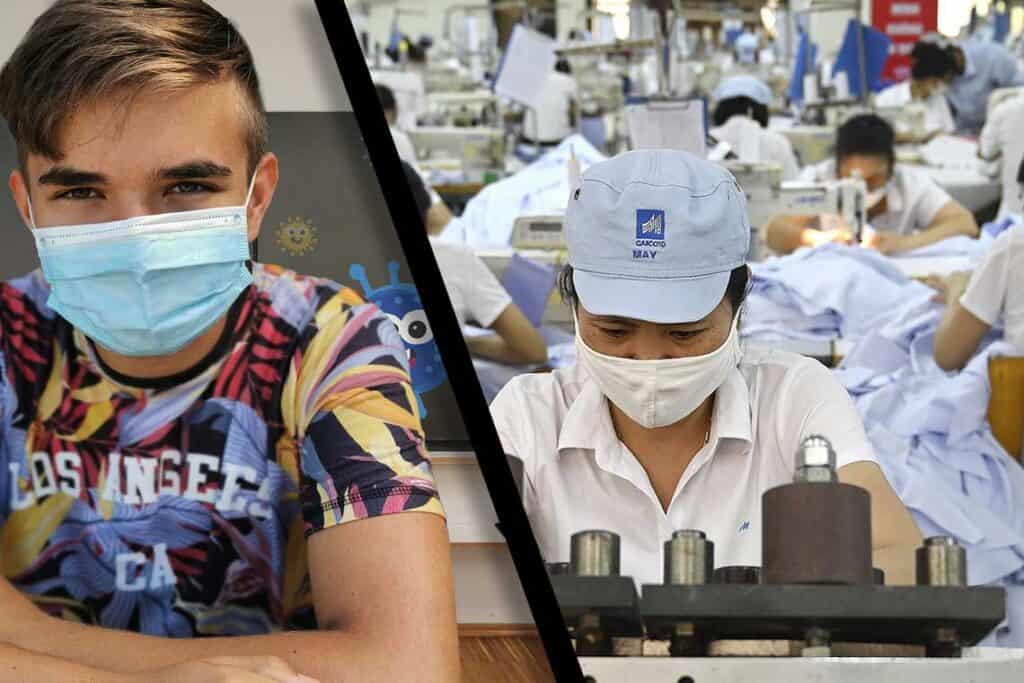
Vietnam's manufacturers quickly shifted to making masks when the pandemic hit this spring. What most companies didn’t anticipate was that by autumn masks would become a key export product category. Through the end of August, Vietnam has exported nearly 1 billion face masks. That growth looks set to continue as masks become mandatory around the world and government health organisations in the Europe and the U.S. fear that winter months could see a sharp rise in COVID cases. With apparel and textile exports down 11.6% year-on-year through August (General Statistics Office), the nation’s trade ministry has encouraged the country to become the ‘world’s face mask factory’, according Nikkei Asia. <h3><strong>Apparel Faces Slow Recovery</strong></h3> Even as retail starts to rebound, and despite brands’ plans to move more of their production out of China, manufacturers realise that export orders are not likely to recover to 2019 levels in the near future. In both the U.S. and the EU, apparel sales have lagged the overall recovery of other goods. In the U.S., apparel retail was 20% below pre-Covid levels in August. In France, August sales of textiles and clothing fell 3.1%, while total retail sales for the month rose 1.3% year-on-year. In Germany, July apparel sales were down 8% year-on-year, compared with total retail sales, which were down ono 0.9% year-on-year. In contrast, the ongoing global demand for personal protective equipment (PPE) is making this look like a practical option. Over 70 Vietnamese manufacturers exported face masks in August, with more manufacturers moving into the category. While export volumes are down since they peaked in June, business is still strong, with August exports totalling 135 million pieces, according to the General Department of Customs. Bestsellers include fabric masks, fine dust masks, 100% cotton fabric masks, 2-layer cotton masks, and medical masks, according to the GDC. <h3><strong>Investment in Manufacturing Slows</strong></h3> Foreign direct investment (FDI) for the first eight months of 2020 has fallen 13.7% year-on-year, compared with an increase of 7% in 2019. Long term, Vietnam is positioned to be a strong manufacturing partner for key international brands. However for factories there’s an immediate need to survive during that interim period. <strong>Vietnam Advantages</strong> <ul> <li>The most trade agreements of any Southeast Asian nation, including the CTPP (modified version of the defunct TPP), RCEP, the new EVNFTA, and others.</li> <li>Proximity to China for imported raw materials.</li> <li>One of the few countries where the Asian Development Bank expects to see growth this year (forecast at 1.8%, down from 7% in 2019)</li> <li>Growing efficiency of factories.</li> </ul>