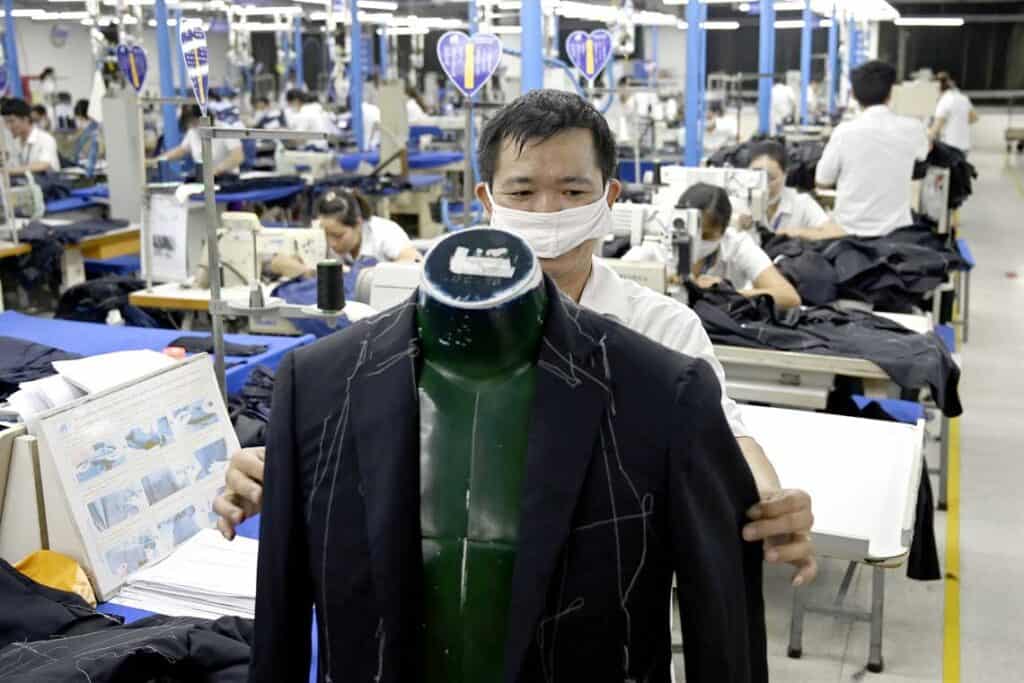
Southeast Asian nations are starting to reopen factories, assess damages, and begin the process of rebuilding. The situation is the same for many - and yet also varies amongst nations and suppliers. With the gradual reopening of key export markets (Germany, Austria and Denmark last week with other EU markets to follow - and the US looking to do the same) orders will start to slowly pick up. The initial supply side problem when China’s shutdown created raw materials shortages was solved within a few weeks times. Now the demand side is the problem - and that will take a longer time to recover. In part because it relies on many nations, not just China, to recover. For most Asian nations, order cancellations have been more devastating than the virus itself. How countries navigate through these next few months will play a pivotal role in determining who will rebound and who will be mired in despair. <h3><strong>Vietnam’s Advantage</strong></h3> <ul> <li><strong>Stayed healthy.</strong> Vietnam has only 270 cases, with no deaths. There have been no new cases for over 10 days.</li> <li><strong>Prepared for prevention. </strong> Vietnam’s locally made test kit for COVID-19 has been approved by the World Health Organization (WHO) after enduring five rounds of testing and quality assessments.</li> <li><strong>Things are staring to move.</strong> The Ministry of Transport has allowed the increase in the frequency of domestic flights on the Hanoi-Ho Chi Minh City route as well as the reopening of other domestic routes.</li> <li><strong>Price stability.</strong> Inflation is expected to be in the range of 3.2-4.3% this year, in keeping with this year’s target of keeping inflation below 4% , according to a government statement. A decline in fuel prices will offset an increase in food prices and the impact of the government’s coronavirus relief packages.</li> <li><strong>Trade advantage.</strong> The newly ratified EVFTA will bring more orders from European brands as buyers look to diversify sourcing locations.</li> <li><strong>Expanding export opportunities.</strong> Japan and Korea could also potentially offer growth opportunities for Vietnam’s manufacturers, as those nations look to diversifying their supplier base. </li> <li><strong>Goverment support.</strong> Includes providing tax breaks, delaying tax payments, and delaying land-use fees for businesses, costing the government US$1.16 billion (VND 27 trillion).</li> <li><strong>Interest rate cuts.</strong> Vietnam’s central bank, State Bank of Vietnam (SVB) has already cut interest rates from February 2020.</li> </ul> <h3><strong>Ready for a Rebound</strong></h3> Despite talk of massive worker layoffs, people on the ground in Vietnam think this is less likely to happen there. The problem is if you layoff your people and this storm blows over, then you have to rehire all of these people. You might not be able to get the same people back. So you have to hire new people and retrain them. It’s a much smarter mid term strategy to provide companies with support so that they can keep their personnel and can reengage successfully when business is running well again. “Especially here in Vietnam, there is strong competition for good workers. If I layoff my highly skilled workers during this health crisis, someone else will hire them. When the orders start to increase, I won’t have the people I need,” said Bjoern Koslowski, Deputy Chief Representative of AHK Vietnam and General Director of DIHK International Service Co. Ltd. Especially in markets where there is competition for labor, there’s the clear risk of losing your best workers to competitors who will opportunistically hire them even during a downturn. While factories wait for orders to pick up, many have turned to making face masks. Cloth face masks don’t need to comply with medical-grade standards. For example, Hanoi’s Garco 10 has received orders for 20 million cloth masks from buyers in the U.S. and Germany. Garment manufacturers estimate that mask exports could account for 30-35 percent of their export revenue this year, as well as supplying the domestic market. This will help many to keep factories running and avoid worker layoffs. <h3><strong>A bird in hand…</strong></h3> If Vietnam has a weak point it would be that most manufacturers rely on big orders. Going forward, that could be a strategic disadvantage. Even before the global pandemic, order sizes have been shrinking as brands look to tighter inventory management. At the same time, there is an ongoing rise in smaller independent brands who need production but require small MOQs. Seizing short term opportunities has long been the priority for Asia’s exporters. Most prefer to stay focused on their current markets and current customers. Talk of diversifying into new markets was really just talk. Historically that has proved to be risky. Export markets have their ups and downs, as do individual customers. Still, change is difficult and so is avoided. “When order books are full, there’s little incentive to look for new markets or new customers,” said Mr. Koslowski. In Vietnam, for the past three years manufacturers were fully booked so they had to concentrate on producing those orders. “Even in Germany, we’ve seen that the focus has been more on diversifying the supply base, rather than looking at new sales markets. However many companies were at full capacity so they didn’t have the ability to take new orders.” The focus has also been on big orders - regardless of how slim the margins might be. “Most of our customers from Germany are medium to small size enterprises so naturally their orders are not that big. When we would approach Vietnamese manufacturers on their behalf they would say ‘no, they are such a small fish it isn’t worth it for us to talk to them’,” said Mr. Koslowski. <h3><strong>Preparation is the Best Prevention</strong></h3> What the nation has learned is that fast action, supported by preparation, can mitigate serious damage. Not only has Vietnam been able to quickly adapt some of its production facilities to make personal protective equipment (PPE) and ventilators, the nation is preparing for the possibility of a second wave of the virus. A new 300-bed hospital has just been opened near Ho Chi Minh City, equipped specifically to handle new COVID-19 cases. An additional 200,000 rapid-test kits have been imported from South Korea to ensure that adequate supply is on hand. Vietnam probably will not be able to prevent infectious diseases from entering the country, but it aims to prevent them from wiping out human life and industry. For buyers sourcing in Vietnam, this provides important assurance about the stability of their supply chain.