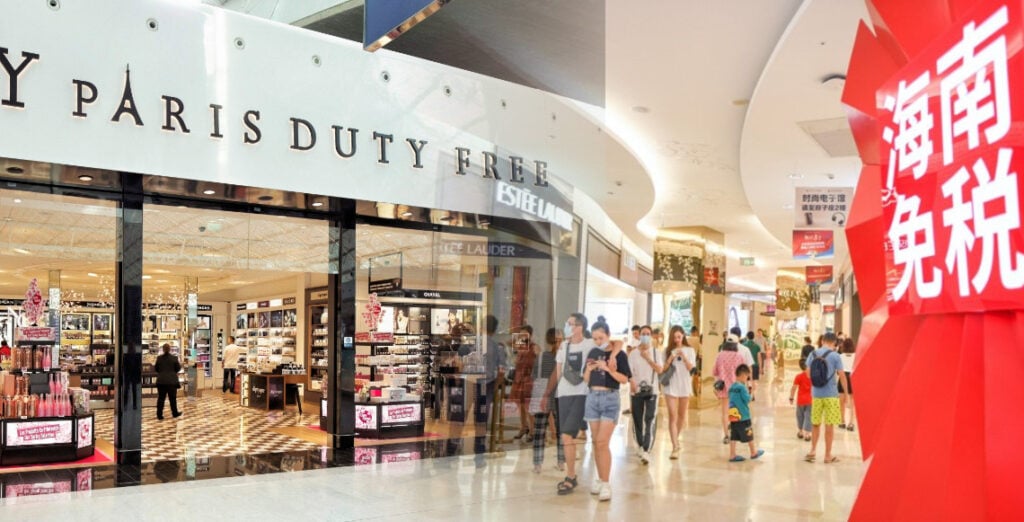
The pandemic is officially over (the WHO recently said so) and domestic retailers in key Asian markets are seeing an exodus of the customers who had driven sales in 2022 as physical stores reopened, and online for the past three years. Domestic retail also benefited from nations allowing duty-free purchases for citizens who did not exit the country as a way to prop up retail sales. Online platforms rapidly expanded their offerings to take advantage of the forced closures of physical stores. No one has gained more from this than China’s Hainan Island, which has turned into a duty free paradise for Chinese consumers who were unable to shop abroad. It is now set to become a regional duty-free Mecca, attracting both domestic and foreign shoppers. <h3><b>On The Road Again</b></h3> The resumption of international travel, aided by airlines adding more flights and nations doing away with covid-related travel restrictions, has seen a steady flow of shoppers purchasing overseas again. In particular those all-important luxury goods shoppers. South Korea, a smaller but key market for luxury goods, is experiencing what might be a short term rush to shop abroad after years of travel restrictions. South Korean luxury fashion shopping platforms that enjoyed explosive growth during the pandemic are seeing a sharp decline in the number of users as more consumers make duty-free purchases on their overseas trips. According to the Korea Duty Free Shops Association, 1.19 million Korean consumers made duty-free purchases in January this year, which is nearly double that of 600,000 in January last year. Sales from the consumers also jumped to $152.7 million from $64.5 million during the same period. <h3><b>No Place Like Home</b></h3> Chinese efforts to establish domestic duty-free retail has so far proved successful. About 62% of luxury spending by Chinese consumers took place inside its borders in April, widening from 41% in the same month in 2019, according to Bloomberg. After 2025, Hainan will operate outside of China Customs’ jurisdiction. Customs duties will apply to items entering mainland China from Hainan, while products moving in the opposite direction will count as exports, according to an announcement during the Bo’ao Forum for Asia. The move is seen as a serious threat to Hong Kong’s role as Asia’s top duty-free destination. After 2025, duty-free retail will no longer be confined to the 12 existing malls owned by travel retail giants such as China Duty Free. Instead, the entire island will be duty free. The development is expected to considerably increase the scale of Hainan’s duty-free retail industry. China's reopening is expected to lift luxury goods sales this year and account for 60% of spending growth by 2030, according to Morgan Stanley research. <h3><b>Brands Prioritize China</b></h3> Part of the reluctance to travel is likely due to astronomical airfares, which offset any savings on duty. Another part is the development of retail in general in China, which in key cities now rivals retail in leading foreign destinations. No longer do you need to go abroad to access the latest designs. In fact, a growing number of luxury brands are now ‘China first’, launching new collections in China before rolling them out to other key markets. In addition, luxury brands are ramping up the level of personalized service that they offer Chinese consumers, making it more attractive for them to shop at home. LVMH, the world’s top luxury conglomerate, is shifting resources out of Hong Kong and focusing more investment in mainland cities including Shanghai and Shenzhen, Bloomberg reported. Air ticket prices from China to Europe are up to 80% more expensive than pre-pandemic, according to travel data firm ForwardKeys, and the number of travelers over the May Golden Week holiday period was 64% lower than in 2019. <h3><b>Price vs. Privilege</b></h3> With travel only having just started to open up again, those shopping in Europe tend to be the ultra wealthy. The big volume of luxury goods and affordable luxury is still being purchased domestically. This is likely a trend that China wants to cultivate. The needs to grow its economy and repatriating retail could make a solid contribution to growth. Still, there is a 25% to 45% price gap between fashion and leather goods in mainland China and Europe, according to Alibaba's Alizila news service. Thus China will need to narrow that gap if it wants to keep consumers shopping at home when airfares become more affordable. While the ultra rich were quick to travel again, early indications show they continued to purchase luxury goods in China, probably to maintain their VIP status at stores, said Alizila. <h3><b>Luxury Online</b></h3> Both China and South Korea have well developed online platforms for luxury goods. According to Mobile Index, the number of South Korea’s duty-free app users increased by an average of up to 90 percent recently compared with the second half of last year. The number of Shilla Duty Free app users, for example, rose to 83,663 in January, up from 54,474 in October last year. “The retail industry, including department stores, are making swift moves to online channels, which is expected to intensify online competition in the luxury market,” said an unnamed industry official. In China, sales of luxury products online have boomed, with 31% growth in transactions in 2022 and comprising 40% of all sales of luxury products, according to Yaok Institute, a high-end lifestyle research organization. Younger consumers, who are increasingly the biggest demographic for luxury goods, are very comfortable purchasing even high-end products from reputable online platforms. McKinsey & Co point out that Chinese consumers are truly omnichannel with more than 70% shopping online. Shoppers could increasingly opt for the convenience of shopping online, especially for smaller ticket luxury goods. While footfall in physical stores will likely pick up, Alibaba’s Cano cautions that luxury companies should provide compelling in-store experiences to keep Chinese consumers engaged. If customers can’t find what they want in the color or size they desire, they should be able to buy it online quickly. Most agree that for those big ticket items, consumers are expected to wait till airfares drop and then purchase them overseas. However the big, long term trend sees both the brands and Chinese governments working to make it much more attractive for Chinese consumers to shop at home.