Why Personal Connection is Key to Building Resilient Supply Chains
A US Cotton Trust Protocol certified supplier. Learn more
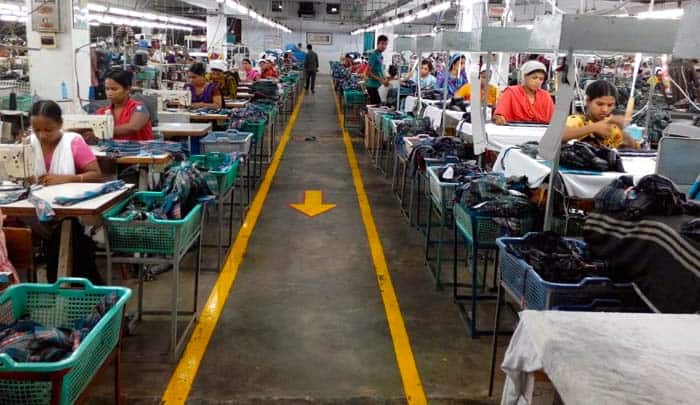
When M. Noorul Quader founded Desh Garments in 1977 he not only built his garment manufacturing and export business, he started an entire industry.
That industry has become the nation’s leading export sector – accounting for about 80% of export earnings – and provides jobs for over 2.4 million women.
Desh Garments Ltd, and the Bangladesh apparel industry as a whole, have now become global leaders in more transparent and green manufacturing.
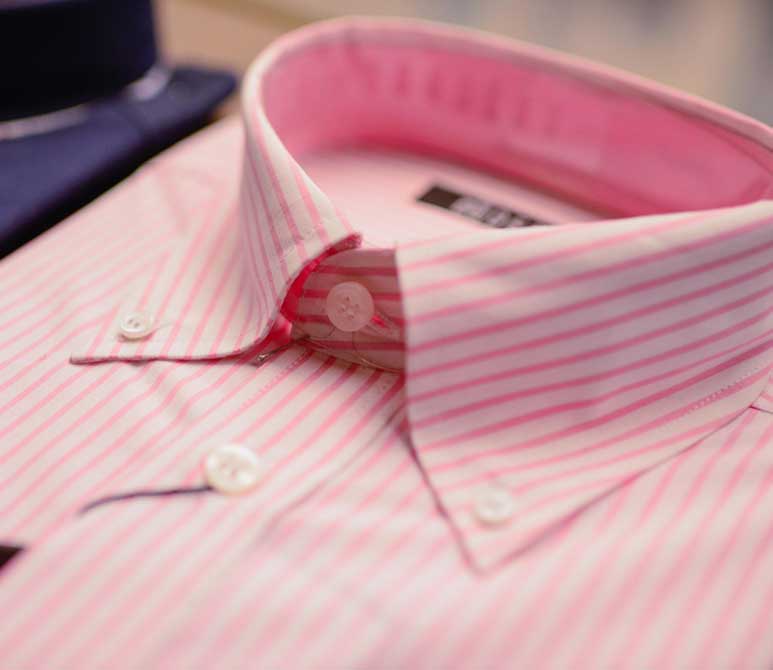
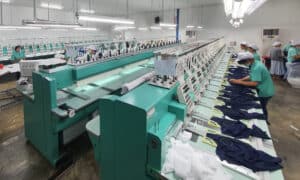
Desh Garments is a specialist in woven shirts
Vidiya Khan, Deputy Managing Director
Personal Communication Counts
In a country with an estimated 5,000 garment manufacturers it’s not easy to stand out from the crowd. In addition to its high level of manufacturing excellence and strong commitment to transparency and sustainability, Desh distinguishes itself through its understanding of the vital role that hands on leadership can play in understanding and meeting customer needs.
“Communication is a huge factor. I’m always available, very hands on. Hierarchies are always present in any business, and they are here too. But I’m very accessible. Sometimes buyers want the personal touch, they want to know whether the owner truly has the entire business within their grasp. And I do have this,” said Vidiya Amrit Khan, Deputy Managing Director and daughter of the company’s founder.
Ms. Khan is one of the few women who run a major garment company in Bangladesh. In addition to herself at the helm, she also has appointed other women to senior leadership roles. “You could say that we have a ‘women empowerment’ factor here at Desh,” she said.
"We have women in senior leadership roles. You coud say we have a 'women empowerment' factor at Desh."
A Legacy of Innovation
Desh’s role in founding Bangladesh’s garment industry extends beyond setting up the first factory.
Mr. Quader was also the innovator of the Back-to-Back Letter of Credit Banking System and the Bonded Warehouse System.
Desh was also the first Public Limited Company in the garment sector and is listed and traded on the Dhaka Stock Exchange.
Strategic Location Means Fewer Delays
Desh’s factory is located in the Heavy Industrial Area of Chittagong, placing it conveniently near the port, allowing goods to avoid the intense traffic delays that often plague other factories who are located in Dhaka.
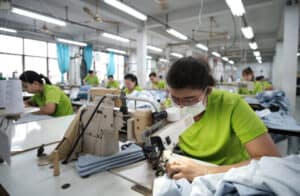
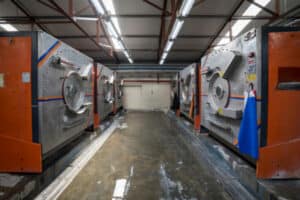
The company has a capacity of 300k pcs/month and 3.6 mn pcs/year and specializes in men’s and boys’ woven dress and casual shirts. Desh also makes women’s and girls’ woven blouses and loungewear, as well as uniforms and protective gear. The factory is set in a single storied, 80,000 sq.ft. purpose built apparel manufacturing unit on nine acres in the Industrial Area. It has natural wastewater recycling ability and scenic landscaping, thus allowing an eco-friendly working environment not typically found in the manufacturing sector.
Desh Garments is strategically located near the Chittagong port
Why Transparency is a ‘Must-Do’ for Desh
Transparency has become a key focus for the apparel industry worldwide and here, too, Desh has taken a leadership role.
“We’re publicly listed, which means we have even more audits, thus we’re very transparent. Our records are easy to access. From a buyer point of view, transparency is very important, so the more transparent we are, the more compliant we are. That means a lot to our customers,” said Ms. Khan.
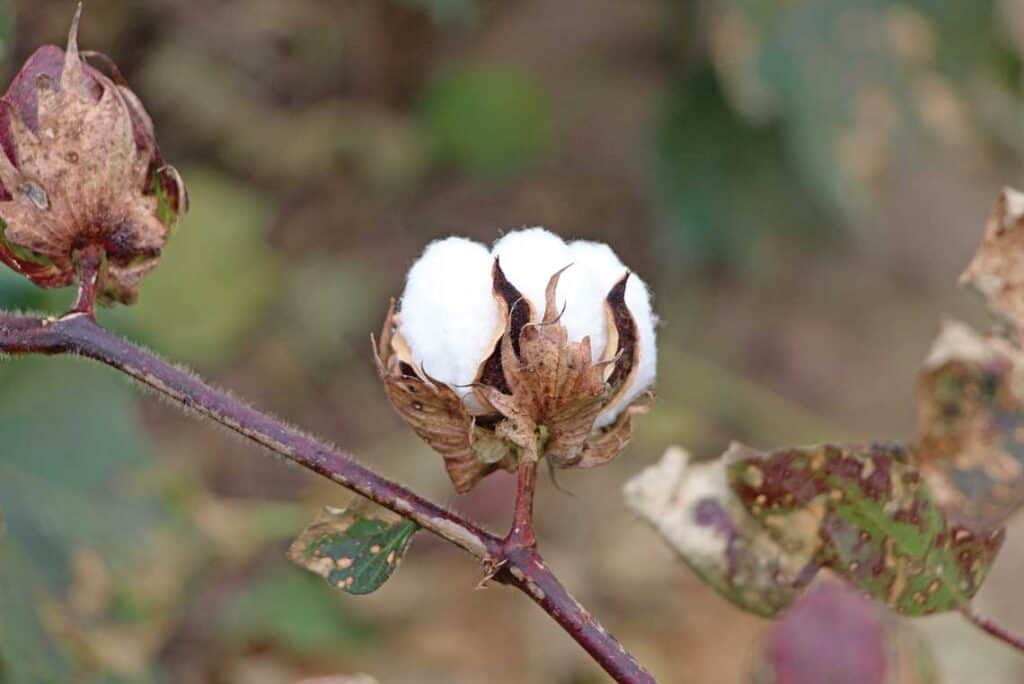
The foundation of a more transparent apparel supply chain starts with the raw materials. To achieve this, Desh uses U.S. cotton, which is grown using sustainable farming practices. It’s also backed by the U.S. Cotton Trust Protocol, which provides a high level of transparency.
“Using U.S. cotton and being part of the U.S. Cotton Trust Protocol helps us to have a strong image in the export market,” said Ms. Khan. “It plays a key role in our commitment to supporting greater sustainability and transparency.”
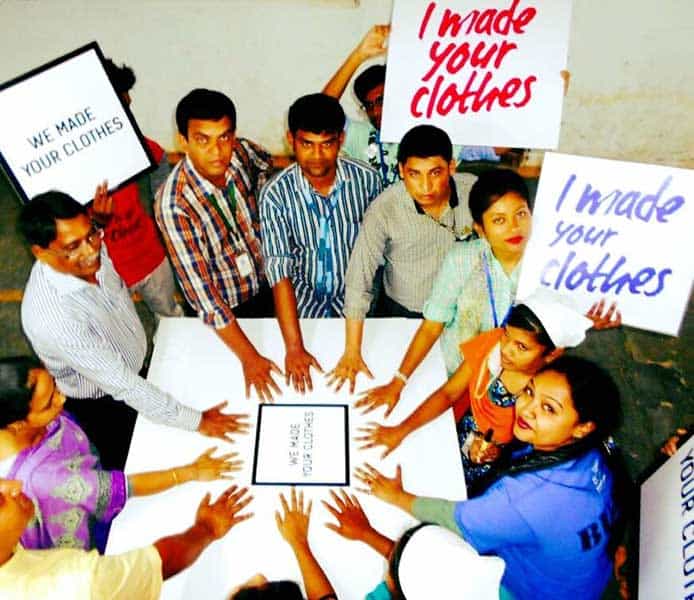
The company is also a strong advocate of workers welfare believing that every employee is entitled to work in a safe, healthy environment. “We are committed to making high quality products while adhering to factory workers’ rights and respect for the environment. We achieve this by being strictly committed ethically and legally to all the compliance international manufacturing standards and being internationally certified,” said Ms. Khan, who is currently on the board of the Bangladesh Employers’ Federation.
Automation is Necessary – but So are Workers
Like a growing number of factories, Desh is using technology to increase efficiency and productivity.
“The way I look at it is that we need to develop our workers’ skills so that they are able to operate automated machines. That will take time. In the meantime, Bangladesh is still very competitive on wages. In many cases, our workers can do tasks fast and more efficiently than automated machines.
“I am that person who could not totally get rid of every human being from my factory and totally depend on machines. Part of this is because these people need jobs. As entrepreneurs and as business leaders, it is also our social responsibility to generate work for the people who have been supporting our industry for the last four decades. That’s the ‘human factor’ for me,” said Ms. Khan.
Looking Ahead
“People come to us because of our goodwill. We promise to deliver and we deliver what we promise – good quality, sustainable and transparent apparel and a safe work environment. We do it and going forward we will continue to do this,” said Ms. Khan.
Family growers who are committed to working their fields sustainably and leaving them better for future generations.
A long history of innovative harvesting and ginning technologies resulting in higher-quality cotton.
One of the highest rates of adoption in the world for Precision Agriculture, which minimizes water and pesticide usage.
U.S. farmers operate under voluminous, stringent, and enforceable regulations.
A commitment to transparent partnership that is unmatched anywhere.
One of the most comprehensive systems for monitoring and measuring all the key metrics involved in sustainability.
U.S. Cotton Facts
2/3 of U.S. cotton land uses only rain water
U.S. cotton water use efficiency has improved by 82% over the past 35 years
Cotton is carbon footprint neutral, meaning the plants remove more greenhouse gasses than production produces.
Sustainability Goals
The U.S. cotton industry is building upon the strong environmental gains already achieved over the past 35 years. The aim is to help members meet their current needs while making the world a better place for future generations.
Specific goals include:
Reducing by 13 percent the amount of land needed to produce a pound of cotton fiber
Reducing soil loss by 50 percent, in balance with new soil formation
Increasing water use efficiency (more fiber per gallon) by 18 percent
Reducing greenhouse gas emissions by 39 percent
Increasing soil carbon in fields by 30 percent
Reducing energy to produce seed cotton and ginned lint by 15 percent
The Trust Protocol is aligned with existing sustainability programs including the U.N. Sustainable Development Goals. It brings quantifiable and verifiable goals and measurement to sustainable cotton production, and drives continuous improvement in six key sustainability metrics – land use, soil carbon, water management, soil loss, greenhouse gas emissions, and energy efficiency. The Trust Protocol is designed from the ground up to address the unique regulatory and larger farm growing environment in the United States.
How the Trust Protocol Works
Through a combination of a unique credit accounting system and the Permanent Bale Identification (PBI) system, the Trust Protocol helps ensure the commitments behind our cotton. Each of the Trust Protocol credits are backed by real sustainability data and third-party verified.
Measures and Verifies Sustainability Commitments
The Trust Protocol enables brands and retailers to better track the cotton entering their supply chain and to further quantify and report on their individual sustainability goals and objectives.
Continuous Improvement in the Fields
The 16,000 cotton farms in the United States have been committed to continuous improvement for decades. Over the past 35 years, U.S. cotton production has used 79% less water per bale and 54% less energy. We have reduced greenhouse gas emissions by 40%, and land use per bale by 49%. We need to continue to innovate and introduce new practices that will serve to further position U.S. cotton as one of the most sustainable cotton growing nations in the world.