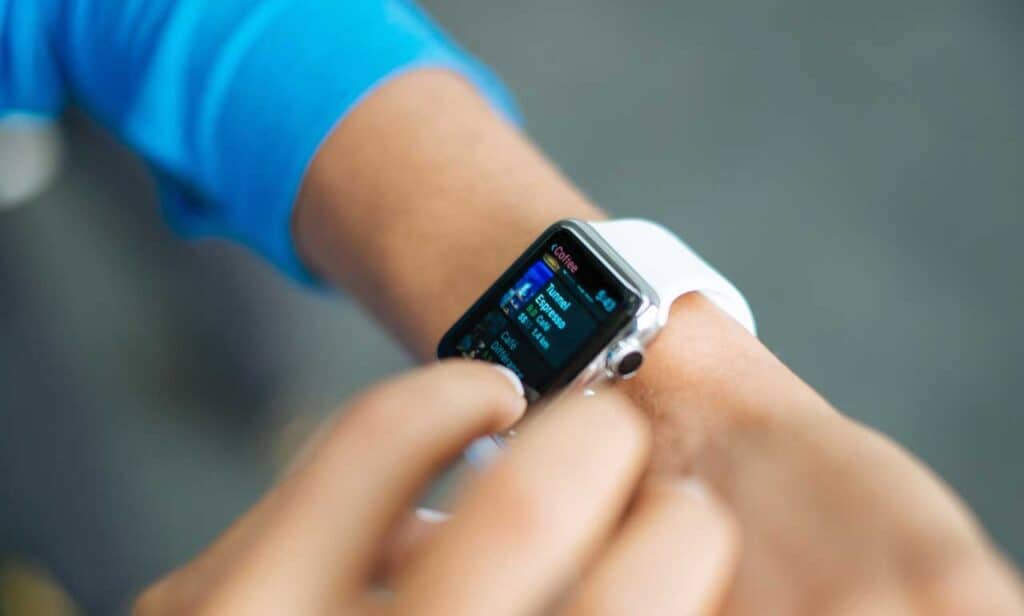
There was a time when wearable tech was heralded as being the next big thing. From exercise trackers to heart rate monitoring, from garments that power your phone to workout wear that boost performance - wearables were the way forward.Then suddenly the category hit a wall.While many people own wearables, about a third of them stopped using the device after six months, according to a survey from Endeavour Partners. Devices weren’t comfortable, people saw tracking exercise, calories - even vital signs - more as evidence of failure than as a measure of success.From Google glasses and Samsung Gear to the Nike Fuel Band, sales of most wearables have not lived up to their hype.More Practical ProductsWe’re now seeing a re-emergence of wearables, and one category is set to be the money maker. Not surprisingly, it’s health care - a category that across all products and services is on a strong upward trajectory.As a category, wearable tech is forecast to reach $54 billion by 2023,from $23 billion in 2018, according to GlobalData.Products With Big Growth PotentialTo succeed, wearables need to solve a problem that smartphones have not already addressed. They also need to be comfortable, convenient, easy-to-use, and accurate.Apple has jumped on this trend by developing the heart rate monitoring capabilities of the Apple Watch. It’s a smart move as the people worldwide become more health conscious. It also taps into the needs of ageing populations - the biggest consumer segment in developed markets, but also in China.There are also opportunities for apparel and textiles.New wearable technologies in the health sector focus on monitoring and tracking health data - from blood pressure and heart rate to blood oxygen and insulin levels, and even brain injury detection. Those with the most promise track chronic conditions such as diabetes, Alzheimer’s and dementia, neuropathic pain, depression, and macular degeneration.The more vital a functions wearables can track, the more likely they are to succeed at both the consumer and institutional level.The ability to deliver medication via patches inserted into the waistbands of undergarments is a huge step - especially for people who might forget to take their medications or who might not be able to administer it themselves.There’s also the strong potential that the technology could lower hospital costs by as much as 16% in the next 5 years. Physicians, hospitals and insurance companies see the potential of wearables for managing chronic conditions, improving patient fitness and health, and reducing healthcare costs.Clinical wearables (those prescribed by a physician) are set to outpace sales of consumer devices.Remote patient monitoring is a future tech concept that could become mainstream in the next 25 years, bringing billions of dollars in savings to the government and private healthcare systems.According a survey from Lux Research, 48% of people surveyed said they would use a wearable device or garment if provided by their doctor.It’s About AccuracyIn the healthcare sector, accuracy is more than a nice-to-have feature. The usefulness of the wearable comes down to what it can do - and how accurately and reliably it can do it.The Apple Watch 4 has received US Food and Drug Administration (FDA) clearance for three heart monitoring capabilities: low heart rate, heart rhythm detection, and a personal electrocardiogram (ECG) monitor.Currently, only the Omron HeartGuide has both FDA (in the US) and CE (in the EU) approval. This smartwatch has an inflatable blood pressure monitor embedded inside the cuff, which expands and tightens to take a blood pressure reading just like a traditional oscillometric machine.Wearables tend to be expensive and so doctor prescribed devices or garments are likely to be paid for by insurance.Software integration is one of the main hurdles for wearables. A successful device needs an operating system that consumers can understand - and that works well.There’s also the matter of durability - especially for something that will be worn consistently for a prolonged period of time.With an ageing population, a growing awareness of health amongst consumers of all ages and the desire for greater convenience, the opportunities for companies who can develop the right wearables are huge.