
The Phiphatanakit Textile Co.
In an era when quality is becoming the consumer’s top priority, the companies who can deliver superior products are likely to win the market.
Unlike other criteria, ‘quality’ is not something that can be achieved overnight. Nor can it be purchased off the shelf. Truly high quality products come from manufacturers who have decades of experience crafting products where quality is a ‘must’ not a ‘maybe’.
“Our market niche is premium products, specifically 100% cotton yarn and woven fabric. My father started this company 70 years ago and it’s remained a family business dedicated to continual improvement in order to maintain our quality standards,” said Veerachai Pinyawat, Managing Director of The Phiphatanakit Textile.
Thai manufacturers can not compete on price so we must compete on quality. We must sell on trust and value.
Veerachai Pinyawat, Managing Director
The Phiphatanakit Textile was Thailand’s first spinning mill, established in 1947. During the past seven decades the company has remained true to its core products – premium cotton yarn and fabric – choosing to enhance its products rather than diversify into other categories. This has proven to be a wise strategy. It’s enabled Phiphatanakit Textile to weather economic cycles and remain a leader in the premium textile sector.
“Thai manufacturers can not compete on price so we must compete on quality. We must sell on trust and value. So our company focuses on those customers who are looking to establish long term relationships where these attributes matter most,” said Mr. Veerachai.
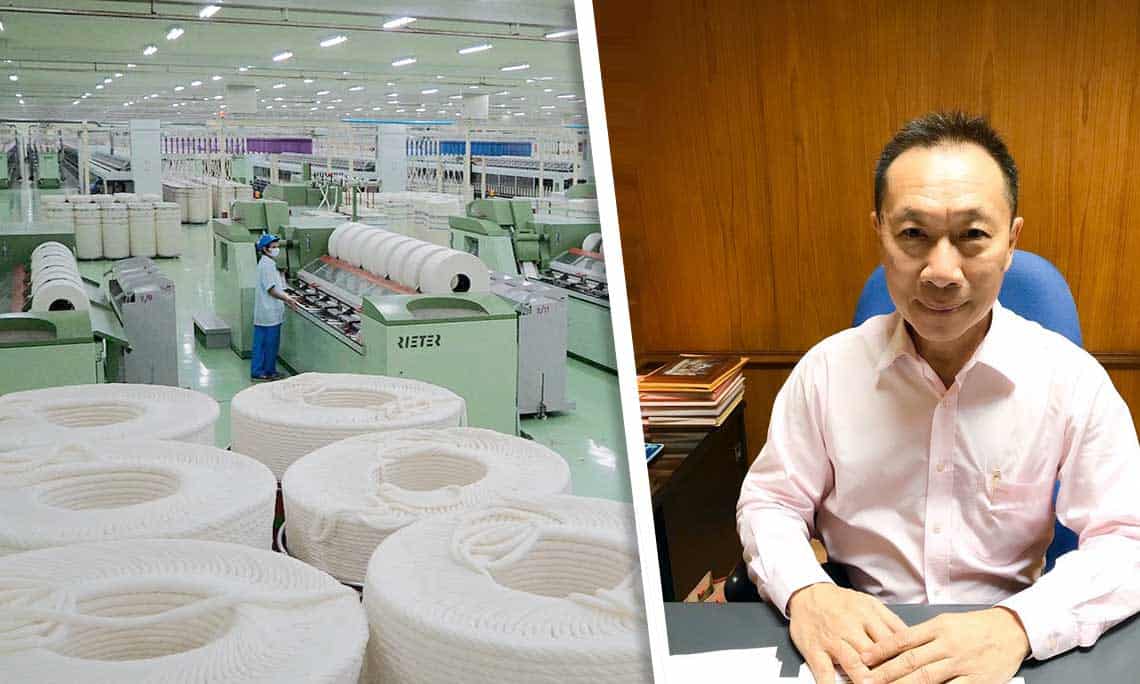
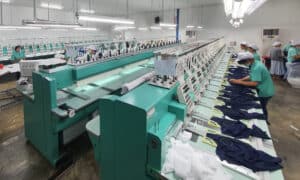
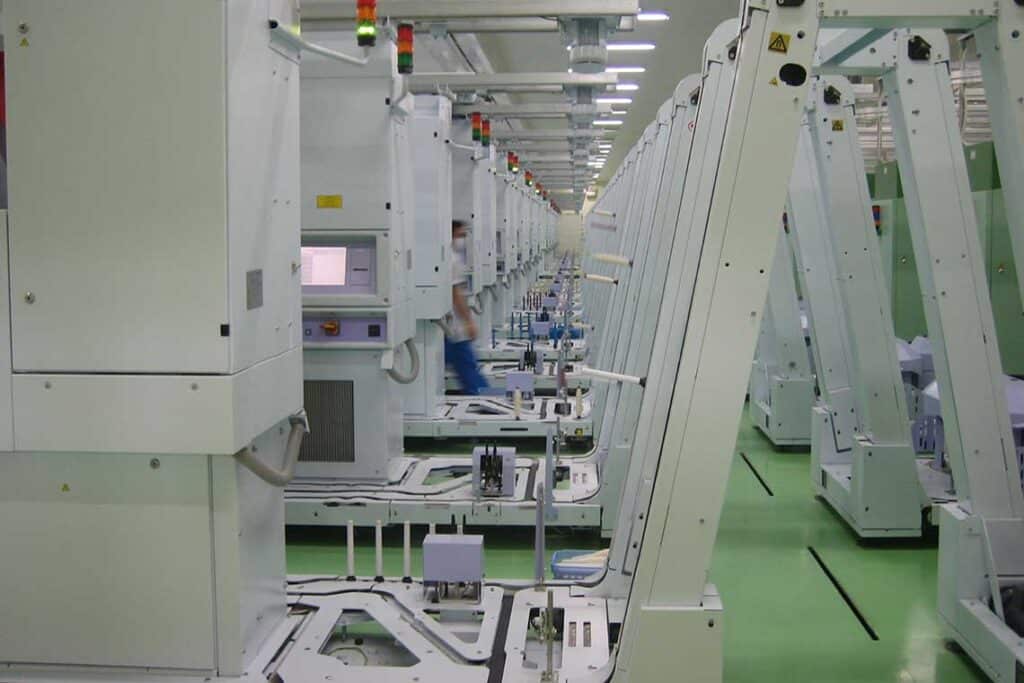
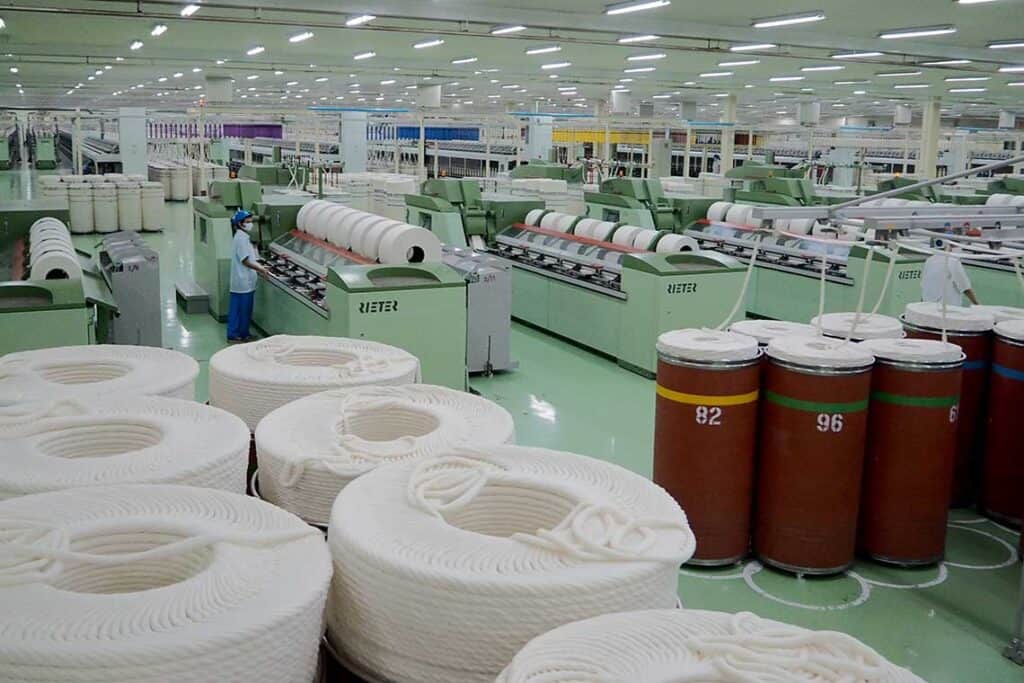
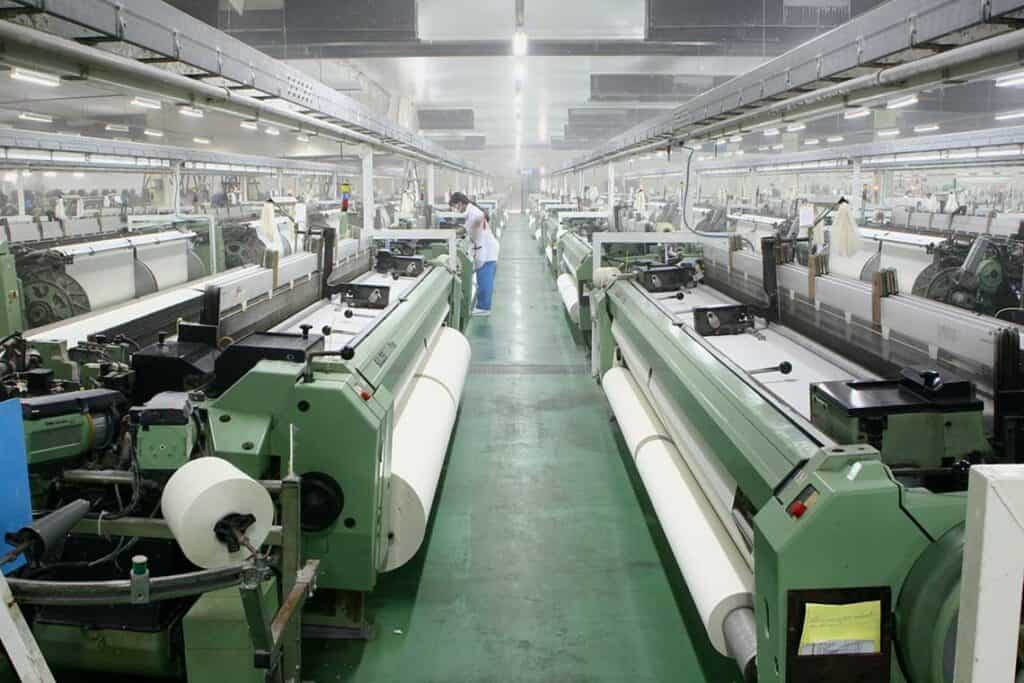
Part of achieving continued high levels of quality is through investing in state-of-the-art equipment. Phiphatanakit Textile uses the best German and Swiss machines that have helped them to automate and digitize their production.
However machines are no better than the people who operate them.
Investing in the Best People
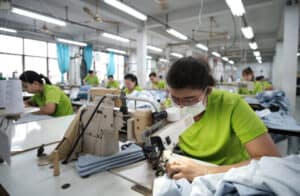
“These machines are complex and you need a higher level of expertise to operate them properly. Training is key – you must invest in training your staff, not just in buying the machine. It’s an ongoing process,” he explained.
Phiphatanakit Textile sends some of its engineers to the European headquarters of the major machinery manufacturers for training. However it also enlists these machinery suppliers to hold training programs on-site in Thailand so that a larger group of Phiphatanakit Textile’s staff can get advanced training.
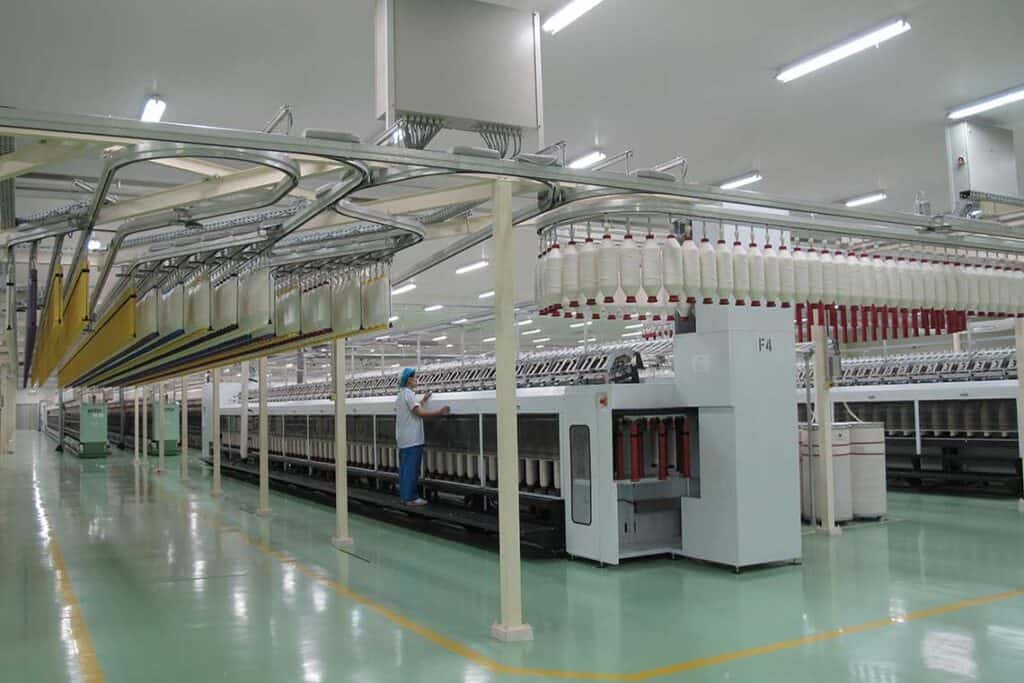
“It takes years of experience to become an expert. We make a great effort to develop our staff in-house, rather than hiring from the outside. We train them to thoroughly understand the entire production process and have a very deep knowledge of our company and our customers. This way they can do things right – and do them on time,” said Mr. Veerachai. “We cannot succeed unless we have the very best people working with us.”
Quality goes beyond the equipment. It begins with the choice of raw materials.
Why Premium Materials are Worth the Price
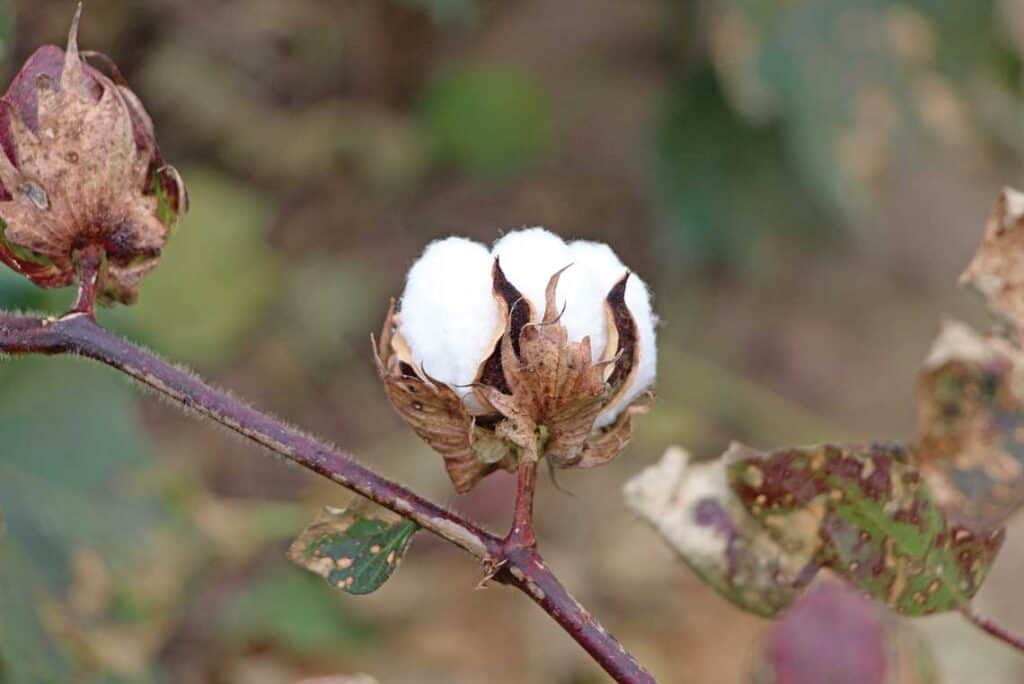
“We use only U.S. grown cotton. In fact, we possibly purchased the first bale of U.S. cotton that landed in Thailand at our factory 70 years ago. From day one we’ve relied on U.S. cotton,” said Mr. Veerachai.
“I can speak for the entire day about why U.S. cotton is better than other cotton. However I can sum it up by saying that it comes down to consistent quality. This is important because it supports the value proposition that we offer our customers, which is “trust” and “consistent quality”. Consistency is key. Customers want this,” he said.
I can speak for the entire day about why U.S. cotton is better than other cotton. It comes down to consistent quality.
Veerachai Pinyawat
“Cotton must be the right quality in order to produce a premium yarn or fabric. With U.S. cotton there’s less risk of uncertainty since it is certified by the USDA (U.S. Department of Agriculture). When we purchase the cotton I can specify in the contract exactly what I need – quality parameters we want such as color, leaf, length, strength and many more – and I know that I will actually get that. It’s more systematic and U.S. cotton’s EFS program works well with our own in-house system,” he said.
Ultimately, by paying more for better quality raw materials Phiphatanakit Textile is able to save time and money during their production process.
“We can put U.S. cotton bales in our blow room and achieve seamless and consistent quality all year round. This is critical because when you have poor uniformity you lose a lot of fiber. You also can have a lot of problems downstream during the spinning and weaving process, as well as imperfection when you do the dyeing and finishing,” said Mr. Veerachai.
We pay a premium for U.S. cotton but it’s worth it because of the benefits we gain downstream. Trying to save money on raw materials can actually end up being very expensive – in terms of production problems and disappointing customers, he explained.
Looking Towards a Truly Sustainable Future
Phiphatanakit Textile has made a serious investment in green energy. They are implementing solar energy to achieve higher efficiency and better manage costs. In addition, the company has invested in high precision textile machinery from Germany and Switzerland that save energy, decrease waste by reducing machine errors, and have a higher rate of efficiency. While those machines are expensive, the company realizes a saving because they require less maintenance and parts last longer so fewer replacements are needed.
The company’s long-term vision includes specific programs to manage the inherent risks and volatility within the cotton market. Phiphatanakit Textile is working with financial institutions to manage risks and gain a competitive edge in the face of changing raw cotton prices.
As we embark on this new decade it is clear that Phiphatanakit Textile’s traditional values of trust and quality will enable it to continue on as an industry leader.
Learn More www.phiphatanakit.org
The COTTON USA Advantage
- Family growers who are committed to working their fields sustainably and leaving them better for future generations.
- A long history of innovative harvesting and ginning technologies resulting in higher-quality cotton.
- One of the highest rates of adoption in the world for Precision Agriculture, which minimizes water and pesticide usage.
- U.S. farmers operate under voluminous, stringent, and enforceable regulations.
- A commitment to transparent partnership that is unmatched anywhere.
- One of the most comprehensive systems for monitoring and measuring all the key metrics involved in sustainability.
U.S. Cotton Facts
- 2/3 of U.S. cotton land uses only rain water
- U.S. cotton water use efficiency has improved by 82% over the past 35 years
- Cotton is carbon footprint neutral, meaning the plants remove more greenhouse gasses than production produces.
Sustainability Goals
The U.S. cotton industry is building upon the strong environmental gains already achieved over the past 35 years. The aim is to help members meet their current needs while making the world a better place for future generations.
Specific goals include:
- Reducing by 13 percent the amount of land needed to produce a pound of cotton fiber
- Reducing soil loss by 50 percent, in balance with new soil formation
- Increasing water use efficiency (more fiber per gallon) by 18 percent
- Reducing greenhouse gas emissions by 39 percent
- Increasing soil carbon in fields by 30 percent
- Reducing energy to produce seed cotton and ginned lint by 15 percent

Learn More cottonusa.org