





SCS May 5
Transpacific capacity eases; Faster, more reliable last mile delivery; Materials prices see continued surge; Concerns over market slowdown

Share This Post

Demand remains stable in most markets, but there are signs that more retailers are becoming concerned about potentially slower sales.

LOGISTICS

AP Møller-Maersk has warned of growing economic risks, including potential stagflation and Chinese factory closures, even as it reported a record quarter where revenues rose 55 percent. 

  • Maersk downgraded its growth forecast in the shipping industry this year to a potential small fall based on a “sharp decline” in freight rates in the second half.

Shippers and carriers are facing extended vessel wait times at Ningbo, China as facilities at the world’s third busiest container port become congested with cargo diverted from Shanghai, according to UPS.

Congestion is easing at U.S. coastal ports while Shanghai remains under lockdown, per Flexport.

Some carriers added more blank sailing to the end of May and into June, including to the US East Coast, but are attributing them to growing delays and congestion instead of a response to falling demand, according to Freightos.

In Europe congestion is still a problem in several ports, causing re-routings and further delays, said Flexport.

Air Cargo operations out of China are still below normal but are expected to rise as soon as Covid-19 related restrictions expire, creating future capacity concerns, said UPS.

PODCAST

Making Last Mile Delivery Faster & More Reliable

How can businesses compete in the face of shortages of drivers, rising fuel costs and increased pressure to meet sustainability standards?

Bill Catania, founder  of OneRail.io, an advanced last mile delivery fulfillment platform.

In this podcast you’ll learn:

  • How platforms are helping shippers find ‘hidden capacity’.
  • How aggregated networks are making delivery more reliable.
  • A simple way to make delivery more sustainable.
  • What’s the next big thing in last-mile delivery.

🎧 Listen to the podcast

MATERIALS

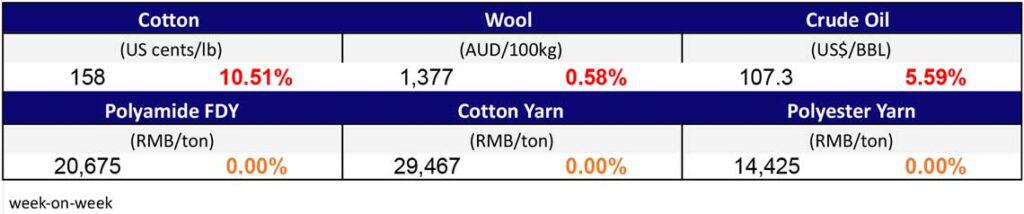
Materials Prices May 5,
  • A looming temporary ban on cotton exports from India is helping to drive up cotton prices.  Pressure on U.S. brands to ensure that garments are free of Xinjiang cotton is fuel to the fire.
  • Despite rising prices for natural fibers, and elevated oil prices, prices for synthetic fibers remain stable.

Subscribe To Our Newsletter

Get updates and learn from the best

More To Explore

Welcome Back!

Login to your account below

Retrieve your password

Please enter your username or email address to reset your password.

error: Content is protected
