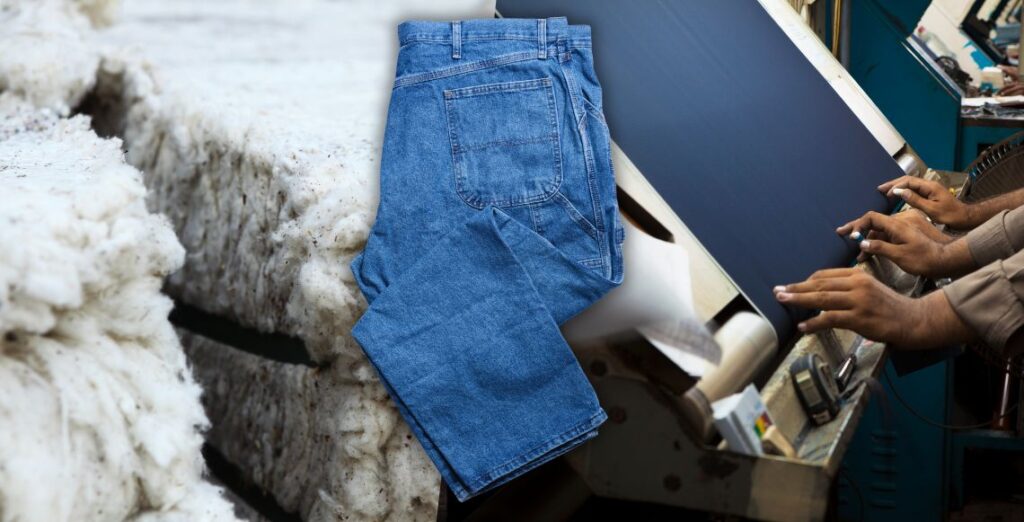
Most conversations about apparel sourcing focus on Vietnam, a fast growing alternative to China, Bangladesh for competitive prices and of course China (the pros and cons of either staying or leaving). Few brands talk about Pakistan, however those that do are very bullish on the nation. Yes, it has its challenges - but so do the other sourcing nations. However the upside, say brands that source there, more than justifies any inconveniences.“We’ve had an office in Pakistan since the early 2000’s and we’re quite happy there,” said the managing director of a large European retailer. “Pakistan has a domestic cotton supply and a lot of creativity around denim, which is what makes it attractive for me.”Most sourcing executives agree that cotton and its strength in denim are Pakistan’s core competitive advantages. Download the report, including the full table featuring Pakistan on the Sourcing Spectrum. Download the Report Textiles are EssentialPakistan’s textile industry is the biggest sub-sector of Large Scale Manufacturing (LSM) and the most important manufacturing sector of Pakistan with the largest production chain, according to the Ministry of Commerce. About half of the nation’s exports are textiles and about 25 percent of its workforce is employed in the textile industry, per the Pakistan Textile Exporters Association (PTEA).There is also the goal of establishing 40 export processing zones.In other words, the textile industry is the mainstay of Pakistan’s economy - creating millions of jobs, driving exports and generating foreign currency.That All-Important Domestic Supply ChainPakistan boasts a vertical supply chain, something most of its competitors lack. Its value chain goes from cotton production through to finished garments.Pakistan has adequate land, labor and a big domestic supply of raw materials. The nation is the world’s fifth largest cotton producer with production for the 2023/24 season expected to reach 6.8 million bales, according to USDA data. Committed to CompliancePakistan has some of the most advanced labor laws that not only protect women and children, but that promote non-discrimination and address forced labor.Maternity benefits are mandatory (art. 37 (e)) and the State must ‘promote just and humane conditions of work,’ according to Article 37 of the nation’s Social Insurance law.Other conventions under international and Pakistani law include freedom of association and collective bargaining; a living wage; reasonable working hours and safe working conditions.Infrastructure Is Getting AttentionA weak link in Pakistan’s competitiveness is its lack of infrastructure development. Prior to the pandemic, the nation joined China’s Belt & Road Initiative, which promised to invest $62 billion to improve infrastructure. The China-Pakistan Economic Corridor (CPEC) has emerged as a game-changer for Pakistan. One of the pivotal achievements of CPEC is the development of a robust transportation network, including projects like the Havelian-Thakot highway and the Sukkur-Multan section of the Peshawar-Karachi Motorway. These initiatives have drastically reduced travel times.The Karot Hydropower Project is the first CPEC hydropower investment project, promising cleaner and cheaper electricity for the region. However, China’s enthusiasm towards Pakistan has cooled this year. "China's approach to Belt and Road investments is guided by prudence and long-term sustainability. Concerns like political instability in partner countries like Pakistan necessitate greater caution, especially regarding the safety of Chinese nationals," Andy Mok, a senior research fellow at the Center for China and Globalization, told Nikkei Asia.Security and Economic RisksThe biggest challenge that Pakistan faces now is political instability and heightened terrorism.The nation is planning to hold national elections at the end of January 2024. However one of the biggest issues in attracting more investment from China’s BRI is that China increasingly questions its return on investment. A shortage of foreign currency has put Pakistan far behind on its payments to international lenders. The nation has $1.2 billion in overdue payments to Chinese power producers alone.Pakistan’s debt-to-GDP ratio stood at approximately 75% in 2022, with external debt reaching $125.7 billion in March 2023, per International Monetary Fund (IMF) data. A debt-to-GDP ratio exceeding 60% has a high default risk as well as considerable risk to sustained economic growth when debt passes this threshold, per the IMF.However, because Pakistan has a vertical domestic supply chain, it can purchase most of the cotton, yarn and fabric it needs in local currency thus avoiding the need for foreign currency.Opportunities for BrandsDespite its current challenges, Pakistan is a rich resource for cotton garments. It’s well known for its creativity in denim and has some of the world’s best laundries.The nation’s mills can supply most of garment manufacturers’ fabric and yarn requirements, which saves time and helps it workaround the lack of foreign currency reserves. The EU recently renewed Pakistan’s GSP+ status, giving most apparel duty-free access to the region. Further, the Pakistan rupee is down 23% against the dollar, a competitive advantage for exports.