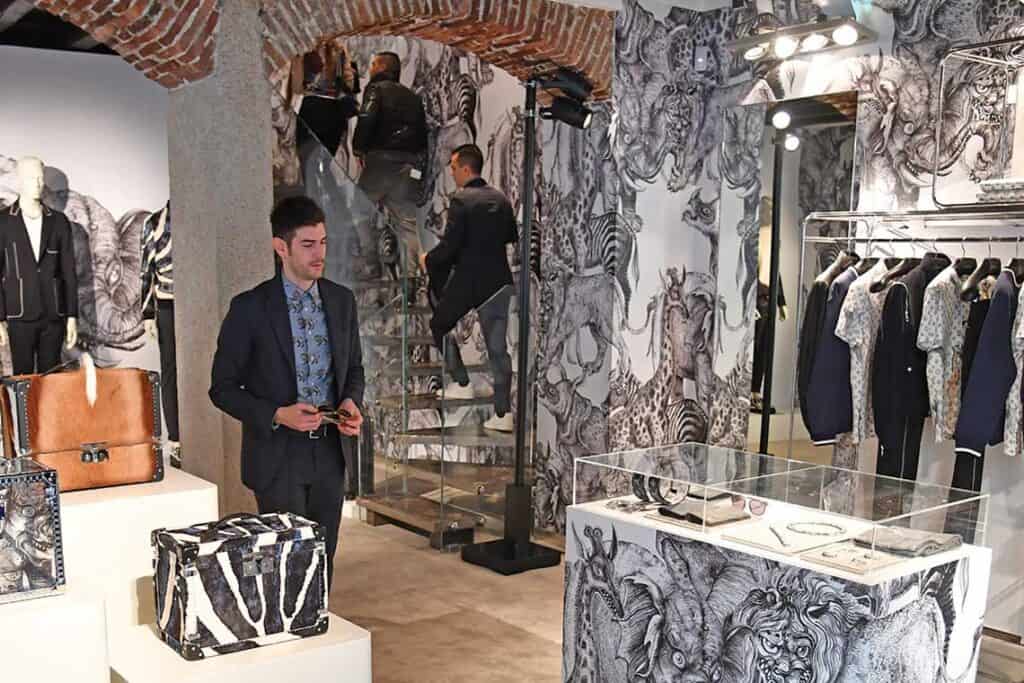
Botanist Charles Darwin suggested that the species that survive are not the smartest or the strongest, it’s those who are the most adaptable. He could have been speaking about today’s retail industry. One ‘adaptation’ is that savvy retailers are literally chasing the consumer - finding out not only where the best markets are, but also when is the best time to reach consumers in those markets - and then being there - in the right place at the right time. The most adaptable being those who can move from location to location with speed and agility. Many of yesterday's flagships will be replaced by temporary stores as retailers seek flexibillity over grandeur. That’s leading more retailers to consider how to combine temporary locations alongside long term physical stores and e-commerce. <h3><strong>Finding Flexibility</strong></h3> Pop-ups are not a new concept, but the combination of massive market uncertainty combined with an equal abundance of vacant space - even in prime locations - has retailers at all levels of the market giving them more serious consideration. They are checking the box on many fronts: they’re flexible (no long term leases), mobile (go where the business is) and require less capital investment in fit out (set design versus long term fit out) and can scale up or down as needed. Signing long term, often expensive leases, are becoming part of a growing list of ‘things we used to do.’ While e-commerce untethers retailers from physical stores, consumers still want the experiential aspect of shopping. Across all key international markets, e-commerce accounts for about 11 to 20 percent of total retail sales. Over 80 percent of sales takes place elsewhere, mostly in brick-and-mortar stores. Still, retailers need to reduce fixed costs - and cutting back on the number of stores could be life changing - at least from a profit and loss perspective. What started out as holiday kiosks that opened during the holiday season, emerged into a way for brands to create unique, Instagrammable moments for customers, is now set to become a mainstream year-round retail format that is coming to Main Street. <h3><strong>The New Retail Model</strong></h3> The Warehouse Sale (USA) launched what could be a model for other retailers. It’s a pop-up shoe store - traveling retail road show - that literally tours the country setting up temporary retail outlets. They choose this format because “Pop-up stores allow you to cut out a lot of costs that traditional brick-and-mortar stores typically cannot. With no expensive year-around rent to pay, elaborate store fronts to maintain and update and no shipping costs, The Warehouse Sale is able to pass along an incredible value on brand name shoes to our customers,” said the company. <h3><strong>Turning a Store into an Event</strong></h3> Even before the pandemic hit, fashion retail needed an injection of new energy. “Because it’s temporary, it feels more like an event than it does a store,” said The Warehouse Sale in a statement. Pop-ups also let retailers leverage the ‘scarcity’ card. Since pop-ups are by nature temporary, it comes down to buy now or buy never. The model is being used by luxury brands, too. Sergio Rossi recently opened a pop-up shop in Milan. Previously Louis Vuitton opened pop-up shops near events like fashion week in Milan to position itself in the path of fashion-oriented foreign visitors. Digital brands have been leaders in using pop-ups to expand their connection with customers beyond their online presence, as well as to test the waters before opening physical stores. Indie D2C (direct to consumer) brands have done this, but so have eBay and Google. <h3><strong>Looking Ahead</strong></h3> From pop-ups to shop-in-shop, and including a range of creative variations on the temporary store concept, retail will be revamping its footprint. The good news is that this will not only slash overheads, but it will bring a more dynamic retail experience to consumers. Suddenly shopping could become exciting again.