







Japan RCEP
RCEP, the world's biggest trade pact, could become a realty by end of the year; shippers start to feel the after effects of the Suez snafu; Turkey's lire continues its free-fall; Myanmar shows faint signs of stemming local violence; and more

Share This Post

RCEP Moves One Significant Step Ahead

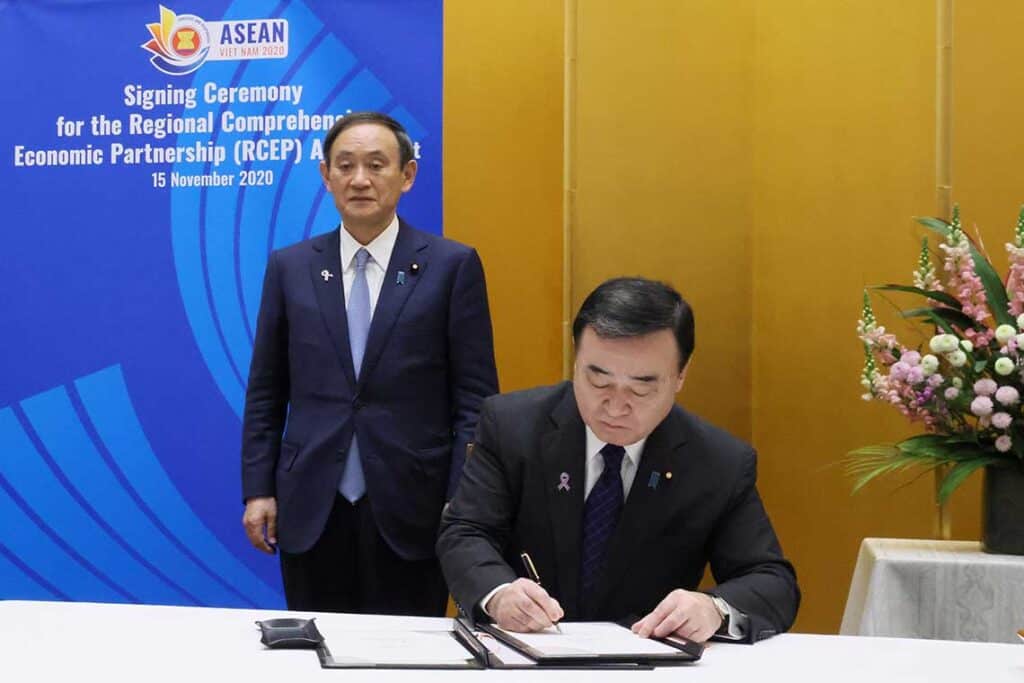
This week Japan officially ratified RCEP taking the mega trade pact that includes 30 percent of the world’s economy one step closer to reality – a reality that could come as early as this year.

China has already assumed a leadership role in the arrangement and will inevitably see its clout increase over the Asian economic order. 

The agreement includes the 10 member countries of the Association of Southeast Asian Nations as well as China, Japan, South Korea, Australia and New Zealand.

Although multinational trade agreements are nothing new, this one is surrounded by concerns of nations that are both part of the pact and those on the outside.

Notable trade shifts; Key concerns

READ MORE

The question we keep asking is “Are things getting better or are we just getting used to them?”

LOGISTICS

Freight Rates Weekly April 28,
  • Ports, carriers, forwarders and shippers continue to contend with the fallout from the Suez blockage, with delayed ships leading to additional cancelled Asia-Europe and Europe-US sailings announced for the coming weeks, according to Freightos.
  • Shifts in U.S. consumer spending to services on the back of the massive vaccine roll out offer a first sign that goods-driven demand for ocean freight will eventually ease.  But not very soon, as May is expected to be another extremely busy month on the transpacific and depleted inventories will mean elevated ocean volumes even after consumer demand eventually shifts back to services. 

PODCAST

Luca podcast

Under Armour’s Dynamic Multi-track Sourcing Strategy

In this episode  Luca Suriano, VP Sourcing for Apparel and Accessories at Under Armour talks about how he’s balancing the need for speed with the importance of having a more resilient supply chain.

Listen to the podcast

MATERIALS

Materials Price Movement

Lower oil prices are helping to keep synthetic fiber prices down.  However cotton prices jumped on increased demand.

MARKETS

The number of bankruptcies across Europe fell by almost 20 percent between July and September last year, compared with before the pandemic, thanks to emergency government support.  

  • Now that support is being rolled back, EU companies may struggle to stay solvent, especially those that have relied on emergency financial support the longest. This could cause debt to accumulate, increasing the risk of a pent-up wave of insolvencies, according to a new report from the European Systemic Risk Board (ESRB). 


Myanmar‘s junta has relaxed some restrictions on digital services, including banking and telecom.  However, despite an agreement during the ASEAN Summit in Jakarta to the “immediate cessation of violence” the death toll continued to rise in the face of ongoing fighting.

Turkey has had three big setback in April as inflation hit 17% this month, the nation’s poverty rate rose above 12% (World Bank data) and the collapse of Turkish crypto exchanges Thodex and Vebitcoin that have led to untold losses for Turks who invested in cryptocurrencies hoping to protect their savings from inflation.

Subscribe To Our Newsletter

Get updates and learn from the best

More To Explore

Welcome Back!

Login to your account below

Retrieve your password

Please enter your username or email address to reset your password.

error: Content is protected
