A US Cotton Trust Protocol certified supplier. Learn more
Pan Brothers is leading the apparel industry through its forward thinking sustainability and human rights initiatives.
Many companies talk about human rights and equality, but Pan Brothers is one company that is ‘walking the talk’ through specific programs that are part of its commitment to bettering the lives of people and improving the environment.
“The strong message from the US and the European countries is very clear: They want to see greater supply chain transparency, they want all of their suppliers to be sustainable, and they want to see nations honoring freedom of speech for their citizens. And it’s not just about their own countries, but also the rest of the world, including their sourcing partners. For brands, it’s not only about raising the standards in the countries where their products are being made, it’s also about the message that they are conveying to the consumers who purchase their products,” said Anne Patricia Sutanto, Vice President-Director at Pan Brothers, a $680 million Indonesia apparel manufacturer.
“I think COVID-19 really established a benchmark for everyone to really see that social compliance, especially during the pandemic, is essential,” she said, speaking from Pan Brothers’ Leeds Platinum Certified green headquarters.
"We are not a perfect country, but we have a passion for democracy. And we are committed to protecting our environment."
Anne Patricia Sutanto, Vice President-Director

“Indonesia and the Western nations share the same values when it comes to freedom of speech. We are not a perfect country, but we have a passion for democracy. And we are committed to protecting our environment,” she said.
“If you look at all of the regulations that Indonesia has, we are even more advanced than some of the developed nations that are in the same sectors as us. I feel that Indonesia has been under rated in the supply chain because people often overlook the many positive things that the country is doing,” she added, pointing to Indonesia’s high level of worker protection and environmental regulations.

Sustainability Has Translated into Resiliency
While most people see sustainability as simply about protecting the environment, Ms. Sutanto sees it as being part of a larger picture.
“The companies that had a bigger commitment to sustainability have proven to overall have more resilient businesses, even during the pandemic. They have longer term goals and that has helped them to survive in the midst of a crisis as well as provide a solid foundation on which to build their future business,” she said.
She sees Indonesia as playing a key role in driving forward the goals of the Paris 2050 project through its commitment to sustainable apparel production.
To support their commitment to producing high quality, sustainable garments, Pan Brothers uses fabrics made with U.S. cotton.
“When we use fabrics made with U.S. cotton customers can see that the quality is better. They also feel confident that these garments are sustainable, that they’re traceable. And when you put them into the consumer market, the consumer will see them as high quality and sustainable, which is a good reflection on the brand. Having the U.S. Cotton Trust Protocol certificate shows that the garment really is sustainable. It provides proof to the brands and to the consumer,” said Ms. Sutanto.
This is becoming increasingly important, especially for big brands because there’s a lot of pressure on them to meet higher and higher levels of sustainability. And, to be more accountable for the claims they make. So it’s not just about a sustainable message, it needs to be traceable too.

Delivering Added Value to Brand Partners
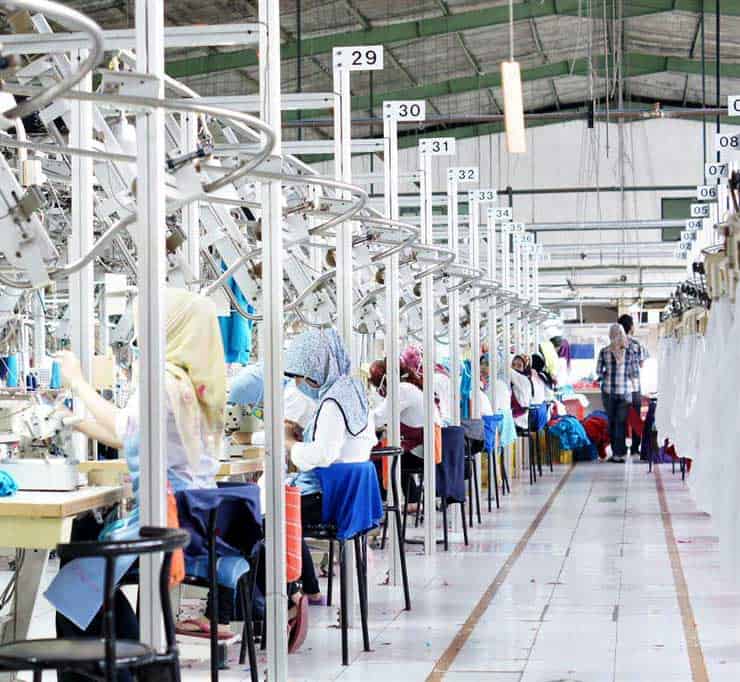
Most leading manufacturers can meet the standard social compliance and sustainability criteria set by major international brands. As a world class supplier, Pan Brothers realizes that it needs to deliver more than this and does so through ongoing investment in technology and product development.
In 2020 Pan Brothers really embraced new technology to bridge the distance between designers and product developers and the factory since travel was no longer possible.
The demand for garments with performance properties remains very strong. A lot of the garments that Pan Brothers produces are for activewear and performance sports so they are utilizing a lot of the value-added technology that Cotton Council International has introduced, including water repellency from Storm denim technology and antimicrobial or stain resistant finishes.

Industry 4.0 and Beyond
One of the biggest challenges for many manufacturers is adopting new technology. Pan Brothers is embracing this and using technology to raise both its manufacturing capabilities and job opportunities for Indonesian workers.
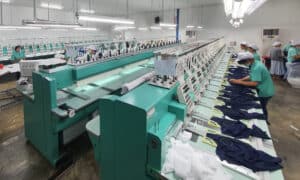
“We are a company that really pushes forward on industry 4.0 and uses automation to help less skilled workers be more productive, as well as assist our skilled workers in doing more complicated tasks,” said Ms. Sutanto.
“As early as 2010 we recognized that digitization was the future for manufacturing. Over the years we’ve been integrating this into our factories. Each factory is continuing to be upgraded,” she added.
Pan Brothers has a strong commitment to developing career opportunities for Indonesian workers and has developed a very progressive approach to achieving this.
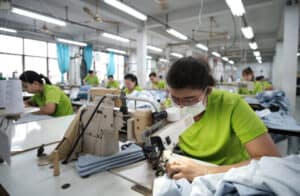
The company is taking women who traditionally have been machine operators and is trying to train them so that they can become supervisors. At the same time there haven’t been a lot of men who’ve taken up jobs as operators. So Pan Brothers is encouraging men to consider that as an option for entry level or low to mid skilled workers.
“We believe that when we employ our workers we want everyone to prosper. That’s why most of our CSR efforts focus on education, on the empowerment of people and on human development,” she added.
“We want to give everyone an opportunity – both women and men,” said Ms. Sutanto.
Learn More www.panbrotherstbk.com
The COTTON USA Advantage
- Family growers who are committed to working their fields sustainably and leaving them better for future generations.
- A long history of innovative harvesting and ginning technologies resulting in higher-quality cotton.
- One of the highest rates of adoption in the world for Precision Agriculture, which minimizes water and pesticide usage.
- U.S. farmers operate under voluminous, stringent, and enforceable regulations.
- A commitment to transparent partnership that is unmatched anywhere.
- One of the most comprehensive systems for monitoring and measuring all the key metrics involved in sustainability.
U.S. Cotton Facts
- 2/3 of U.S. cotton land uses only rain water
- U.S. cotton water use efficiency has improved by 82% over the past 35 years
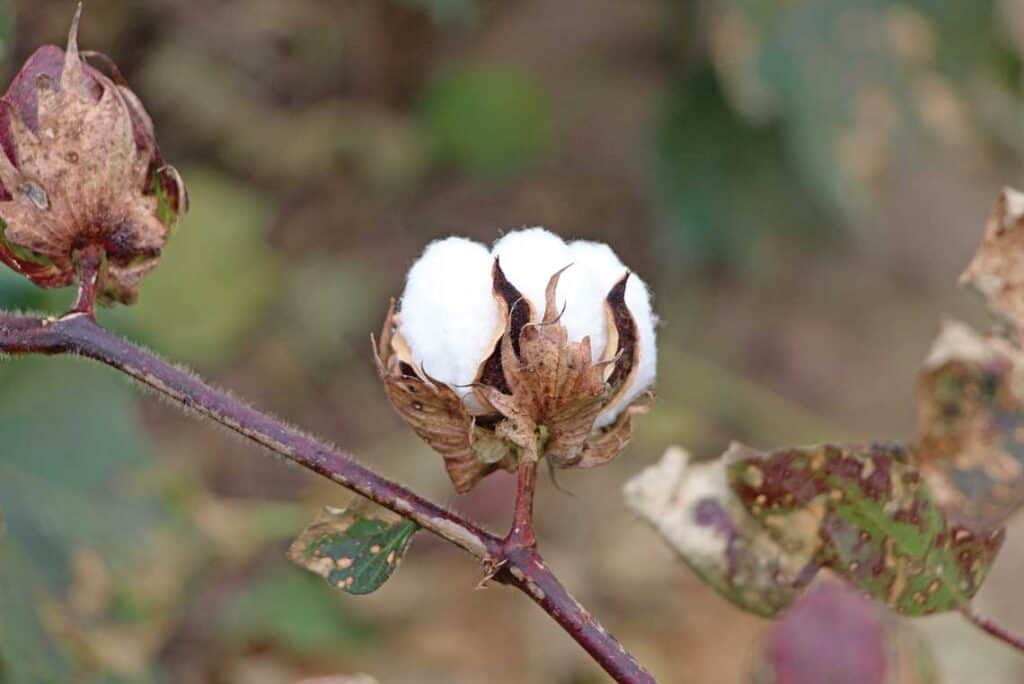
- Cotton is carbon footprint neutral, meaning the plants remove more greenhouse gasses than production produces.
Sustainability Goals
The U.S. cotton industry is building upon the strong environmental gains already achieved over the past 35 years. The aim is to help members meet their current needs while making the world a better place for future generations.
Specific goals include:
- Reducing by 13 percent the amount of land needed to produce a pound of cotton fiber
- Reducing soil loss by 50 percent, in balance with new soil formation
- Increasing water use efficiency (more fiber per gallon) by 18 percent
- Reducing greenhouse gas emissions by 39 percent
- Increasing soil carbon in fields by 30 percent
- Reducing energy to produce seed cotton and ginned lint by 15 percent

Learn More www.cotton.org
Certified Sustainable
The Trust Protocol is aligned with existing sustainability programs including the U.N. Sustainable Development Goals. It brings quantifiable and verifiable goals and measurement to sustainable cotton production, and drives continuous improvement in six key sustainability metrics – land use, soil carbon, water management, soil loss, greenhouse gas emissions, and energy efficiency. The Trust Protocol is designed from the ground up to address the unique regulatory and larger farm growing environment in the United States.
How the Trust Protocol Works
Through a combination of a unique credit accounting system and the Permanent Bale Identification (PBI) system, the Trust Protocol helps ensure the commitments behind our cotton. Each of the Trust Protocol credits are backed by real sustainability data and third-party verified.
Measures and Verifies Sustainability Commitments
The Trust Protocol enables brands and retailers to better track the cotton entering their supply chain and to further quantify and report on their individual sustainability goals and objectives.
Continuous Improvement in the Fields
The 16,000 cotton farms in the United States have been committed to continuous improvement for decades. Over the past 35 years, U.S. cotton production has used 79% less water per bale and 54% less energy. We have reduced greenhouse gas emissions by 40%, and land use per bale by 49%. We need to continue to innovate and introduce new practices that will serve to further position U.S. cotton as one of the most sustainable cotton growing nations in the world.

Learn More https://trustuscotton.org/about/