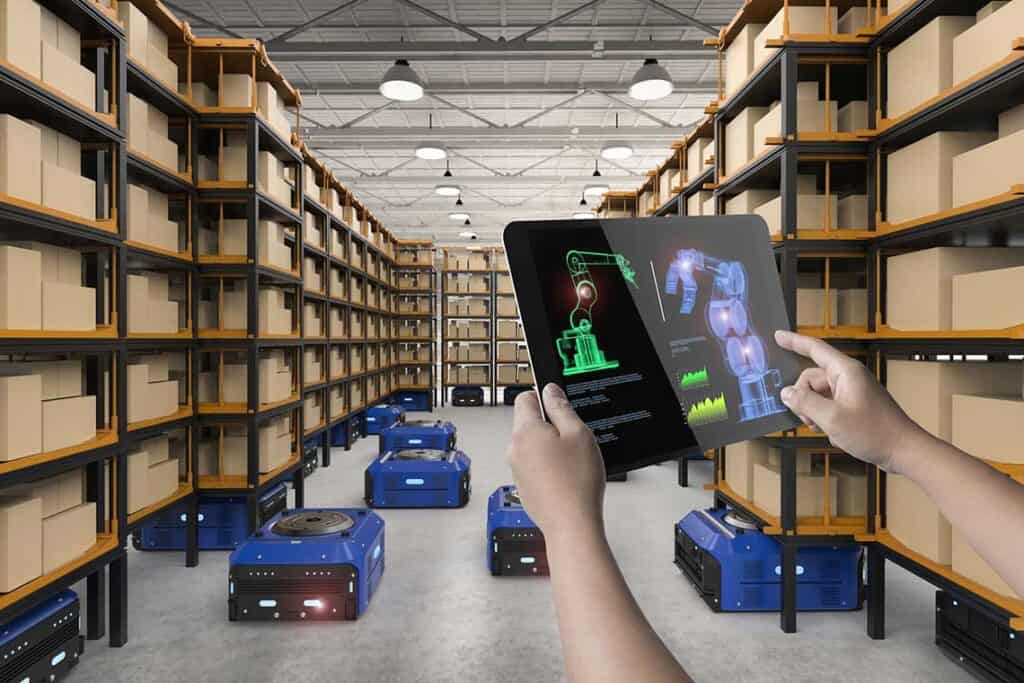
Despite the fast growth of e-commerce, warehouse automation has been slow to develop. Much of the opportunities here – in cost savings and speed - have yet to be realized.Whether it’s customer deliveries or keeping inventory moving – warehouse operations are an area where there’s lots of room to save costs and gain greater efficiency.In 2018, 80% of warehouses worldwide were still manually operated, according to a report from DHL. In the US$5 trillion global logistics industry, mechanized warehouses that use conveyors, sorters, goods-to-pickers, and so forth, account for only 15% of total warehouses, while only 5% of all warehouses are fully automated. Current SituationNo off-the-shelf solutions. Automation systems need to be customized to meet each company’s individual requirements. Order picking is the most labor-intensive part of warehouse operations. Automation becomes increasingly challenging as the number of SKUs goes up (LogisticsIQ)RFID remains the best-practice – for accuracy and speed. Goods-to-person (G2P) picking solutions are helping to reduce labor time and costs.Voice beginning to come as an aid to human efficiency (sort of a hybrid automation solution).Palletizing systems that automatically load pallets into and out of the warehouse are not new but are now seeing increasing use. Newer capabilities now include smarter systems that consider product weight, crushability and size, before palletizing the goods.Key DriverseCommerce relies on warehouse efficiency. Online orders require most logistical work per item than physical stores since each item needs to be individually picked and packaged. By comparision, physical stores receive bulk deliveries.Both ecommerce and bricks n’ mortar retailers are pushing to increase inventory visibility in order to reduce costs.State of RoboticsSmall scale picking solutions are less disruptive to existing warehouse management. They claim that their ability to save on labor costs comes from reducing costs related to worker over time, leave time and training. They are also more scalable, have a smaller footprint, and are less expensive.Fully automated warehouses or autonomous picking robots are either too slow or too costly to replace human labor. As costs come down, and speeds improve, things could change.Retailers including Walmart have been using drones to fly around their warehouses and check on inventory levels and also for misplaced items. Drones are also being used to bring items from the stockroom to the selling floor, saving sales assistants from having to retrieve the merchandise themselves.Amazon fulfilment centers are using more than 80,000 autonomous mobile robots (AMR), up from 30,000 AMR in 2015.Looking ahead, automation in warehouses is only expected to double between 2019 levels and 2025, despite growing developments in automation systems – and rising labor costs.Cross-border ecommerce accounts for about 15% of total e-commerce orders (DHL) and is expected to increase to 25% within the next three to five years. This will mean even more complex logistics to balance efficiencies between warehouse or distribution center location and delivery costs and time to the final consumer.