Vietnam’s Sourcing Is Splitting in Two—See the Full Comparison at a Glance
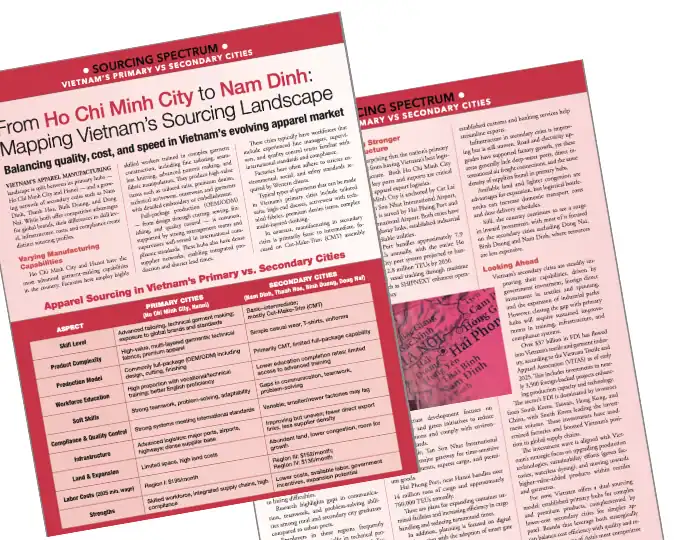
A sharp side-by-side comparison of Vietnam’s primary vs. secondary sourcing hubs—10 criteria that every sourcing leader needs to know.
Vietnam’s apparel manufacturing landscape is split between its primary hubs — Ho Chi Minh City and Hanoi — and a growing network of secondary cities such as Nam Dinh, Thanh Hoa, Binh Duong, and Dong Nai. While both offer competitive advantages for global brands, their differences in skill level, infrastructure, costs, and compliance create distinct sourcing profiles.
Get the Full Vietnam Comparison
Side-by-side table covering 10 key criteria (wages, QC, infrastructure, compliance, etc.)
Sharp overview—save hours of research, get clarity at a glance
Practical insights for sourcing executives
Varying Manufacturing Capabilities
Ho Chi Minh City and Hanoi have the most advanced garment-making capabilities in the country. Factories here employ highly skilled workers trained in complex garment construction, including fine tailoring, seamless knitting, advanced pattern making, and fabric manipulation.
Vietnam’s Primary vs. Secondary Cities: Apparel Sourcing Capabilities
Download the PDF file to see the Comparative Data Table.
Related articles

Indonesia Gains a Competitive Edge
As brands look to balance supply chain risk, more are revisiting Indonesia.
Laos: An Overlooked Sourcing Opportunity
New tariff advantages, specialist sewing capabilities and small-order flexibility are creating opportunities for buyers willing to look beyond Asia’s major

India Finds Its Sourcing Edge
Sourcing opportunities are shifting from competing on price to investing in product value, and textile depth and specialization