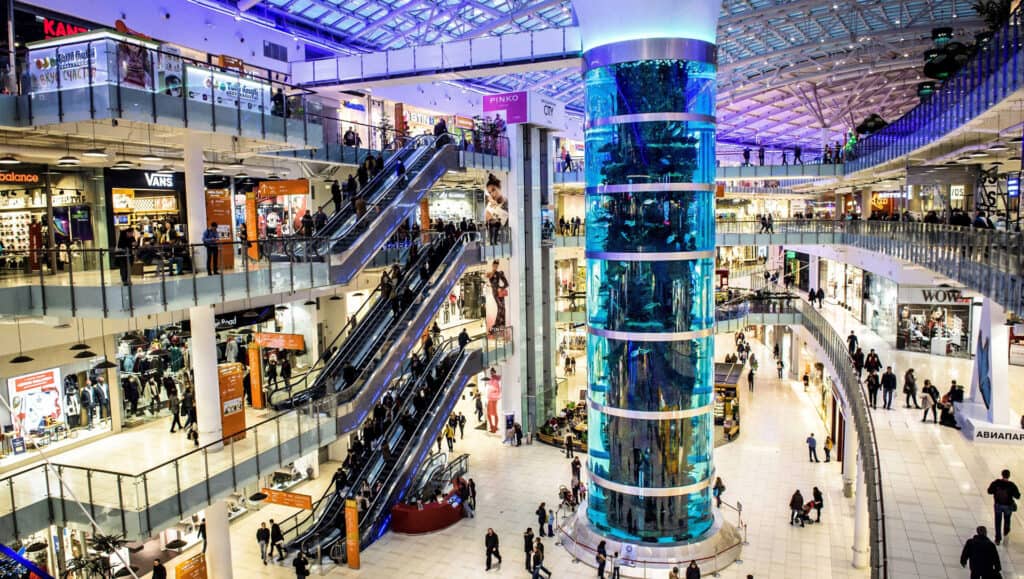
If you believe the news headlines, physical retail is dead and malls are New Age dinosaurs waiting to fossilize.And yet, visits to many leading malls reveal retail centers that are bustling with activity. Consumers of all ages, but mainly Millennials, are browsing, buying, and dining at food courts – and they seem to be enjoying the experience.Even in malls where there’s far less activity, there are those stores that are trading well, and others that scarcely see a customer.While it’s an overstatement to claim that malls, as a retail format, are “dead”, things are a lot quieter than in the good old days (that would be pre-2008). Who Failed Whom?“Who failed the customer? Was it the mall or the retailer?” said Lanne Bennett, Vice President of New Business Development with Samuels and Company, and who previously worked for Unibail-Rodamco-Westfield in Los Angeles.Many of the brands that are doing poorly have lackluster products, shoddy quality and have cut back on investing in maintaining their stores. So is it the mall or the brand that’s to blame for weak sales?At the same time, there are malls that squeezed every dollar out of their properties, with no view towards the impact on the future success of the property.Yet, retailers, brands, and mall owners blame Amazon for stealing their customers.“The old mentality was ‘build it and they will come. That’s changing now. The successful landlords understand that they need to re-invest to keep their property relevant. Some malls are no longer relevant. Others are opening in new and better locations,” said Ms. Bennett. “People want to feel good about where they shop. Malls that are cared for and curated will always be successful,” she added.But is the mall – or even physical retail - still relevent?“Mall are being redefined, they are not going away,” said Ms. Bennett. “Digital native brands are starting to migrate offline – and they are going into Grade A malls.” Brands believe that Amazon killed malls. Maybe they are missing part of the story. Amongst all the announcements of store closures and shuttered malls, there are an equal number of new store openings and new malls coming on line.Aerie (part of American Eagle Outfitters) plans to open 60-75 new stores this year. Burlington Coat Factory plans to open 50 new stores in 2019, while Ross Stores in planning 100 new outlets and TJ Maxx is targeting to add 125 more stores.The ‘value’ sector overall is seeing strong growth in physical stores. The category is expected to open 2,000 new stores this year.According to Westfield Corporation, which operates over 103 malls worldwide, over 1.3 billion people visit their combined properties.The notion that brick-and-mortar is dead can easily be disproved, based on the fact that in-person sales still constitute 91% of America’s $5.1 trillion retail market, according to real estate consultants Newmark Frank Knight.In the UK, 18.2% of clothing and footwear was purchased online in 2018, according to the Office for National Statistics. 87.8% are made in physical stores.Part of what’s driving retail closures is a right-sizing from decades over expansion. The U.S. has the most retail space in the world at 23.6 square feet per capita, roughly five times that of the U.K. and other European countries, said Newmark Frank Knight. “Good real estate is good real estate,” said Ms. Bennett. “For mall owners, it’s really a matter of changing how we work with tenants.”Mall owners have learned that building it will not assure that customers will come. Today, top mall owners and operators are investing in making their properties ‘destinations’ packed with engaging experiences that offer more than just shopping. Reducing the FrictionOne of the biggest questions smart retailers need to consider is ‘Where does the point of sale originate?’. The key is to follow the path from first point of contact all the way through to the point of purchase. From ‘showrooming’ to ‘web rooming’, consumers are moving frictionlessly between online and offline. This alone is making it critical for retailers to pay attention to how they present themselves across all retail channels.