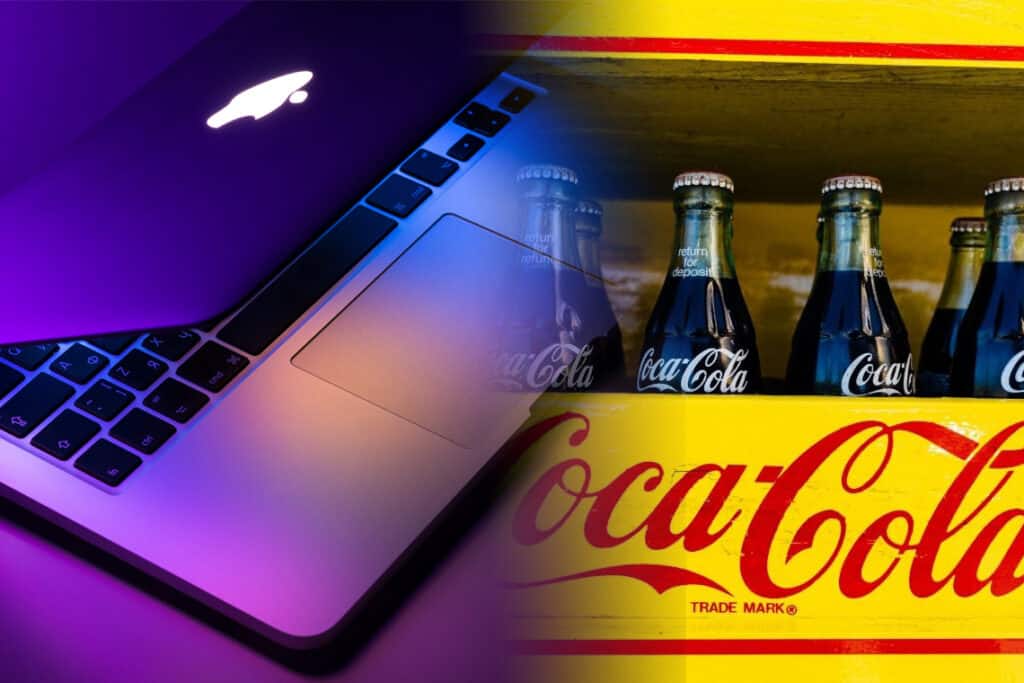
<b>Tired of chasing customers and then having to bribe them with discounts to buy your products? Maybe it’s time to rethink your brand strategy.</b> Have you ever looked a bit enviously at those brands whose customers are so loyal that they'll pay a premium for their products, endure long waits for access, and can't be persuaded to switch brands, regardless of the offer? Often referred to as ‘cult brands’, they don’t just have lots of customers, they have loyal fans. People who are buying the brand as much as they are buying the product. The standout example is Apple, which has created an entire ecosystem around its computers and smartphones. How often do iPhone customers stray to a competitor’s offer? Rarely. Apple customers don’t shop the market for price. They simply choose the Apple product that best suits their budget. Other brands enjoy a similar, if not as extreme, status. Harley Davidson, Disney, Supreme, Yeti coolers, Beats by Dre, Tesla and others have created market positioning that gives them higher margins, while not needing to continually chase customers with special offers, massive advertising campaigns or discounts. <em>Can any company create a brand that has ‘cult’ status? </em> “I am often surprised at how many business leaders seem content with having a mediocre business, with some marginal year over year growth and transactional relationships with consumers who they have to continue to bribe through discounts and sales promotions to get them to come back again,” said Chris Kneeland, co-founder of Cult Collective, and The Gathering, an agency that is dedicated to deciphering how businesses can create fanatical customers and engaged employees. “I like to say to them ‘stop chasing profits and start chasing prosperity’,” he added. <blockquote> "Brands need to stop chasing profits and start chasing prosperity." <footer> <cite>Chris Kneeland, co-founder, The Cult Collective</cite> </footer></blockquote> <h3><b>Advocacy vs. Awareness</b></h3> At their core, cult brands emphasize advocacy while other brands focus on awareness. “Mediocre brands think that their job is to get more people to know them. Therefore, they spend most of their energy on paid media or earned media trying to create the conversation themselves. Cult brands realize that getting known by customers is the beginning,not the end objective. They want customers to know them so well that they then get their friends and family to get to know the brand also. “Creating advocates has nothing to do with promoting. It is about customer experience. It comes from investing in enhancing your value proposition to the customer so that you become ‘remarkable’ - whereby people are now remarking about your brand. This means that you don’t have to be the one that's talking about yourself all the time. Your customers are doing it for you.” <h3><b>Where to Start</b></h3> To begin with, you need to evaluate your brand and determine if there is something about it that is remarkable. Mr. Kneeland points out that retail shelves are filled with way too many me-too brands that offer no distinct or exceptional value from their competitors. Differentiation creates value for the consumer, and can help make your product remarkable. “We start by asking if there is something in your product that could be considered remarkable. If not, then we go to some form of service delivery. <blockquote> A key benchmark is how many people are willing to either pay a premium for your product, or pay full price for your product. <footer> <cite>Chris Kneeland</cite> </footer></blockquote> “For example Traeger Grills, which is actually a smoker, and is pretty remarkable. But the way that it's packaged and shipped to you is even more remarkable. The box that it comes in can be turned into a log cabin for your children to play in. If you can't do either of those, then you have to create some form of brand affinity or customer experience that has really nothing to do with your core product. “A few years ago I was working with Converse and we realized that the product was pretty similar to its competitors, and it was sold in the same stores as well. So Converse had to create ‘what does it mean to be a converse customer’. To do this they needed to own some form of lifestyle and so they tapped into skate culture. They use their brand to propagate creativity and music and skating and that's what attracted people to their brand. “They had to bolt that on to the brand experience because they didn't have the product or service advantage,” said Mr. Kneeland. <h3><b>There’s More …</b></h3> At the foundation of a cult brand is purpose. It’s more than just selling products. “Cult brands look to co-creation. They value customers for more than just their dollar. They value them for their voice, in the form of feedback and input and that voice in the form of referrals. “There's something very special about bringing your best fans together and letting them sort of revel in their togetherness,” said Mr. Kneeland, pointing to things like the Harley Davidson rally. “In some cases, you don't even host the party. The Harley Davidson rally is the largest motorcycle rally in North America, which happens in Sturgis, South Dakota, and yet Harley Davidson didn’t create that event, fans did. <h3><b>Friendship Matters</b></h3> It is also about being relatable. Customers are more likely to fall in love with companies that look and feel like their friends. “That's certainly Disney's secret sauce. I think it's what's made Airbnb so popular so quickly. Airbnb became like the friendly neighbor that will let you sleep on their couch. “It's a company’s use of imagery. It's the way that their call center answers the phone, it's their empathy with which they deal with pricing or returns. It's a systemic way with which the company treats its customers - it’s about having very humane, very competent, very warm, endearing attributes,” said Mr. Kneeland. <h3><b>Is Your Brand a Cult Brand?</b></h3> How do you know if your brand has achieved cult status? According to Mr. Kneeland, a key benchmark is how many people are willing to either pay a premium for your product, or pay full price for your product. Most companies focus on how many people click or like or open or whatever their social media posts. They want to be viral. For cult brands, the high level of media attention is a residual benefit of having a brand that customers love. <h3><b>No Shortcuts to Success</b></h3> While management often embraces the concept, few welcome the timeline associated with building a cult brand. “We live in a society of quick fixes. Even though people know that, for example, weight loss pills don’t work, they still buy them because everyone wants things to be fast and easy. Building a cult brand is neither fast nor easy. It's hard, you have to make sacrifices and put in the work. But ultimately it is so much more rewarding. Not just in terms of profitability, but it’s so much more fulfilling. Cult brands tend to be some of the best places to work. Brand leaders spend a disproportionate amount of their time and money on culture, as opposed to just on communications. This also helps these brands attract the best talent, which ends up being a win for management - so everyone benefits,” said Mr. Kneeland. Get more insights from Chris Kneeland in his podcast episode “How to Turn Your Brand into a Cult Brand’ on a <i>Seat at The Table</i>. You can listen to it here. <b>???? </b><a href="https://bit.ly/CultBrands" target="_blank" rel="noopener">https://bit.ly/CultBrands</a>