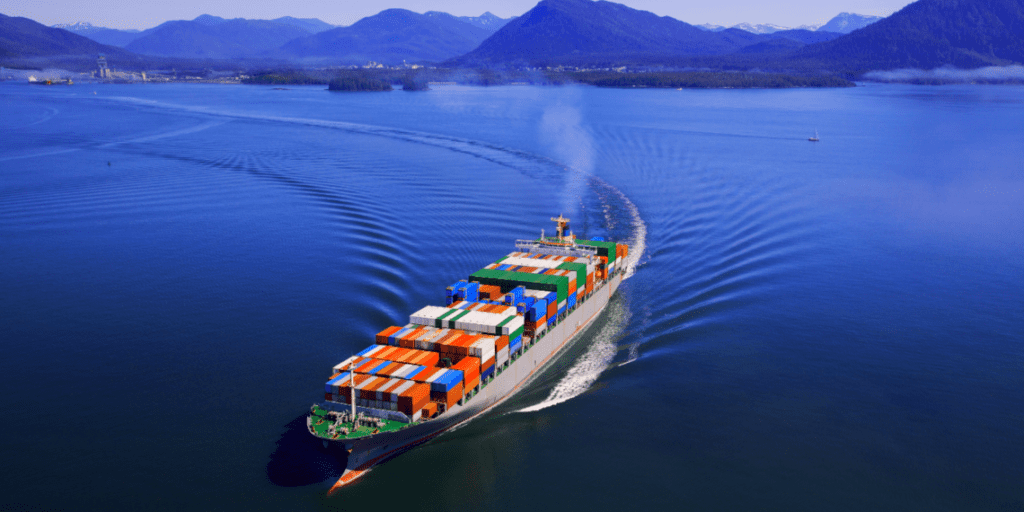
<b>New systems on ships are enabling them to clean up ocean water, while delivering cargo</b> The focus in making shipping more sustainable has been on using greener fuels. However an increasing number of carriers are using their time crossing the world’s oceans to help remove some of the massive amounts of waste that has gone from ‘a concern’ to a crisis for ocean life. Plastic pollution in oceans continues to grow sharply and could more than double by 2030, according to an assessment by the UN Environment Programme (UNEP). Plastic debris is currently the most abundant type of litter in the ocean, making up 80 percent of all marine debris found from surface waters to deep-sea sediments. According to the International Union for Conservation of Nature (IUCN) at least 14 million tons of plastic end up in the ocean every year. Plastic is found on the shorelines of every continent, with especially high levels of plastic waste found near popular tourist destinations and densely populated areas. Mitsui OSK Lines, Japan’s largest shipowner, is one of several naval companies pioneering a way to clean up the ocean while moving cargo around the world. <h3><b>Mitsui Develops Ocean Cleaning Technology</b></h3> The ocean carrier has introduced its new centrifugal-type microplastic (MP) collection device, which can continuously collect MPs while a vessel is underway, by leveraging their technology and knowledge of an earlier MP collection device they co-developed. The new device was installed on the MOL-operated car carrier <i>EMERALD ACE</i> in June for a demonstration test. With the aim of collecting MPs, which are a source of ocean pollution, MOL and Miura have developed a collection device that captures MPs collected and trapped in a filter with a backwashing function and have installed it on seven carriers. While these vessels were at unloading ports, the systems treated a total of about 16,000m3 of seawater. The development of this new model was intended to further increase treatment times, area, and capacity. An earlier system developed by the two partners has already been installed on five MOL ships, with MOL able to convert some of the rubbish it has picked up into energy resources similar to wood pellets. <b>How It Works</b> <ul> <li aria-level="1">The addition of a centrifuge allows the device to efficiently separate floating microplastics from concentrated seawater with a high density of floating debris, without closed plumbing. </li> <li aria-level="1">This enables it to treat seawater, which continually draws in sea water line, and even treat the full amount of discharge water after passing through the filter with the backwashing function of the ballast water treatment system. </li> <li aria-level="1">On the Emerald Ace, microplastics can be continuously collected while sailing, by connecting the system to the cooling seawater line, which always draws in seawater. </li> <li aria-level="1">This gives the system an annual seawater treatment capacity about 70 times that of the previous device.</li> </ul> <h3><b>Grimaldi Group Invests in Ocean Cleaning Technology</b></h3> Earlier this year technology group Wärtsilä (Finland), together with the shipping company Grimaldi Group, unveiled a new system that uses exhaust gas scrubber washwater to tackle the amount of microplastics in the world’s oceans - a critical and growing global environmental challenge. To tackle the growing amount of microplastics in the world’s seas, Grimaldi has developed and patented a system that filters out microplastics from open loop scrubber washwater. “Reducing microplastics pollution in our world’s oceans is an important challenge, and we are pleased to provide a solution for the shipping industry. The idea for this innovative technology originated from recognising that open loop exhaust gas cleaning systems can draw seawater for exhaust scrubbing and simultaneously collect microplastic present in the oceans as part of their normal operation”, said Emanuele Grimaldi, managing director. Wärtsilä, in partnership with the Neapolitan group, will take the microplastics filtration system - which traps plastic particles before the washwater is returned to the ocean - to market. The capability to filter microplastics will be an integrated feature of Wärtsilä’s future wash-water treatment system. Grimaldi has already completed pilot testing of this system onboard one of its vessels deployed between Civitavecchia and Barcelona. The results are promising, with 64,680 microplastic particles collected on a single voyage between these two ports. <strong>How It Works</strong> <ul> <li aria-level="1">The new system requires very little changes to onboard procedure and uses the natural capabilities of an open loop scrubber to contribute to cleaning the oceans during each voyage.</li> <li aria-level="1">Currently, a 10-megawatt engine will require scrubbers to process approximately 450 m3 of water per hour, potentially resulting in a large amount of microplastics being captured from seawater. </li> <li aria-level="1">According to early test results, the microplastics filtration system is efficient in capturing particles smaller than 10µm and the captured concentration by volume equals around 76 particles/m3.</li> </ul> <h3><b>Converting Plastic Waste into Fuel</b></h3> H2-Industries and TECHNOLOG Services (Germany), a naval architecture company, have joined forces to develop 3D designs for an innovative concept ship that will collect plastic waste that currently blights the world’s oceans and then converts it into clean hydrogen, allowing surplus hydrogen to be shipped back to shore. “It is becoming increasingly clear that the shipping industry can make a positive impact on reducing global emissions. At H2-Industries, the plan is to help decarbonise industry and power generation, while cleaning up our water resources and converting pollutants into an energy source,” said Michael Stusch, CEO of H2-Industries. This waste will be converted into hydrogen by the same thermolysis process that the H2-Industries’ plants will be using on shore. For every 600 kg of waste collected, approximately 100 kg of hydrogen can be produced and then stored in 20-foot containers. Because of the benefit of removing harmful plastic waste from the ocean, hydrogen produced in this manner can be classified as “<i>beyond green</i>,” or “<i>greener than green”</i> as it has been dubbed, recently. <h3><b>Supporting Roles</b></h3> Maersk (Denmark) has been supporting The Ocean Cleanup, the Dutch green tech non-profit organization developing and scaling plastic-harvesting technologies to rid the oceans of floating plastic. To date, The Ocean Cleanup has collected approximately 67,000 kgs of plastic waste from the Great Pacific Garbage Patch. In addition to the vessels and marine support from Maersk Supply Service, A. P. Møller-Maersk also provides logistics support to The Ocean Cleanup, ensuring global end-to-end transport of the project equipment such as the collected ocean plastic and its river cleanup technologies, including the Interceptor Original, the Interceptor Barrier, and the Interceptor Tender.