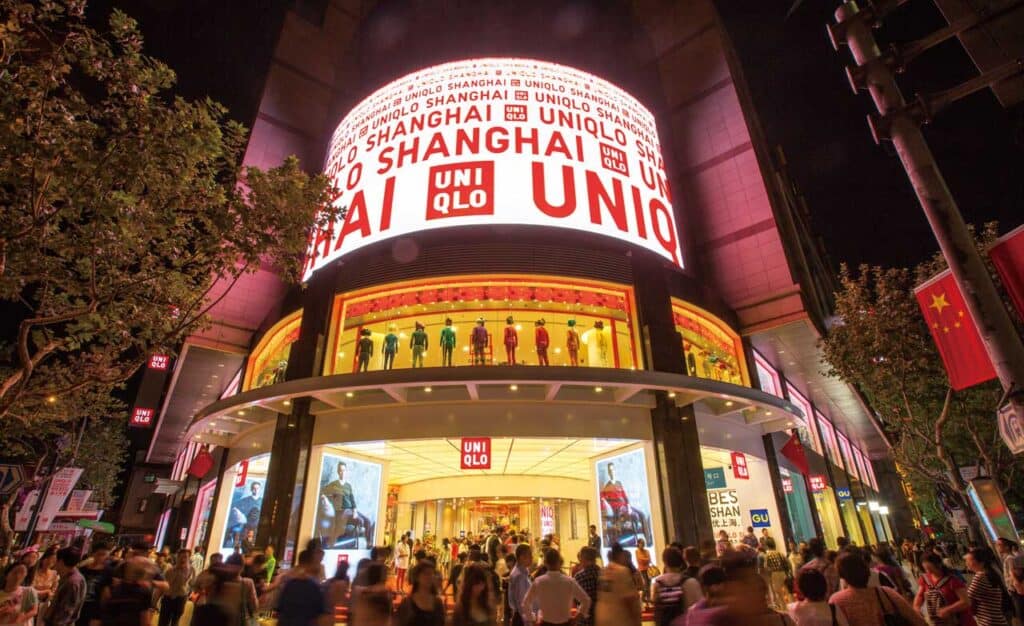
Retail is starting to see signs of optimism as major international retailers re-open stores in Greater China.While no one is completely back to normal, the re-opening of stores in the region is a positive sign for the entire apparel supply chain.Most international retailers rely heavily on the EU and US markets as the foundation of their retail sales. With most stores in those markets now closed, the re-opening of China offers more of a psychological boost than significant revenue support.Who Has Re-OpenedUniqlo re-opened all but 30 of its 750 stores in China.Ikea has re-opened all but one store in China.Inditex has re-opened all but 11 stores in China.H&M has re-opened most of its stores in China.Xiaomi has re-opened 1,800 stores in China.Apple has re-opened its 42 stores in China.Canada Goose is still keeping stores open in Greater China.Starbucks has re-opened 95% of its stores.Nike has re-opened about 80% of its stores.Signs of RecoveryAccording to a report from Harvard Business Review (HBR), “Only six weeks after the initial outbreak, China appears to be in the early stages of recovery.” It used three benchmarks to determine this: movement of people, coal consumption and property transactions. All three indicators have pointed to the beginning of a recovery.Retail has been one of the hardest hit sectors and has still shown only minimal signs of recovery, according to the HBR report.Interestingly, the report cautions that industry should “be prepared for a faster recovery than expected.”At the same time, on Sunday, 22 March, Fox News published an opinion piece from Dr. William Haseltine, who recently returned from Wuhan where he chaired the 9th US-China Health Summit. He is a former Harvard Medical School professor and founder of the university’s cancer and HIV/AIDS research departments.He, too, suggests that this epidemic could end sooner than we expect. (Read the full article here)Consumption OutlookPost-epidemic retail spending is expected to “largely follow patterns similar” to the 2002-2003 SARS outbreak, according to a recent report from Bain & Co. At that time, spending on cosmetics saw a quick return to normal while demand for clothing surged beyond pre-epidemic levels.In 2003 during SARS, retail sales declined quickly and dipped to the lowest level in May. However, once the disease was brought under control in June, consumers began spending again. In July sales continued to grow.