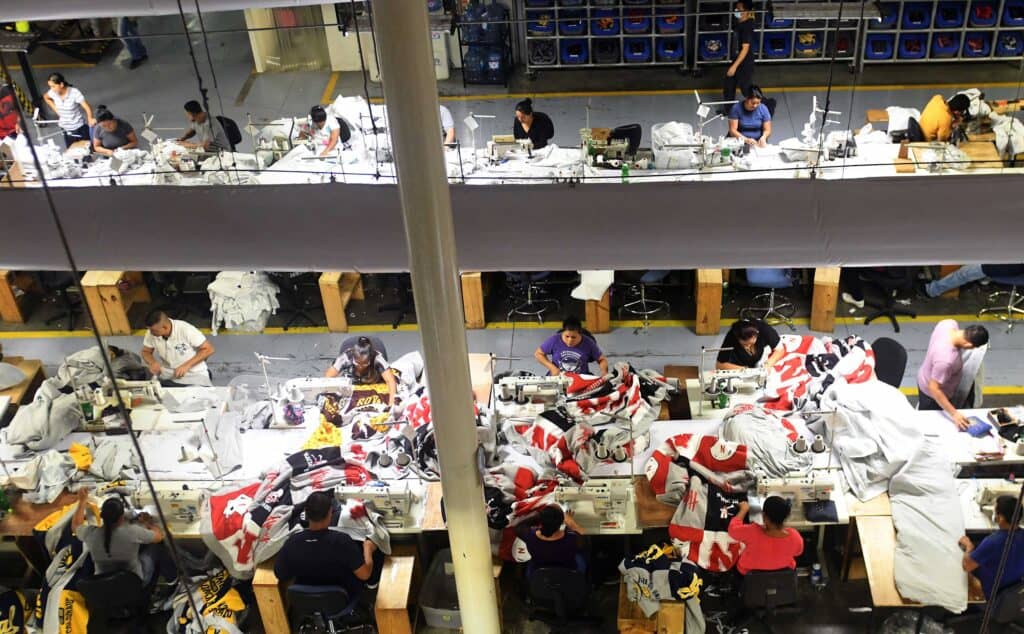
After a year of unanticipated trade conflicts, buyers are shifting from consolidating their sourcing (fewer vendors, fewer countries) to greater diversification. While the talk centers around becoming less dependent upon China, in reality factors such as speed to market, currency fluctuations, and duty-free opportunities are influencing the decision to enter new countries. Most major brands are focused on developing new sources in Southeast and South Asia. A prevailing strategy is to enter new markets through one of the Chinese manufacturers with whom they are already working and who has opened factories outside of China. However there are growing opportunities for U.S. buyers in Central and South America, especially for knitwear, said Wendy Berloe-Buch, a 30 year industry veteran who runs WBB Advisors, a supply chain consultancy. Access to a growing pool of regional Mills in cotton and fine synthetic fabrics satisfy the CAFTA regs and the resulting duty free status. “Western Hemisphere sourcing also provides a hedge during unexpected disruptions in the supply chain. For example, a few years ago when cotton prices were highly volatile and unpredictable day by day, the Western Hemisphere [supplieres] was hit very late by the flux and provided much needed hedging opportunities both on price and availability,” said Ms. Berloe-Buch. <h3><strong>Working Through Relationship Issues</strong></h3> “Relationships are a critical part of making sourcing work. There’s a big investment necessary in building new relationships between brands and vendors,” she said. She suggests that the move towards more diversification should include having a presence in the Western Hemisphere. “Central America is very flexible – it’s a great place for small as well as large orders. This is especially good for smaller brands,” said Ms. Berloe-Buch, adding that the region’s proximity to the US market is another key advantage. “In the beginning, it can be difficult. Especially if you’re used to working with Asia where you have big local offices that can act as a sort of buffer between you and the factories,” she explained. She points out that each region has it’s own mindset . Often times what makes one seem better than another is simply a matter of what you are used to. “You need to understand the business culture and mores of the region. Building new relationships takes time and patience – you need to manage your expectations. You also need to understand the strengths and limitations of each factory. It all comes down to communication. “Don’t take things for granted,” Ms. Berloe-Buch cautions. “In the beginning, you need to babysit the relationship. However, if given the time to develop, Central America can offer great production resources in terms of technical capabilities and flexibility, and comparable pricing while also meeting very high compliance and ethical standards,” she said.