
Phu Bai 2 - Phu Group
When it comes to apparel purchases consumers have become very demanding. They want excellent quality. And they want function and performance. They also want greater sustainability. That’s a tall order for most brands to fill.
However there’s a mill in Vietnam that is helping its customers to meet those criteria.
Phu Bai 2 prides itself on producing 100% cotton yarn that’s both high quality and has unique properties.
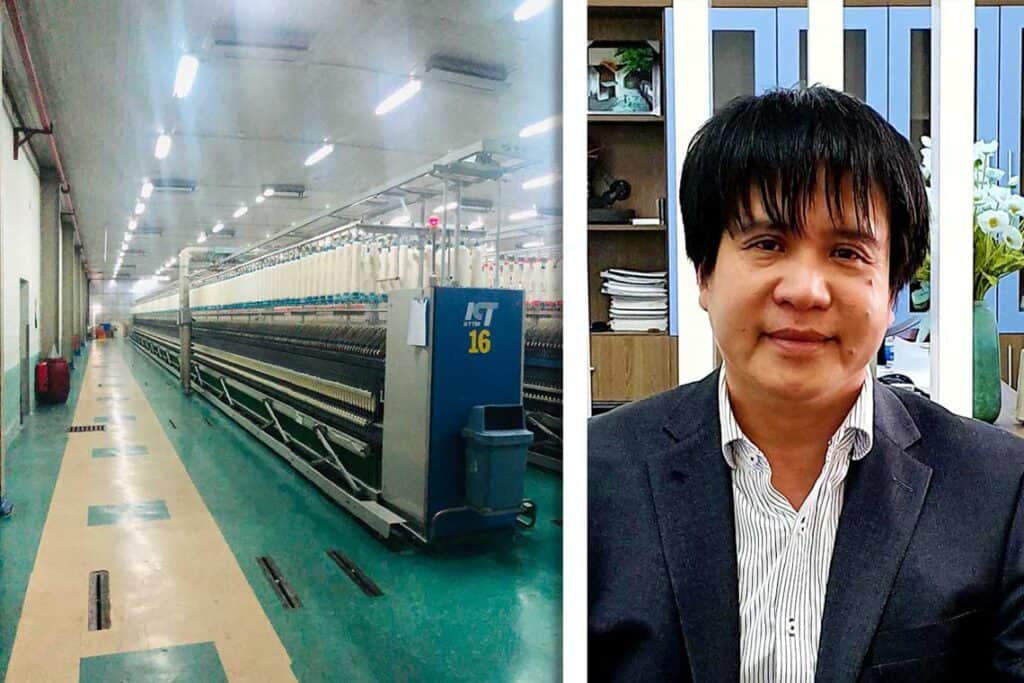
“By using our yarns fabric mills are able to make fabric with special properties and added functionality,” said Tran Quoc Tuan, Director. He explained that by cooperating with customers, Phu Bai 2’s yarn mills could help them to achieve fabrics that are Quick Dry, Dual Action and Premium Cool. They are durable, have a softer – cooler hand feel, a smoother surface, as well as functional properties.
Yarn Innovators
“We’ve made a high effort into developing a strong R&D department. This enables us to produce specific yarns to meet our customers’ requirements.
“Rather than develop a collection of yarns, we instead start by working with our customers and finding out what they need. Then we go to our R&D department and have them create the exact yarn to meet those requirements,” said Mr. Tran.
“Most spinners only focus on making the yarn and don’t think much about the end use. We take a different approach. We focus on the end product and then work from there to create the best yarns for the final garment,” he said.
We have good machines, but machines alone don’t make a product better. How we manage our production is what makes our yarns premium yarns.
Tran Quoc Tuan, Director

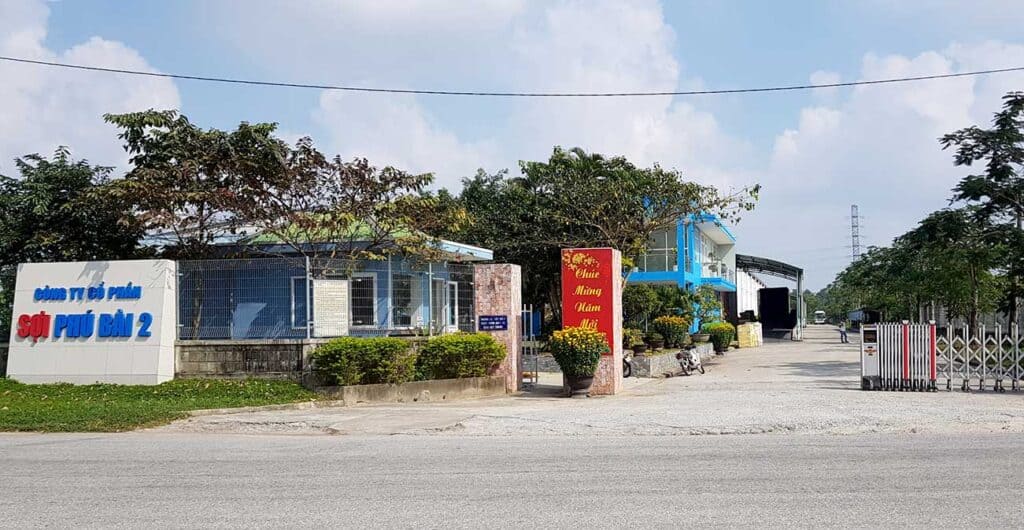
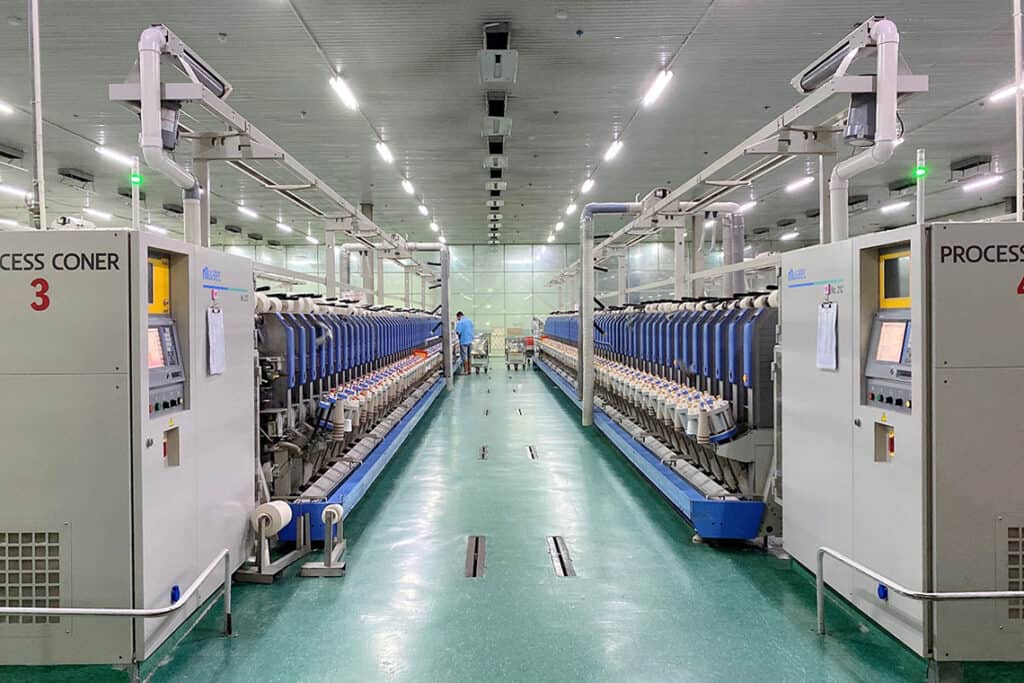
Phu Bai 2 is one of eight companies within the Phu Group, a spinning group established in 2005 with a combined total of more than 189,000 spindles and approximately 2,600 rotors, using 3,600 metric tons of cotton each month. Depending on the type of yarn they are spinning, they will use different grades of U.S. cotton and U.S. Supima cotton.
“We have good machines, but machines alone don’t make a product better. How we manage our production is what makes our yarns premium yarns,” he said.
“Our customers like the fact that they could reduce textile manufacturing waste and loss due to using U.S. cotton yarns compared with yarns making from another cotton” said Mr. Tran.
The company’s main export markets are Japan and Korea where quality standards are very high and customers put a priority on products that offer a lot of added value. By being able to meet these demanding standards, Phu Bai 2’s yarns are ranked amongst the highest quality in the market.
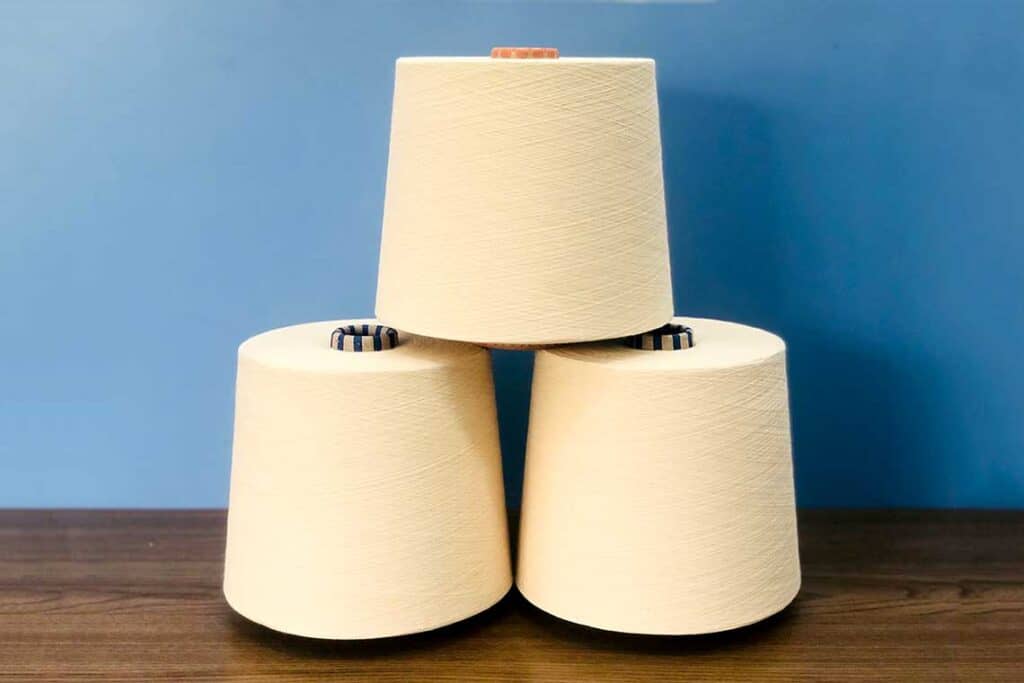

“We need to ensure that we are providing our customers with the quality they request so we rely on suitable raw materials and our production management. Using U.S. cotton is one of the best ways to achieve quality and customer satisfaction. It’s reliable and the quality is consistent. It also comes in a wide range of grades so there is lots of choice. We can buy the right cotton for our more basic yarns as well as for our high-end yarns from the U.S.
“U.S. cotton tests and labels each bale. The numbered labels allow us to confirm the quality of the cotton in each bale. This way we know the origin and the quality of what we are buying. This also makes U.S. cotton more traceable. We know that U.S. cotton is classified by the USDA (U.S. Department of Agriculture) so it gives us further confidence that we are getting the quality cotton that we ordered. We use Cotton Incorporated’s Engineered Fiber Selection – EFS system, which is very good. With EFS we optimize the laydown to produce the best quality yarn,” said Mr. Tran.
The Right Raw Materials for Sustainable Garments
In addition to quality and uniqueness, there’s a growing request for garments that are more sustainable. That’s been a challenge for many manufacturers and brands since often times the materials or processes that add performance to the product don’t meet some of the newer criteria for sustainability.
“For us, sustainability starts with the raw materials. We use mainly U.S. grown cotton that already meets very high standards for sustainability and is also traceable,” said Mr. Tran.
Using U.S. cotton is one of the best ways to achieve quality and customer satisfaction. It’s reliable and the quality is consistent.
Tran Quoc Tuan, Director
Forward Vision
As an R&D driven company, Phu Bai 2 is focusing its growth strategy on new product developments. In the pipeline is a yarn that has natural stretch. The impact on the final garment will be that it will have ‘comfort stretch’ but will not require the addition of spandex to achieve this.
Phu Bai 2 is also adding finer-count yarns with other functional properties for use in premium natural stretch-soft underwear and infants’ clothing.
“At the moment, our focus is on product quality, not on expanding our capacity,” said Mr. Tran.
That’s a wise strategy in a market where consumer buying has clearly shifted to ‘buying fewer, buying better.’
Learn More www.phugroup.com.vn
The COTTON USA Advantage
- Family growers who are committed to working their fields sustainably and leaving them better for future generations.
- A long history of innovative harvesting and ginning technologies resulting in higher-quality cotton.
- One of the highest rates of adoption in the world for Precision Agriculture, which minimizes water and pesticide usage.
- U.S. farmers operate under voluminous, stringent, and enforceable regulations.
- A commitment to transparent partnership that is unmatched anywhere.
- One of the most comprehensive systems for monitoring and measuring all the key metrics involved in sustainability.
U.S. Cotton Facts
- 2/3 of U.S. cotton land uses only rain water
- U.S. cotton water use efficiency has improved by 82% over the past 35 years
- Cotton is carbon footprint neutral, meaning the plants remove more greenhouse gasses than production produces.
Sustainability Goals
The U.S. cotton industry is building upon the strong environmental gains already achieved over the past 35 years. The aim is to help members meet their current needs while making the world a better place for future generations.
Specific goals include:
- Reducing by 13 percent the amount of land needed to produce a pound of cotton fiber
- Reducing soil loss by 50 percent, in balance with new soil formation
- Increasing water use efficiency (more fiber per gallon) by 18 percent
- Reducing greenhouse gas emissions by 39 percent
- Increasing soil carbon in fields by 30 percent
- Reducing energy to produce seed cotton and ginned lint by 15 percent

Learn More cottonusa.org