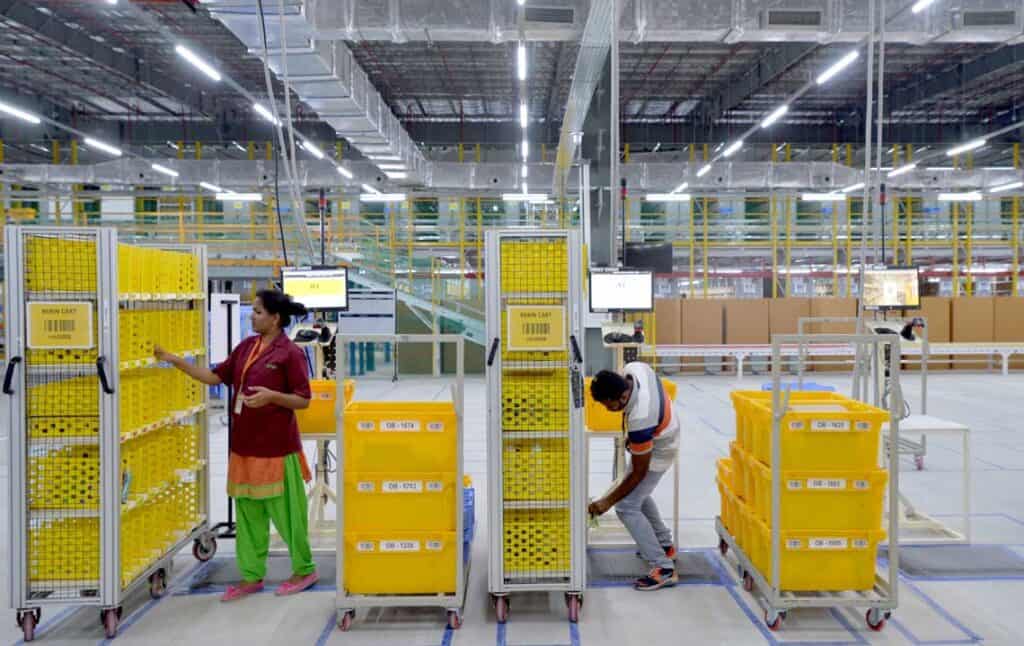
It is often said that “India has a bright future and always will.” Now it looks like the ‘future’ will be arriving soon - much sooner than most industry watchers had expected.Despite having a massive workforce, a legacy of textile and apparel manufacturing, domestic raw materials and strong creative skills, India with a 4 percent share of the global apparel market, trails China (36 percent share) and other Asian garment manufacturing nations.However, as brands are looking to diversify their sourcing locations, India is getting a lot more attention.One of the key sticking points has been logistics. Unlike China, which has state-on-the-art infrastructure thanks to massive government backed investment, India has been thwarted by a lack of progress, particularly in logistics.India lags in kilometres of paved roads, airports, and container port throughput, amongst other benchmarks.For example, By 2019 China had 510 airports with paved runways, while India had only 253 (CIA World Factbook).However that could be changing.The government granted infrastructure status to the logistics sector, which will help it to gain all-important long term financing for projects. There’s also a move to digitize logistics.In addition, the nation has actively introduced business reforms.Signs of ImprovementWhile India faced several challenges in 2019 including a slowdown in GDP growth to the lowest level since 2013 and a drop in consumer lending, the mid to long term outlook for the nation’s domestic economy is very optimistic. And this time that optimism is based more on fundamentals than on ‘hope’.It is difficult to predict what the impact of the health crisis will be on India or other nations, but much needed and long awaited investment in infrastructure could be a game changer.• India has ranked just after China in terms of domestic opportunities and international opportunities. Ranking in terms of the nation’s business fundamentals (regulatory environment, corruption, inflation, banking) has India further down on the list, but still in the top 25 percent amongst 50 emerging nations.• Amongst 190 nations, India ranks 63rd, in terms of “ease of doing business”, up from 77th in 2019 (World Bank ranking).• Economic reforms by Narendra Modi’s government have given India much needed support to grow its domestic market as well as exports.• The warehousing sector is undergoing consolidation. This has led to bigger players building large-format warehouses with value-added services.• A National Logistics Policy that would create a single window e-logistics market is under discussion. The initiative would help organise and streamline the sector, contributing to efficiency, cost reduction, and optimisation of resources. Bhiwandi has become the logistics hub for most of the nation's e-commerce industry. Warehousing clusters are also being developed in Gurgaon, Bengaluru, and Hyderabad. Not There YetThe government is trying to remove much of the red tape that has frustrated businesses and hindered growth. Still, things like enforcing contracts remains a problem.• India ranked 163rd out of 190 countries for ‘contract enforcement’ (World Bank).• The cost of logistics in India is about 14 percent of the Gross Domestic Product and is much higher than in many other countries.For example, in Japan the cost of logistics is 11 percent of GDP and in the US it is 9-10 percent. India’s target is to reduce it to about 10 percent by 2022 which could increase exports by 5-8 percent, according to government estimates.