

A few weeks ago it looked like inflation was under control and the global markets had avoided falling into a recession.
However, this week’s announcement of February inflation data shows that most nation’s saw a jump – especially in core inflation.
This, along with the recent turmoil in the banking sector, is likely to make consumers even more cautious. We expect a stronger focus on value-for-dollar, not simply chasing cheaper prices.
LOGISTICS

Air capacity out of Asia has been cut due to dropping rates shifting most cargo back to ocean shipping, per Flexport.
Carriers are reportedly pushing for agreements at at least the $1,500 mark. If agreed to, this step may indicate optimism for a rebound in volumes and higher spot rates later in the year and into 2024. Or that carriers are prepared to remove enough capacity to reach that rate level anyway if a rebound doesn’t materialize, per Freightos.
LATAM records a 4.6% increase in demand year-over-year, despite global demand falling 14.9%, per UPS.
Asia – Europe ocean rates fell further last week, and are now just 13% higher than in 2019 as volumes fall, though some are optimistic for a rebound in H2, said Freightos.
MATERIALS DEVELOPMENTS

The Lightness of Warmth
Keeping warm, a key function for the winter season is reliant on synthetic insulation and natural down. Whilst invisible to the eye, these toasty developments are embracing biomimicry, offering bio-base, recycled and circular economy in creating a high level of warmth light without the weight. Read More
SUSTAINABILITY
Cone Denim (USA) has established a certified supply chain for recycled cotton in Mexico. The company’s Recycled Claim Standard (RCS) certification now includes a closed-loop process for recycled cotton, providing customers with verification and documentation … Read More
Crystal Denim (Hong Kong) has introduced its new Vibrant Denim collection made using natural dyes, using an advanced, sustainable natural dyeing technique. Read more
Hyosung (S. Korea) has joined the Ocean Network platform, which works to reduce plastic pollution and help protect the oceans. The organization includes over 300 leading businesses. Read more
PODCAST

Building a Supply Chain that Can Beat Even the Toughest Stress Tests
Managing global supply chains has become one of the most challenging, risk intensive aspects of just about any business.
A growing number of people are looking to technology to create greater supply chain stability. However even the most advanced technology is only a tool. The foundational strategies will come from the people who manage the sourcing operations which the technology is supporting.
In this podcast Christophe Roussel, CEO of Big Ideas Consultancy, shares his view on what next generation supply chains could look like.
Most recently Christophe was EVP Global Sourcing & Manufacturing at U.S. casual wear brand the Gap, Inc. Previously he worked with Tesco, Carrefour and other major retailers.
You’ll Learn:
- Practical and actionable ways to create more resilient supply chains
- How to balance the need for reliability with the quest for cheaper prices
- Which technology developments are likely to make the biggest impact on supply chain resilience
MATERIALS PRICES
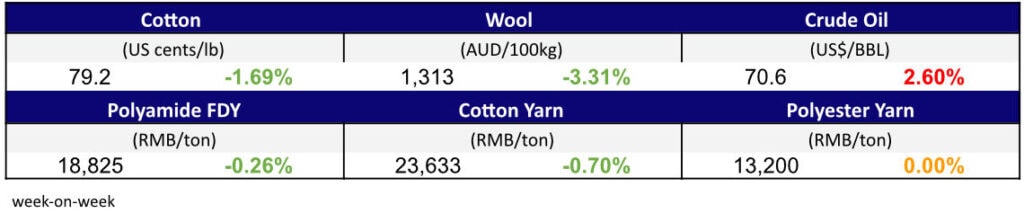
Materials prices remain suppressed, mainly due to weak demand across all key global markets.
Oil prices could average almost $90 a barrel this year, driven by China’s emergence from the pandemic, per Wood Mackenzie analysts.
You can find Month-on-Month and Year-on-Year prices here.
MARKETS
The Federal Reserve Bank raised interest rates 0.25% taking its benchmark rate to a new target range of 4.75% to 5%, the highest level since 2007.
The Bank of England has increased interest rates by 0.25% to 4.25%. The BoE faces pressure to put a fence around inflation, which rebounded to 10.4% in February (Office for National Statistics data).
GCC central banks raised interest rates along with the US Federal Reserve’s recent 0.25% increase.
- The Central Bank of UAE’s overnight rate is now 4.9%.
The Bangko Sentral ng Pilipinas (BSP) raised rates 0.25%, taking the key policy rate to 6.25%. The move is in response to inflation which stands at 8.6% year-on-year, per ING.
Singapore’s core inflation remained high, at 6.3% in February, per the Monetary Authority of Singapore (MAS) data.

📣 Promote your brand, build your business – with Inside Fashion newsletter sponsorships.
YOU MIGHT HAVE MISSED THESE ARTICLES
- Materials Trends Spring 2024
- What C-Suite Execs are Saying Now
- Why Trust is Becoming the Key to Success or Failure for Brands
- Knitwear Leads the Way to Better Days
- The Need to Automate. The Challenge in Doing It.
- Key Trends that Will Define 2023
- Delivery Technology that Could Solve Last Mile Delivery
- A Fast Growing Sock Business that Combines Marketing and Automation
- Why Nike Continues to Outperform the Market
- How Cloud-based Tools Could Stabilize Supply Chains