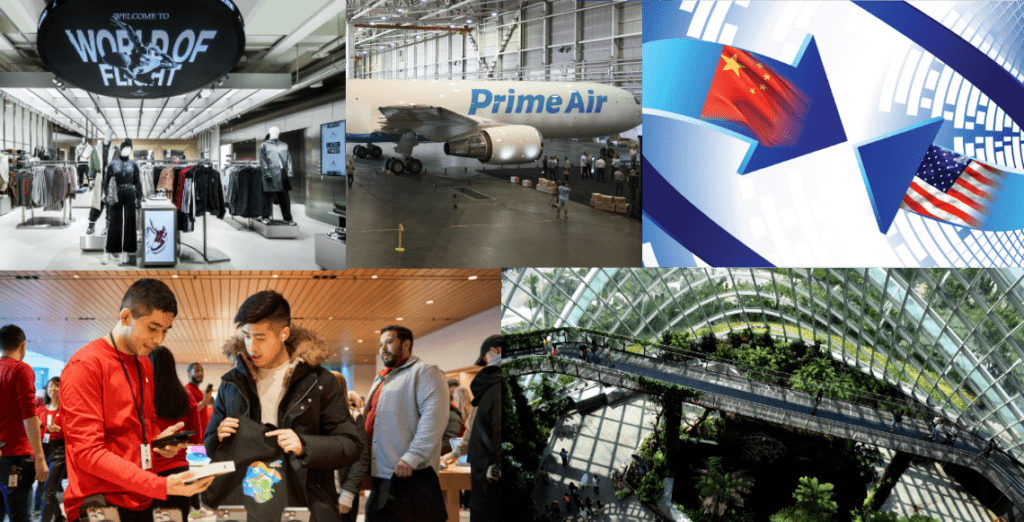
<strong>RETAIL</strong> <h3><b>Retail Builds Back Better</b></h3> Brick & mortar stores are facing a ‘tower moment’. The old way of doing physical retail has been torn down by the continued development of e-commerce - and a new space has been cleared in the post-pandemic era as consumers eagerly return to stores. Will retailers seize the opportunity to reimagine how they can uniquely service consumers - and create that all-important brand loyalty? For some companies that will be too big of a pivot. Changing internal thinking or existing systems will be simply too complicated or take more time and/or money than leadership is willing to invest. However a window has been opened for agile players who make use of physical stores to create meaningful experiences that build loyalty - and allow them to collect ‘soft data’. Better experiences go beyond more technology and better decor. The retailers (of all sizes) that will be the new winners will leverage their physical space to host activities that bring people into their stores. That could range from courses and workshops to networking events or co-working spaces. <b>INSIGHTS:</b> As people become even more isolated (living alone, working from home) the role physical retail can play in a community -bringing people into the store and building loyalty and goodwill - will be well worth the investment. <strong>SUPPLY CHAIN</strong> <h3><b>Geopolitical Tensions Heat Up</b></h3> Now that the world has put the pandemic behind it and logistics are almost back to ‘normal’ geopolitical tensions that have been bubbling under the surface of global affairs well before the pandemic started are coming to the surface. The issues are not directly related to the apparel or retail industry, but these industries will certainly feel the impact. Hot spots include the Russia-Ukraine war, which most people thought wouldn’t end up being a war, but more of a ‘conflict’. Nearly a year later, the most positive outlook political experts point to ‘continued instability’ in the region. At the same time, China and the U.S. are increasingly eyeing each other as adversaries rather than the trading partners that they used to be. Europe also continues to lock horns with China. While there are many issues at play, for supply chains a big one is global concern about China’s growing consumption power and its impact on raw materials supplies. While this is less likely to be as disruptive as the logistics logjams that disrupted the flow of goods for the past nearly three years, it is something to keep an eye on. <b>INSIGHTS:</b> Tariff and non-tariff barriers to entry on various products from China could become a threat to supply chains. This could result in higher prices on imports from China. Importers will need to consider geopolitical tensions more seriously, and not just with regard to China. At the same time, exporting nations are working to establish more bilateral trade deals with key markets to secure trade channels. <h3><b>Sustainability On Steroids</b></h3> The movement towards more sustainable apparel continues to gain momentum. This is ramping up pressure on brands to have an increasing amount of supporting documentation to defend their supply chains - should they be questioned. And the likelihood of any enquiry has moved from ‘possible’ to ‘probable’ - especially on imports from nations that are already in the hot seat for other trade issues, such as human rights violations. The solution for most brands will be a combination of choosing suppliers who are able to prove that they are sustainable and transparent - and implementing technology that manages the paperwork overload associated with backing up product origins and composition, as well as human rights and other compliance issues. <b>INSIGHTS: </b> Digitizing more parts of supply chains in order to achieve the new standards for sustainability and transparency will become key to making this more manageable - and ensuring that brands have the documents they need - when they need them. <strong>E-COMMERCE</strong> <h3><b>Personalization vs Privacy</b></h3> Consumers like personalization but they are increasingly concerned about privacy. The key for retailers is not crossing that line. The challenge is knowing exactly where that line is. Services such as showing coordinating items when a consumer shops for apparel is a winner. It adds value without being intrusive. Amazon does an incredibly good job of understanding what people are looking for - and making it easy for customers to find what they want. <b>INSIGHT:</b> Successful e-commerce sites will have less frills and better functionality. Amazon isn’t pretty. But customers love it - just as it is. <h3><b>Speed Still Matters</b></h3> Fast delivery continues to be a key criteria for consumers when shopping online. The convenience of purchasing online is diminished the longer consumers need to wait for delivery. For consumers, the advantage of shopping online is mainly convenience and assortment. Compared with purchasing in a store where they can see the actual product, and can get it immediately. When consumers think: “Should I wait a few days (or even a week) for delivery or should I just go to a store and purchase it now?” the winning answer for online sellers will often be determined by delivery times. This remains one of the core ways that Amazon continues to retain customers. Its investment in a lightning fast, highly reliable logistics network enables the marketplace to make their delivery service ‘remarkable’. Literally, one of the top reasons consumers cite when talking about ‘why they like shopping on Amazon’. <b>INSIGHT:</b> Unless you are selling something very exclusive (or at bargain prices), finding ways to get orders to customers faster will be key to competing in an already challenging market. <strong>CONSUMERS</strong> <h3><b>Better is Better</b></h3> Nobody likes to see prices increase, however inflation is less scary than unemployment. Right now, employment levels remain strong in both the US (unemployment is at 3.5%, the lowest in 50 years) and the EU where unemployment for men fell to 5.7% in December and 6.4% for women - the lowest levels since 2007, per Eurostat data. Consumers are still feeling edgy about the economy (potential job loss) and political tensions, so they will be shopping a lot more carefully. The desire to be more sustainable will also play a key role, as most see buying less as part of helping reduce carbon emissions and reduce landfill. While prices will certainly matter, today’s consumer (with the exception of Gen Z) will not buy on price alone. Quality is increasingly important - in materials, fit and design. Service also matters - a lot. Today’s consumer is just as inclined to ‘not buy’ and to buy. <b>INSIGHT:</b> Slow shopping - better quality, personal service and more innovation is gaining popularity in a world otherwise dominated by bigger selections and faster delivery. <h3><b>Customer Centric</b></h3> Everyone talks about the concept of being customer-centric, but few really execute on this. For one thing it usually involves greater costs. And then it disrupts internal systems and worse, the timeline from investment to reaping the benefits can take longer than many companies are comfortable with - and it's difficult to measure progress along the way. Still, this is the way forward for companies looking to sell products at better margins. From high end to mass market, customers want to be respected. <b>INSIGHT:</b> In the words of the legendary Daivd Ogilvy: “The customer is not a moron. She’s your wife.” Apple gets this, which is a key factor in its being able to high volumes of expensive products to mainstream consumers, regardless of their incomes. When people appreciate the product and trust the company, somehow price is less of an obstacle.