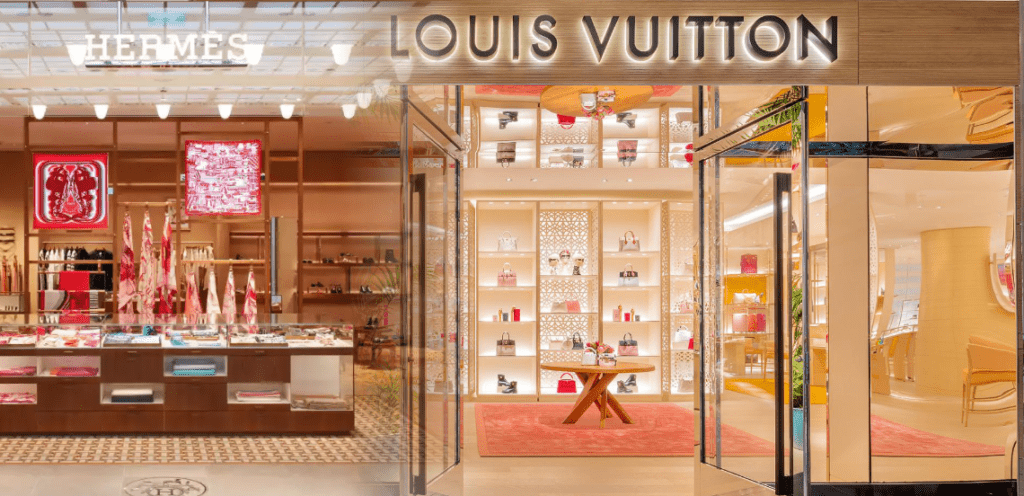
For the past two decades when luxury brands looked to the future their sites were trained on China. The market offered a massive population and strong economic growth - and love of international luxury brands. Sales soared and even conservative estimates forecast that China would quickly account for between 30-40% of total global luxury goods sales. Then the pandemic hit, followed by ongoing lockdowns in China and economic growth dropped from 5-6% annually to a forecast mere 2% increase for 2022, with 2023 not looking much more optimistic. Goldman Sachs revised down its 2023 China GDP growth forecast to 4.5% from a previous projection of 5.3%, and predicted that Beijing is unlikely to begin reopening before the second quarter next year. <h3><b>Finding Alternatives to China</b></h3> From travel restrictions to the mortgage and banking crisis, some of the shine has gone off the China market - at least in the near term. China might have been the biggest, however Russian consumers were also solid buyers of luxury brands, either at home or on shopping trips to Europe. The Russia-Ukraine war has seen almost all international brands pull out of Russia, as well as making it difficult for Russian consumers to travel. Cross border e-commerce has been one lifeline for brands who want to reach consumers who are not able to make their regular shopping trips to London, Paris or Milan. In addition, luxury brands looked for alternative markets and it seems that some of the investment that was slated for China has found new opportunities in the U.S. and in emerging markets. LVMH (France) reported sales for the first half of 2022 rose 28 percent over last year, despite multiple lockdowns in China, and with Shanghai lockdown for over two months. The group reported sales in the U.S. grew 24 percent year-on-year, accounting for 27 percent of total revenue in the January to July period. Asia, outside of Japan, accounted for 38 percent of total revenue, although growth fell 1 percent. While the U.S. has been hit by inflation and rising interest rates just like the rest of the world, the nation’s wealthier consumers are still spending. At the same time, South Korea, Southeast Asia and other nations are helping offset the drop in sales in China. Kerring (France) reported sales for the first half of 2022 rose 23 percent year-on-year. Gucci, one of the group’s flagship brands saw “robust sales in Western Europe, Japan, and North America, more than offsetting the impact of lockdowns in China. Momentum was also very strong in Southeast Asia,” according to the company’s financial statement. The situation was the same for the group’s other apparel brands, including Yves Saint Laurent and Bottega Veneta. The push to expand in the U.S. is part of brands’ efforts to grow sales, but also to reduce their reliance on any single market. There are continued reports of luxury brands opening new super sized flagships and expanding into more cities - even as the stock market falters and interest rates are increasing. Hermès (France) just opened a 20,250-square-foot flagship store on New York’s Madison Avenue. Louis Vuitton (France) recently opened a store in New Orleans as it expands into more cities. Other brands are opening more stores in cities where it already has a presence. Gucci (Italy) just opened its seventh company operated store in Dallas, Texas. The brand is in five cities in Texas. Still other retailers are making their debut in the market. Printemp (France) is opening a 54,365 square feet department store, located in the landmark One Wall Street building in New York City. <h3><b>Down But Not Out</b></h3> Luxury sales in China have slumped further - and have stayed weak for longer - than expected. Still, most brands and analysts are expecting the market to make a comeback. Despite the Covid-19 era disruptions and dampened consumer sentiment, analysts at Bain, Oliver Wyman and Yaok Institute still believe that China will still become the world’s largest luxury goods market. The question is not of “if”, but “when”. Last year, China’s domestic luxury goods sales accounted for 21 percent of total global luxury goods sales, according to Bain. China’s 4.7 million HNWIs (High Networth Individuals) account for more than 80 percent of the nation’s luxury purchases, according to Yaok Institute. HNWIs are people with personal assets worth at least 10 million yuan ($1.45 million). So while middle class consumers might be tightening their belts and saving, HNWIs are still spending.