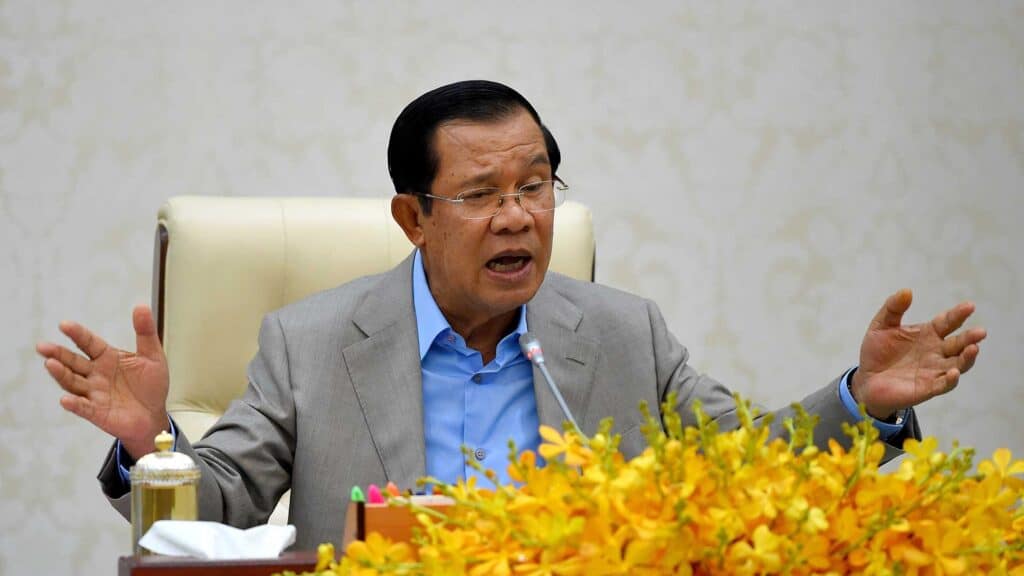
For years the EU warned Cambodia that it risked losing its duty-free status, on the back of ongoing warnings over human rights violations.On February 12 the European Commission decided to suspend a part of the trade preferences that Cambodia enjoys on exports to the region. What Made the EU Finally Take Action• The EU feels that Cambodian Prime Minister Hun Sen's government had cracked down on opposition, civil society groups and the media over the past three years.• "The European Union will not stand and watch as democracy is eroded, human rights curtailed, and free debate silenced," EU foreign policy chief Josep Borrell said in a statement.• Global clothing and shoe brands, including Adidas, Puma, and Levi Strauss, have urged Cambodia to reform, but Hun Sen said on Tuesday that the country would not "bow down" to foreign demands. (Aljezzera) It’s Not As Comprehensive as It Sounds• Cambodia will lose about 20 percent of the preferential rights it enjoys under the Everything But Arms (EBA) scheme.• That’s about one billion euros ($1.1 billion) of Cambodia's exports to the EU. Total exports from Cambodia to the EU reached 5.4 billion euros ($5.9 billion) in 2018. • The Commission will replace zero duties with standard tariffs for certain garments and footwear; all travel goods and sugar. • The standard tariff for clothing is 12 percent and 10 percent for footwear. (World Bank)• Emerging industries and high value-added garments and certain footwear will continue to enjoy duty-free, quota-free access to the EU.• About 20 percent of exports to the EU are to Britain, which would be able to negotiate its own trade deal with Cambodia after Brexit was completed. (National Bank of Cambodia report) Final Warning…• The changes will take place on August 12, 2020, unless EU governments or the European Parliament block them.• "For the trade preferences to be reinstated, the Cambodian authorities need to take the necessary measures." Cambodia Prepared for Post-EBA TradeLast year the Cambodian government announced a number of measures, including lowering logistics and production costs, cutting red tape, and supporting businesses with a six-day reduction in the number of public holidays, to support local manufacturers and exporters in case Cambodia lost its EBA status.Prime Minister Hun Sen has said the measures had helped reduce operating costs for producers and exporters by about $400 million per year.