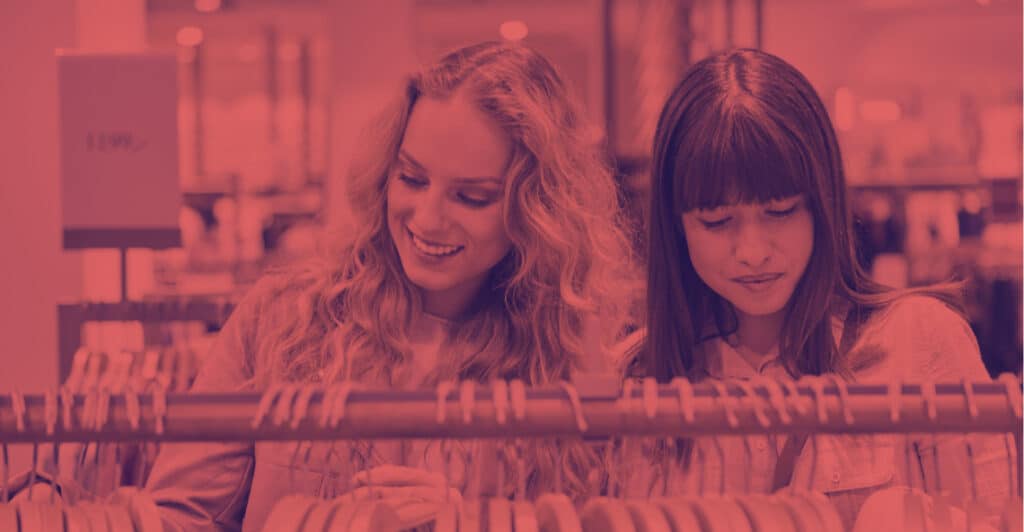
Many see physical stores as dinosaurs, whose role will increasingly be a combination of distribution centers supporting e-commerce, and a product showroom of sorts. But others argue that shopping is a social activity that is a fundamental part of most consumers' lives. It’s easy to assume Gen Z’s shopping preferences would fall in line with younger Millennials’, however the more data we gather on Gen Zs, the more we find they are not following the path that those even a few years ahead of them have made. Gen Z in particular, is putting ‘product first’, which is creating a huge opportunity for physical stores. While many people argue that since Gen Z grew up with online shopping - and with so much of their lives digitized - that this would be their preferred channel. However research shows just the opposite is true. <h3><b>The Data</b></h3> Gen Z, more than Millennials, prefer to shop in a physical store for certain items including electronic devices and clothing. Millennials have been defined as wanting purchase experiences over products. That generation heralded the ‘experience economy’, which is expected to reach $12 billion by 2023. “But while millennials strive for memories over memorabilia, Gen Zs haven’t followed suit”, according to research from GWI. <img src="https://insidefashionlive.net/wp-content/uploads/2022/09/GenZ-Shopping-Preferences-1-866x1024.jpg" alt="" loading="lazy" srcset="https://insidefashionlive.net/wp-content/uploads/2022/09/GenZ-Shopping-Preferences-1-866x1024.jpg 866w, https://insidefashionlive.net/wp-content/uploads/2022/09/GenZ-Shopping-Preferences-1-254x300.jpg 254w, https://insidefashionlive.net/wp-content/uploads/2022/09/GenZ-Shopping-Preferences-1-768x908.jpg 768w, https://insidefashionlive.net/wp-content/uploads/2022/09/GenZ-Shopping-Preferences-1-750x887.jpg 750w, https://insidefashionlive.net/wp-content/uploads/2022/09/GenZ-Shopping-Preferences-1.jpg 1040w" sizes="(max-width: 866px) 100vw, 866px" width="866" height="1024"> “Gen Z, especially those younger than 20 years old (many of whom are still in school), are more likely than any other age group to say they would opt for products over experiences, and they’re the second most likely generation after baby boomers to say they prefer shopping in-store versus online,” said GWI. “47% of Gen Z respondents (those born in 1997 and later) prefer to shop in a store compared to online, more than any other generation,” according to a new consumer survey from CM Group, a portfolio of marketing technology companies. The survey revealed that when asked how they evaluate brands, “23% of Gen Z respondents rank authenticity as important, more than nearly any other product or company attribute, such as design or social impact. “22% of Gen Z respondents note that a lack of transparency reduces their opinion of brands and products, more than any other generation.” <h3><b>Physical Retail Post-Pandemic</b></h3> Now that most countries have drawn a line under the pandemic, there’s been a resurgence in traffic at brick-and-mortar stores - and it’s not only Gen Z who's coming to stores. “Physical stores are responsible for 83% of sales. Mid pandemic last year that figure dropped to 75%. So even during lockdowns, and all sorts of restrictions, stores still accounted for three quarters of all sales. That's far from dead, said Ian Scott, a leading UK-based retail consultant with over 20 years experience working with top brands, including Lego Coca Cola, Estee Lauder, Dyson, P&G, and many others. “At the same time, people are saying that e-commerce growth is falling. It’s not. It’s just settling back to where it was on its original growth curve pre-covid.” <blockquote> “The younger generations are seeking to see things in ‘real life’. So this is an opportunity to catch the next generation coming through and engage them in physical spaces." <footer> <cite>Ian Scott, retail consultant</cite> </footer></blockquote> The pandemic not only did not kill physical retail, it actually provided a greater appreciation of the role physical stores play in a world that includes e-commerce as a shopping channel. “A physical store has two unique qualities: human interaction face to face and the ability for customers to touch and try products. “There's a growing trend now where you might start the shopping journey in the store but not end it there. You go to the store to see the product and try it on, but you might end up making the purchase later when you get home by going online,” he said. <h3><b>Rediscovering Retail</b></h3> Contrary to popular opinion, this generation is not solely focused on technology-first experiences, instead preferring to balance both to suit their needs,” said Wendy Werve, CMO of CM Group. “Gen Z are the least engaged with Amazon, for example. Amazon offers convenience, availability and speed. You get wonderful benefits but you don’t get engagement. Even in their stores, it is not about engaging with the customer. Those stores are data driven science labs, first and foremost. “In fact, they’ve closed their bookstores. Their most successful stores are AmazonFresh and the Amazon Go stores, which are basically convenience stores. It's about a simple transaction,” said Mr. Scott. Despite being the most online generation, Gen Z likes shopping in-store and part of that is being able to interact with sales assistants. “They like having real shop assistants to help them with queries,” according to insights from Talon.One. “Gen Z'ers have high expectations as consumers, both in terms of customer service and product quality.” This generation wants to shop in stores, but expects more from that in-store experience than simply shelves of products. Retailers need to add that extra experiential component to physical stores. “The younger generations are seeking to see things in ‘real life’. So this is an opportunity to catch the next generation coming through and engage them in physical spaces,” said Mr. Scott. However, that doesn’t necessarily require something extreme or grand. Friendly, helpful shop assistants can be just as big a win as a Nike-style multi-sensory fit out. <h3><b>Building Engagement to Better Understand Your Customer</b></h3> One of the reasons brands like Nike and Apple are so successful is that they make a strong effort to deeply know their customer. “Even if you're a mom and pop store with a Facebook account, you apply that same principle. The challenge is getting to understand your customers. You can make posts on your Facebook page that connect to your unique customer and have the same principle effect that Nike does by opening a House of Innovation store on Fifth Avenue in New York. “So it really stems back to engaging with your customers and understanding them. Then tailor your response and products to meet what they want. There's no sort of generic formula, but the more you engage with your customers, the more you get to understand them, and the more you can then start delivering things that work for them,” said Mr. Scott.