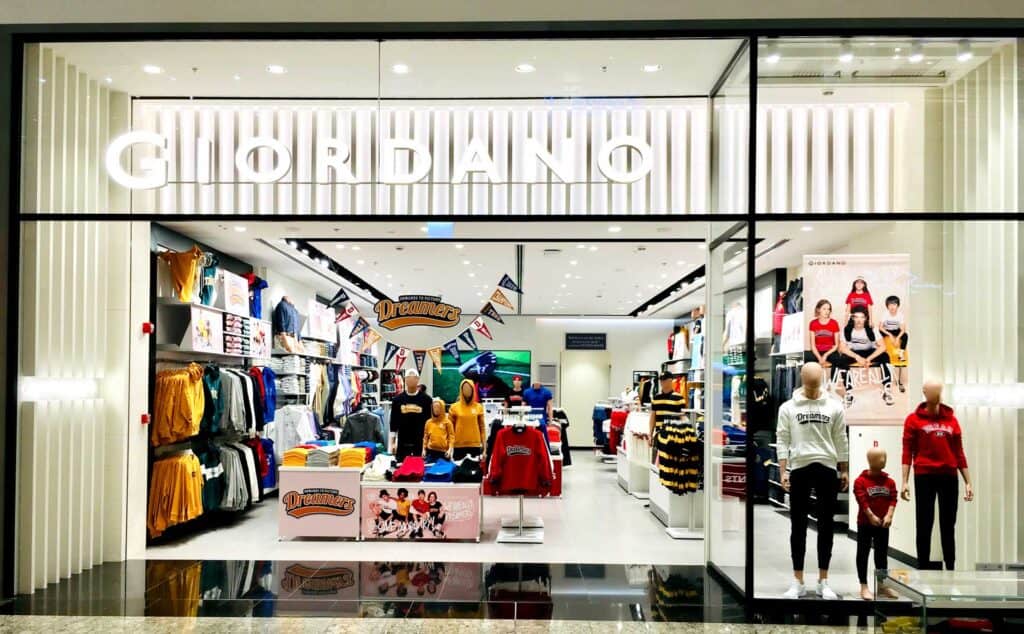
While most brands are still keenly focused on traditional markets, Giordano continues to see an opportunity in developing emerging markets. The forward thinking brand has a tradition of seeing opportunity that competitors often overlook. That could prove to be a key success strategy, as major markets like the US, Western Europe, Japan, and even China face slowing growth. At the same time, consumer markets that barely existed five years ago are now starting to take off. Giordano was one of the first international brands to enter the Middle East. The brand now has 200 stores across the region - part of its over 2,400 stores in over 30 nations. In very new markets, such as Bangladesh, Zambia, Mauritius, South Africa, and Georgia, Giordano opts to franchise rather than own the business. “It’s not only about understanding local market preferences, but also about managing your expectations about what that can produce - now and going forward,” said Ishwar Chugani, Managing Director of Giordano Middle East, speaking with <em>Inside Fashion</em>. Giordano was one of the first foreign retailers to enter Myanmar 25 years ago, and now has over 100 points of sale there. The retailer sees Africa, Central Asia and Eastern Europe as the next areas that offer big expansion opportunities. Plus, it sees good growth opportunities in Mongolia, Cambodia, Vietnam and Laos, where it already has stores that are trading well. <h3>The Advantage of Being Agile</h3> “Because we have a very flexible format, and don’t insist on owning all of our own stores, we can adapt to any market,” said Mr. Chugani. Giordano can be found in standalone stores as well as department store counters. Store sizes can range from 50 sq. meters to 500 sq. meters. Other brands have focused on establishing more flagships, but here too Giordano sees an advantage to staying small and agile. Its stores tend to range from 50-150 sq. meters on average, opting to have more stores rather than betting on single, larger stores. Giordano has established itself as the go-to place for good quality basics - particularly polos and chinos. Their strategy is to provide easy-to-understand apparel, that’s fashionable, but not trendy. For most consumers - this is exactly their comfort zone. They know what they are buying will look good, be comfortable, and offer value-for-money. <h3>Bend, Don’t Break</h3> While new markets offer growth opportunities, it’s still established markets that provide the core part of most brands’ revenue. For many the punishing effects of economic instability in key markets have taken a toll on sales and profits. “A flexible approach is important when facing a downturn. You need to be able to bend with the market, not snap,” said Mr. Chugani, adding that a downturn also presents opportunities. “There are a lot of opportunities for us despite the downturn. We are able to open new stores in good locations at lower rents. Landlords are also now more willing to renegotiate rents. Also, suppliers have been more flexible on prices and payment terms,” he said. <h3>Culture is the Key</h3> While controlling costs are critical, it is meaningless if you are not able to drive sales. “The world of retailing is incredibly competitive with customers becoming more and more disillusioned with all of the various lines, styles and brands available,” said Mr. Chugani. While most brands see online as ultimately replacing physical stores, Giordano believes that stores are key to establishing brand loyalty. “Shopping is all about relationships. Today’s customers rarely buy from a company, they buy from a person, a person they trust, a person that is knowledgeable and a person that delivers what is promised.” At a time when most brands are trying to figure out to create better and longer lasting connections with consumers, Mr. Chugani offers the following insight: “A company’s culture is their ultimate competitive advantage. Competitors can steal your products or services or even key employees. However, they cannot steal a great company culture”.