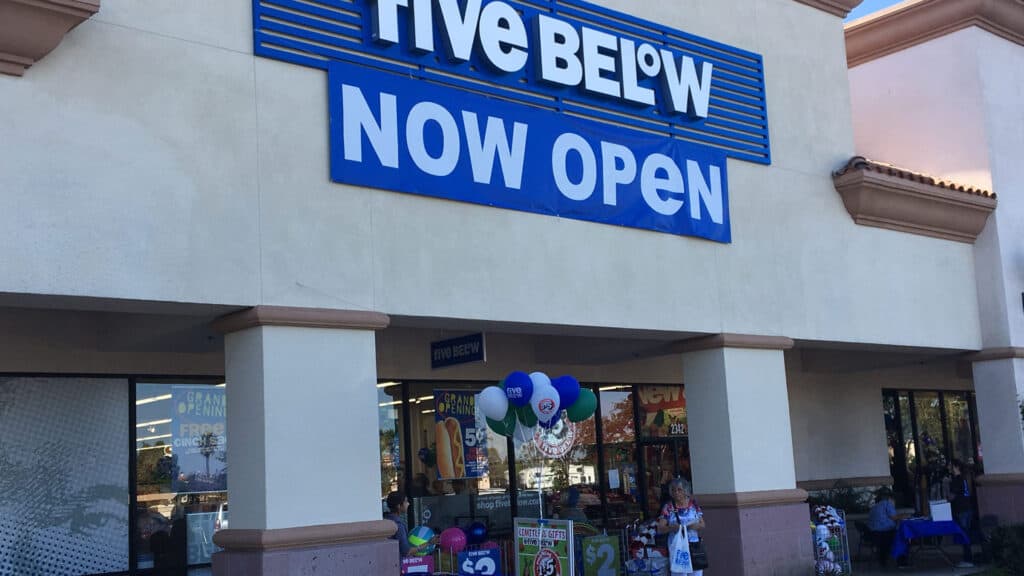
Amidst the buzz about a ‘Retail Apocalypse’, many retailers have been quietly opening new stores - and see the opportunity to open even more in the next few years.Yes, roughly 9,300 stores closed in 2019, more than in 2018. But 4,392 store openings were announced last year, 35 percent more than the 3,258 that opened in 2018.For example, teen value retailer, Five Below, opened around 150 new stores in 2019. CEO and president Joel Anderson sees the potential for 2,500+ U.S. stores, up from the chain's current 750 stores.Aerie has added more than 60 new stores in 2019, while TJX opened around 125 stores and Ross Stores added nearly 100 new outlets.The biggest growth was seen in the 'dollar store' category with Dollar Tree having a net growth of 160 stores and Dollar General opening over 900 stores in 2019.On a smaller scale, digital native brands are moving offline, adding much needed diversity to the physical retail offering.The big fallout in physical retail was led by shoe store Payless Shoesource, Inc, which closed 2,500 stores - or 27% of the total 9,300 stores that closed in the U.S. during 2019.6017 of the 9,300 stores that closed the result of 8 retailers closing stores.58% of the 2019 store closing were accounted for by just 6 retailers.27% of all retail closings were the result of Payless Shoes closing 2,500 stores. Of the store closing that make up the rest of the total, many were the result of retailers pulling out of underperforming locations or markets – something that is common when managing a large retail portfolio. Some retailers have indeed failed.That’s not a new story. Companies fail for many reasons. Sometimes it’s a result of market conditions. Other times it’s due to poor management, not adapting to changing consumer demands, or many other reasons. Blaming and Shaming AmazonIf we blame e-commerce for the failure of those retailers that have closed, are we crediting it for the success of those whose business is growing?To be fair, e-commerce still accounts for less than 20 percent of all retail purchases in most markets – including the UK (18%), the US (11%), Japan (9.7%) and even China (20%).While e-commerce is growing, so is physical retail. The huge percentage growth seen in e-commerce is in part because it is a smaller market segment to begin with. Surviving and Thriving in a Challenging Market“U.S. retail has increased $565 billion in sales since January of 2017, fed not just by online sales growth but net store sales growth,” said Lee Holman, VP of Research for IHL Group, in a statement. “Clearly there is significant pressure in apparel and department stores, however, in every single retail segment there are more chains that are expanding their number of stores than closing stores.” Debt-driven ExpansionMany of the recent retailers failures are companies that struggled under heaps of debt piled on during private equity buyouts. Others strayed away from their core categories and lost focus (and customers) along the way. Then there were those whose brands simply became irrelevant to today’s consumer.The two primary characteristics of chains closing the most stores has been too much debt and rapid overexpansion driven by historically low interest rates for the last 10 years, according to IHL Group research. Lack of innovation and short-sighted private equity has also played a significant role in many of the chains.Retailers without these characteristics have continued to thrive in this market, noting that when a retailer closes a lot of stores, it is more of an indictment on the individual retailer rather than an overall retail industry problem as has often been reported.Although apparel and department stores have showed a net decline in stores during the past two years, that’s not necessarily catastrophic.The sector saw many store openings during the year, with both long establish chains and digital native brands opening bricks and mortar stores. And that’s not the end of the story.Less than a year after folding, Payless has just emerged from bankruptcy this month. The retailer has new growth plans - and that includes reopening some its stores. This is the second time that payless has rebounded from financial crisis - the first being in 2017.Their story is not unique. We're seeing many other retailers reorganize and return to the market. Notably Toys R Us and Charlotte Russe have returned after brief closures. Now the talk around Forever 21 has shifted from ‘going out of business’ to ‘reorganizing’.For strong retail brands, there’s always the chance for a second – or even third – act.