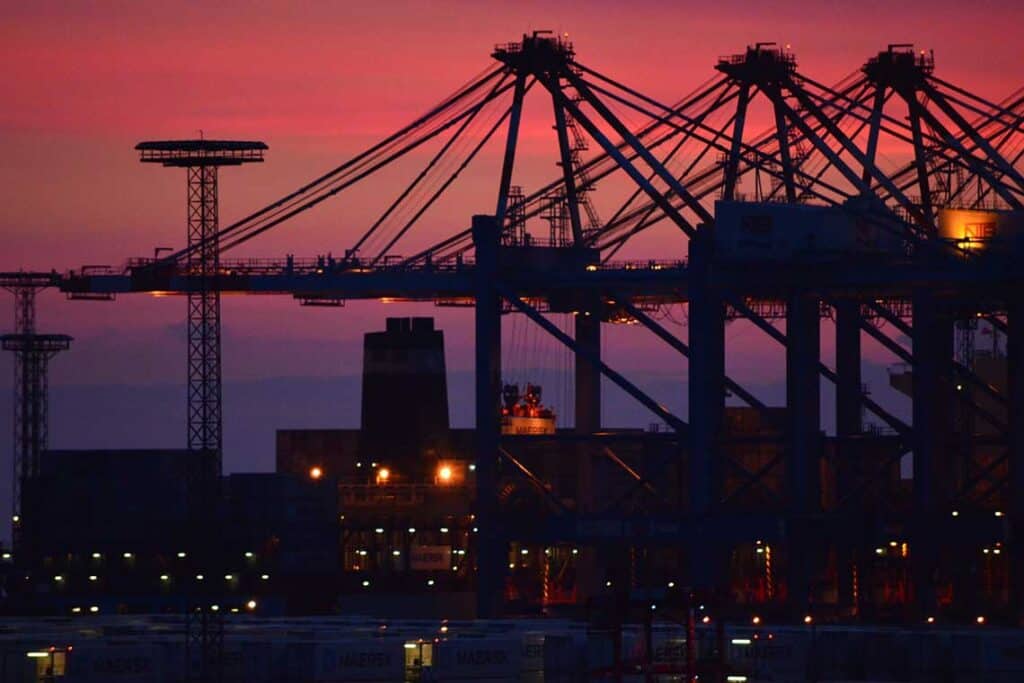
Q1 was faced with unprecedented manufacturing challenges. In Q2 the problems shifted to retail, with stores around the world shuttered. By Q3, stores were open and factories were picking up speed, but ports came under pressure. Now in late Q4, logistics remain an issue - a critical issue - with exporters in Asia increasingly unable to get their goods on ships or planes - at any price. Container freight rates from Asia to Europe soared to 10-Year high. The average spot market of a 20- foot box from Asia to Europe this week is $2,091, surpassing the high mark in May 2010 which was $2,000. The rate has more than doubled from $1,029 in Aug, 2020. Experts expect that this upward momentum will be sustained into Jan 2021, according to Flexport.According to Maersk's Q3 trade report the continuation of India's lopsided trade flow causing tight capacity there, as well as out of China.“With 14% quarter-on-quarter growth, India’s containerised exports are helping the country’s trade recover," said Maersk. However imports were down 28% in Q3, and continue to lag exports.Textiles and apparel were the main driver of this “tremendous” export growth, says the Maersk report, particularly to North America and the Mediterranean.It's a Matter of BalanceBut due to China’s lopsided trade balance - exporting three containers for every one imported recently - and delays in containers returning to China due to the pandemic overseas, a severe shortage is now starting to pinch export flows. Roughly 60% of global goods move by container, and according to United Nations trade data there are close to 180 million containers worldwide.As bad as the logjams are, shipping companies can’t invest in expanding capacity simply to meet short term demand. By mid 2021, even as early as late Q1, the situation is expected to ease up and return to normal.Box shortages are also severe on intra-Asia trade routes and from India to North America and Europe. Here’s a Snapshot of the Current Situation in LogisticsAverage container turnaround times have ballooned to 100 days from 60 days previously because of COVID-19-related handling capacity cuts in Europe and the United States, according to the China Container Industry Association (CCIA).The Ningbo Containerised Freight Index from China to Singapore/Malaysia soared nearly 300% between early October and early December as regional traders competed for containers.Monthly output in China - which accounts for 96% of global production - hit a five-year high of 300,000 units in September, according to CCIA data.Shortages are due to COVID problems in importing nations. They lack the staffing to turnaround the empty containers. From China to North American and Europe, recommended advanced booking notice remains 21 days prior to CRD, according to Flexport. Ningbo, Southeast Asia and Busan are among POLs (ports of loading) with greatest equipment shortages.Rates from China to Europe have increased significantly during December and will continue to do so in January in the lead up to Chinese New Year (CNY). There will be severe equipment shortages through CNYThere are widespread restrictions for UK cargo due to port congestion and haulage limitations and there will be further delays and port omissions. Service from feeder outports in East and South China has been suspended until further notice and shipments should be diverted to main ports. India to North America rates remain stable, but capacity is tight due to limited equipment and feeder port omissions, according to Flexport.Air freight into LAX continues to deal with an operationally challenging environment, due to high cargo volumes and labor shortages caused by COVID. ORD/JFK/ATL/MIA are facing similar high influx of cargo activity, but do not report labor shortages as severe as LAX.