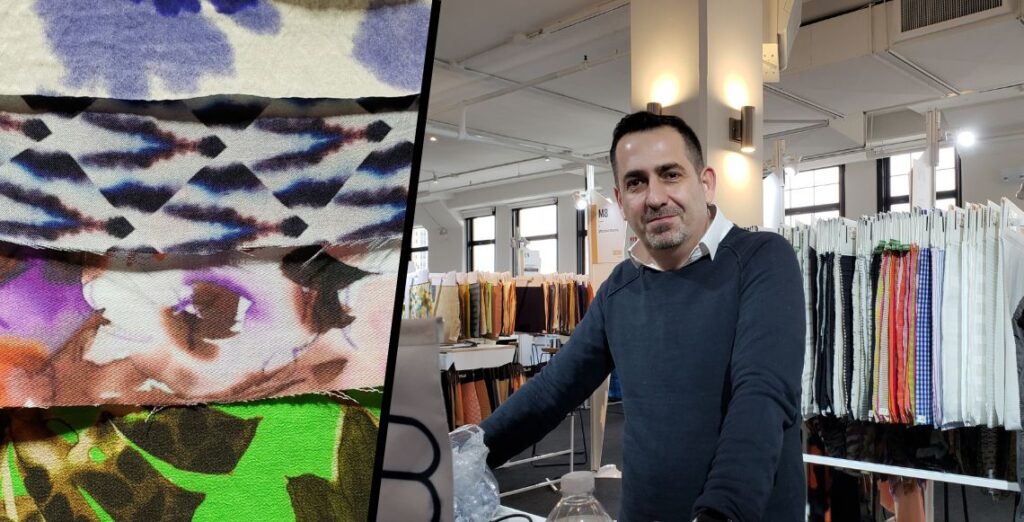

Just two weeks into the new year and mills are putting shoulder to shovel to try and make the best of what most agree looks to be another challenging year.
That said, even in the toughest times there are still winners.
The mills at Premiere Vision New York (January 17-18, 2024) said that although they felt this would be a difficult year, they were reasonably optimistic that they could find opportunities in the market.
“Business is not bad, but buyers want to ‘wait and see’. The bigger brands seem to be more cautious. They’re afraid to take risks. The smaller ones are willing to move ahead and take risks,” said Josep Bombardo at Bombardo, SA (Spain).
“People are holding back on ordering. Also, there seems to be a lot more small brands, however they can’t meet our minimums,” said Seda Guney Karaca from Ersat Tekstil (Turkiye).
A major challenge was the sharp drop in volumes – even from larger brands. Even in the US, everyone was looking for crazy small minimums – well under the 1,000 meter minimum that most mills require.
“Buyers want something special, high quality and unique. But they want low minimums. It takes one day to prepare the machines, even though it might take only an hour to actually run the production,” said Volkan Celebi at Nurel Group (Turkiye), explaining why small orders just aren’t viable for most mills.
Even with minimums as low as 600 meters, it was too much for the growing number of smaller brands that are becoming a bigger part of the market.
“One of the biggest challenges is trying to make unique products when brands want lower minimums,” said Ece Yucel at Almodo (Turkiye), whose MOQ is 1000 meters.
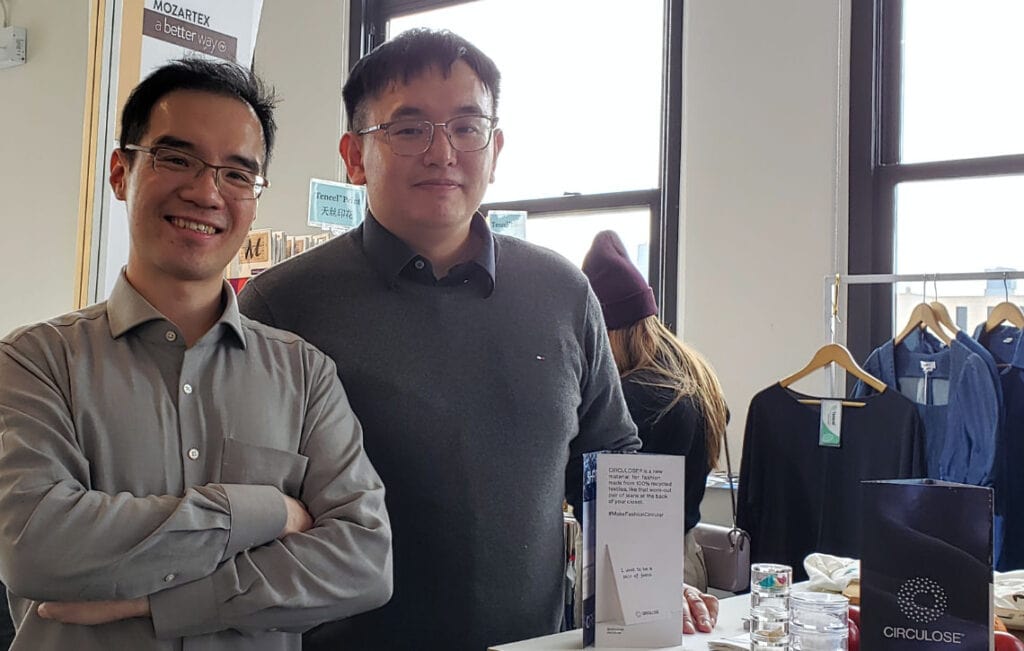
“Brands are asking for less than 500 meters,” said Mai Tseng at Mozartex (China). “This is not good for mills.”
Leaning into the US Market
Most mills said that the US showed the most promise amongst the global markets for 2024. Not that anyone was bragging about business being great. But this is where they saw the best opportunity for getting orders.
“The US market is not bad. It will be good for at least the next season,” said Mr. Bombardo. “Some European countries are doing well, others are not. It’s really up and down right now.”
“The Russian market is good right now. Not as good as it was before the conflict with Ukraine, but still good,” said Ms. Karaca at Ersat Tekstil.
For mills who had a good year in 2023, this year seems a lot slower.
“Last year was very good for us, so we expect this year might be slower. At the same time, buyers are being cautious since no one wants to face overstock.”
“Even with the economy being a little down, the US still has more potential for us right now than the EU,” said Berrak Tokuslu at Ugurteks (Turkiye).
However, realizing that potential is not easy any more.
“It takes a lot more effort these days, and you get less results,” said Joel Simon at Paulo de Oliveira (Portugal).


Everyone’s Doing Their Own Thing
In the past, there were always bestsellers or strong directions that defined each season.
No longer.
Not only has the sharp divide between seasons that used to delineate Fall and Spring faded, now even trend directions have given way to brands doing their own thing.
And that’s a good thing!
More retailers are realizing that the ‘sea of sameness’ that for decades defined retail selling floors – and led brands to sell on price alone – is not viable for anyone who hopes to run a profitable business.
Consumers want products that are more unique and offer better quality – at every segment of the market (including discount and budget).
The brands and retailers that are delivering on this are the ones that are succeeding. You can see that in their earnings reports.
“There are no clear bestsellers. It’s different for each customer,” said Sabri Ozkan at MAC (Turkiye), discussing the reaction he was getting from buyers.
“Many of our clients don’t know what trend to follow. There really aren’t any clear trends,” said Ms. Yucel at Almodo, noting the move away from strong directions in the market.
“The market is changing very quickly, which is why it’s hard to predict. Brands want shorter lead times – ideally to be able to get delivery immediately,” added Mr. Bombardo.

Sustainability Goes Mainstream
New regulations from the EU have forced European brands to meet strict sustainability standards. This has left many brands – and mills – scrambling to find ways to be both sustainable and fashionable.
“Brands now have to meet new EU standards for sustainability. That’s pushing forward the demand for sustainable fabrics,” said Berrak Tokuslu at Ugurteks (Turkiye).
“Customers are asking for 100% natural fibers. There’s no demand for polyester right now,” said Ms. Yucel.
“We’re getting a lot of requests for sustainable or organic lace,” said Mr. Celebi at Nurel Group. To achieve this his company is making lace using bamboo, cellulosic fibers and recycled polyester.
Still, when the economy is not good, brands tend to go after cheaper prices and that oftentimes means opting out of sustainable fabrics.
“Demand for sustainable fabrics is good, but the economy and wars is making people buy less and look for lower prices these days. Overall, the market for sustainable materials is still growing. We believe it will take more time to reach its full potential,” said Mr. Tseng at Mozartex (China), whose company specialized in Tencel fabrics.
Brands are also focusing on comfort.
“Clients are asking for fabrics with a soft touch and a comfortable feeling, like cotton and some wool,” said Sandra Vilas Boas at Casa da Malha (Portugal).
“People want sustainable fabrics but then they also want fabrics that look good and have a nice hand feel. This is very challenging.
“Organic cotton has short fibers so the hand is more rough. Recycled polyester has a very dry hand feel. In general, we see more demand for organic than recycled,” she said.
Global Trade Pressures
One of the newest problems facing mills is the disruption to ocean carriers transiting the Red Sea.
“Right now, we are ordering earlier to plan in advance for further delays,” said Mr. Ozkan at MAC. “The delay in getting the fiber or yarn in from the Far East is costing us money, as well as time because of the high interest rates.”
Despite the new challenges, business continues to move forward.
“We know how to handle crises in Turkiye. Our companies are very resilient,” said Mr. Ozkan.