
The market is being cautious – at least in terms of ordering – but on the upside there is sufficient optimism to motivate brands to actively seek new developments.
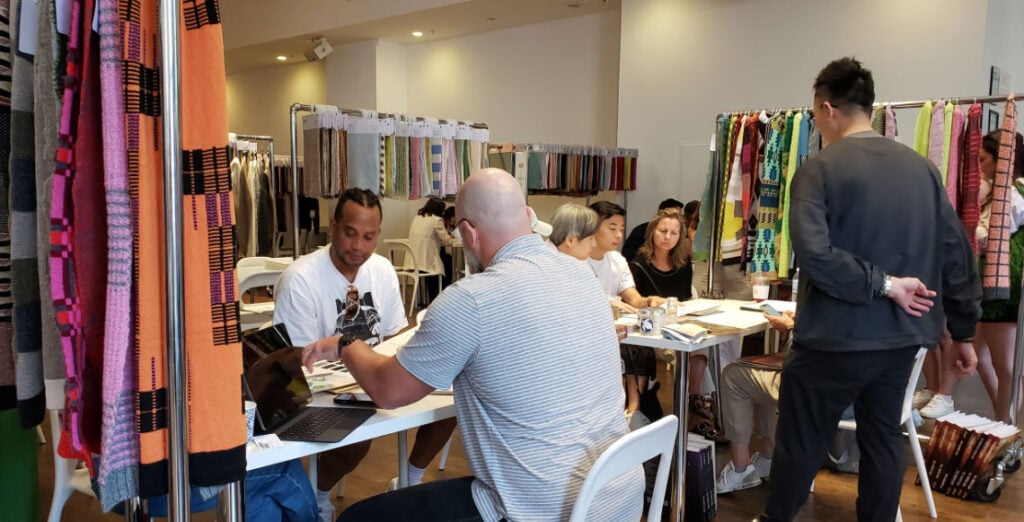
This was a key observation at SPINEXPO New York (July 11 and 12), which had an expanded group of exhibitors and record breaking visitor attendance.
The fair was a hive of activity with brands still showing up when the fair would typically be closing. And spinners having appointments that ran into the post show ‘break down’ time.
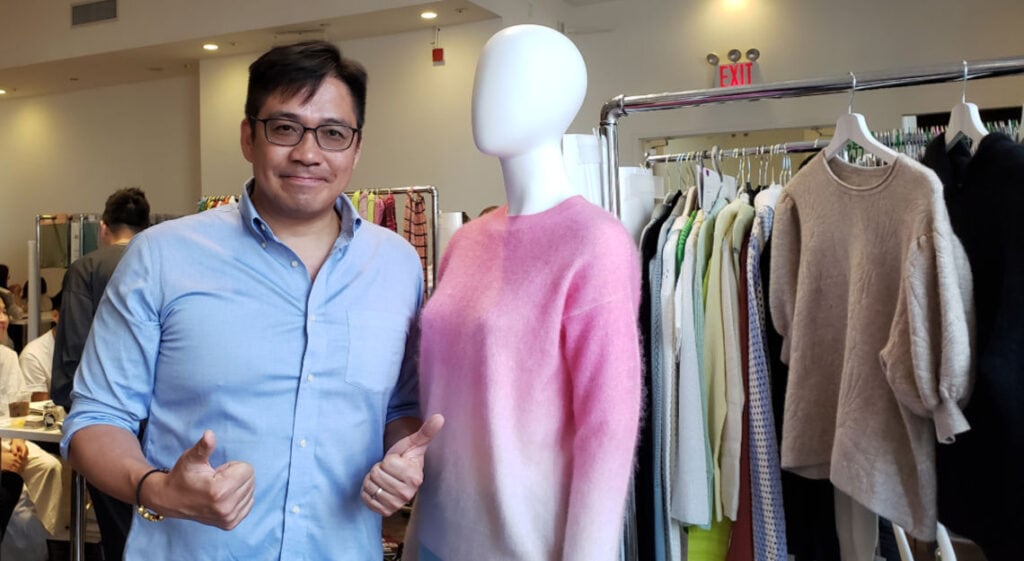
“This is the busiest I’ve seen it,” said Perry Swatzburg at Arrow Yarns.
Most other participants agreed.
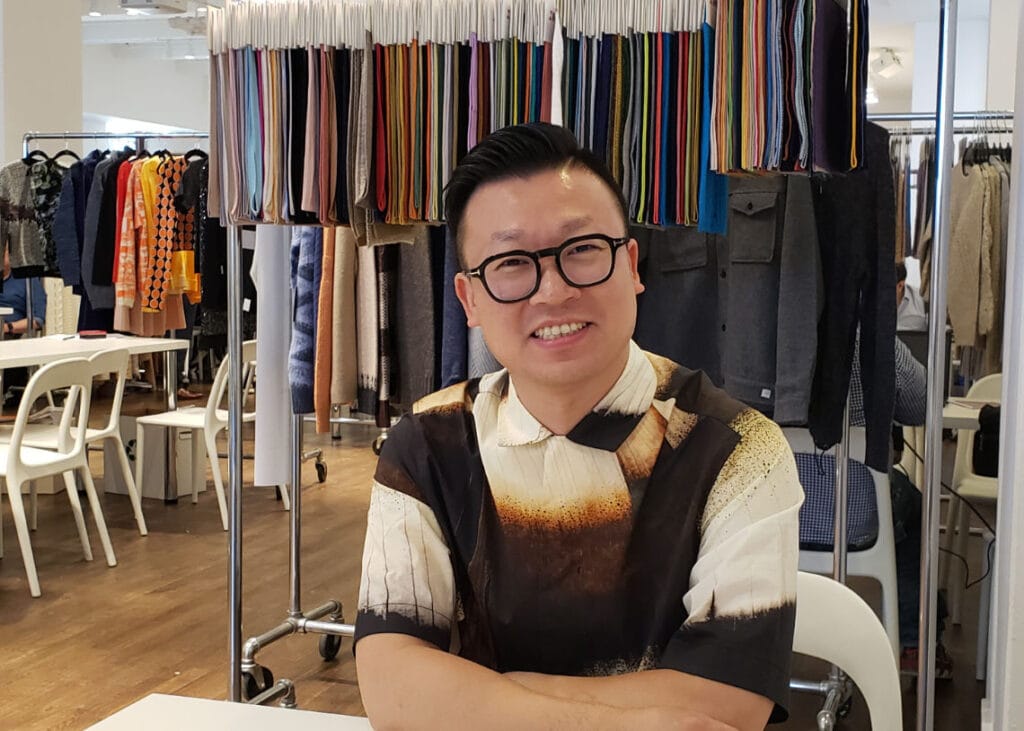
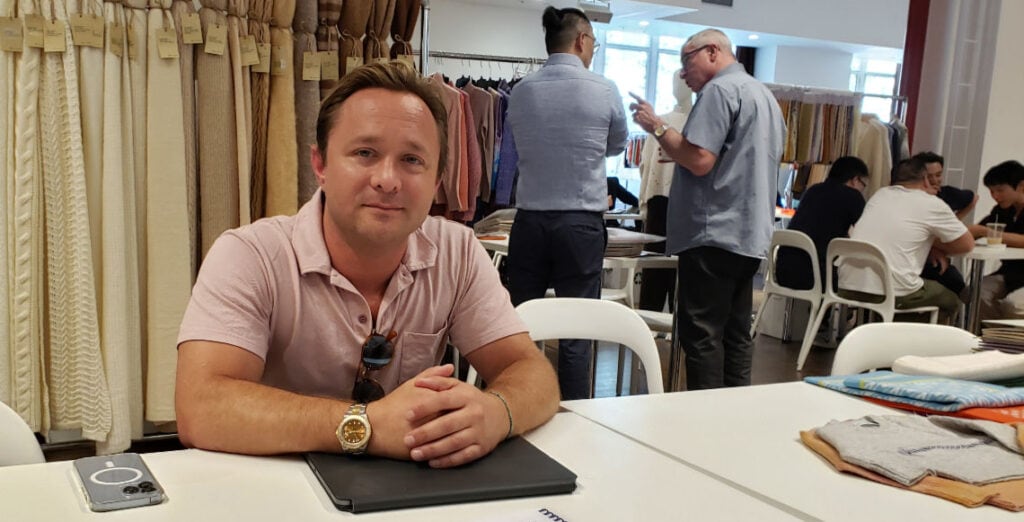
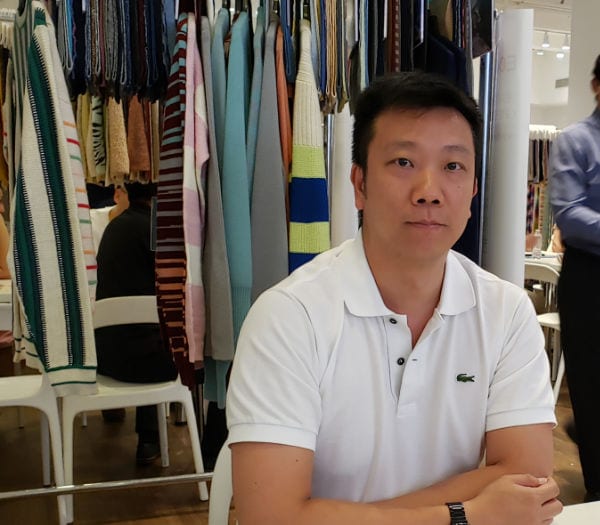
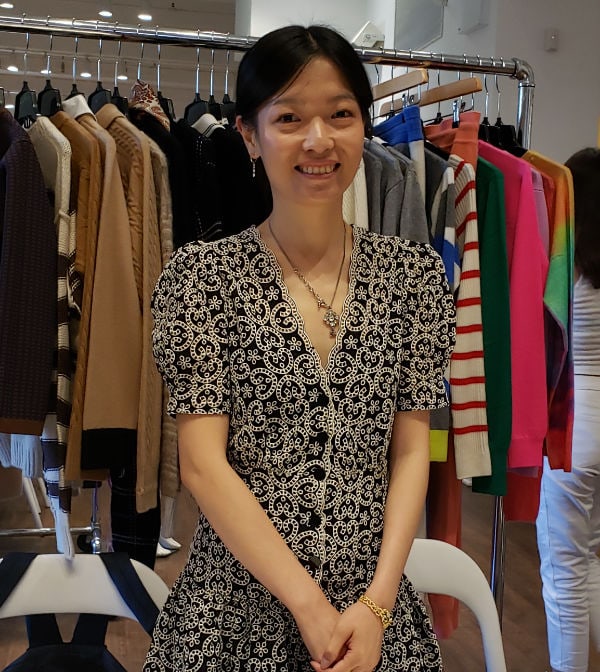
“This show has been great. It is very easy to see a lot of customers here,” said Man Lam, CEO, M’Oro International. “Spinexpo is the most successful fair partly because it is very efficient and easy to see a lot of customers in a short time”, said John Liu, EVP, Xinao Textiles. Spinners also like Spinexpo because of the “accuracy of the kind of brands visiting the fair with the yarns on offer” , said one of the brands at the fair. “We can find products that are right for our collections here … there’s always a lot of inspiration at Spinexpo.”
Inspiration and innovation have become essential as brands work hard to convince consumers to buy another garment, when most are inclined to save rather than spend right now.
Once Burned, Twice Learned
Still trying to clear the last of 2022 stockpile, and with plenty of uncertainty about the market, brands were opting to buy less and buy as close to the season as possible. The thought of getting stuck with inventory that wasn’t selling – or even selling through fairly quickly – is unbearable.
Thus order sizes remain small, in fact very small. But the consensus was that business is getting better.
The major stumbling block is that there is still too much excess stock in the pipeline (although a lot of it has been cleared) and that brands and retailers are opting to play it safe.
That’s led to a return to ‘just in time’ ordering, which has shifted more risk (and costs) onto the suppliers.
Spinners have been expanding their in-stock programs for years, putting them in a better position to support just-in-time ordering. The cost of financing these programs continues to increase due to higher materials prices and sizable interest rates hikes during the past year. Yet yarn prices face downward pressure due to weak demand. Thus the risk has shifted to spinners – it’s a bigger risk than a year ago when interests were still near zero.
Moving Forward but Without Direction
While business continues to inch forward in a positive direction for spinners, it is the brands that lack direction of their own.
“Brands lack a solid direction. They have no definitive strategy. What we are seeing though is that those brands who have opted to use better materials are doing better,” said Mr. Swatzburg.
This was highlighted by the fact that most spinners couldn’t point to any standout bestsellers this season. Brands were simply exploring what might be new and that met their price targets.
The fact is that the market is shifting. Fewer consumers want to buy for the sake of buying. They want something special and they want better quality.
In the US market there is still a divide between wanting better and willing to pay more to get it. But increasingly consumers are buying less, which is enabling them to buy better.
“The US market is more price focused than in Europe, where people will pay more for better quality. We are now trying to enter the US market to reach those people who now want higher quality garments,” said Pi-Ju Lee, Chief Coordinatrice Europe at Hems.
Rebalancing Supply and Demand
Although business is improving there’s still excess capacity on the supplier side.
“Demand is still weak so everyone is competing for orders and so we face price competition. Cashmere fiber has increased 5 percent since last year, but customers still want to pay the old prices,” said Mr. Lam at M’Oro.
“Customers are looking for cheaper prices. They’ll say ‘Oh, I can’t buy that because of the price’,” said Louis Lu, General Manager, at GTIG Esen Co. Ltd.
Surprisingly, there was less talk about price pressure than what we usually hear. More mills were complaining about the ever increasing amount of certifications and documentation brands need to support regulations on sustainability and transparency.
“Our customers in the EU have pressure to meet the government’s 2025 sustainability targets,” said Ms. Lu at Esen. This means not only buying sustainable materials but also being able to prove that they meet the new standards. Outside of the EU, other nations are also raising the bar on textile standards.
Innovation Drives Orders
Typically suppliers have two tools they use to drive sales: cheaper prices and innovation. Those who can innovate are proving to be more successful now than those who are trying to compete on price.
“We’ve started doing acetate yarns. New developments are helping to keep our sales stable,” said Samson Lam, managing director at Winning Textiles. His company supplies high end brands including Michael Kors, Herve Leger, Ralph Lauren and BCBG.
Xinao has leaned into the ‘smart activewear’ trend with a new active collection that blends more technical, functional yarns with wool for added performance.
Vertex Greentech Ltd., which specializes in novelty yarns, was showing a beautiful mock indigo yarn in 100% cotton and a unique slub yarn in 100% cotton.
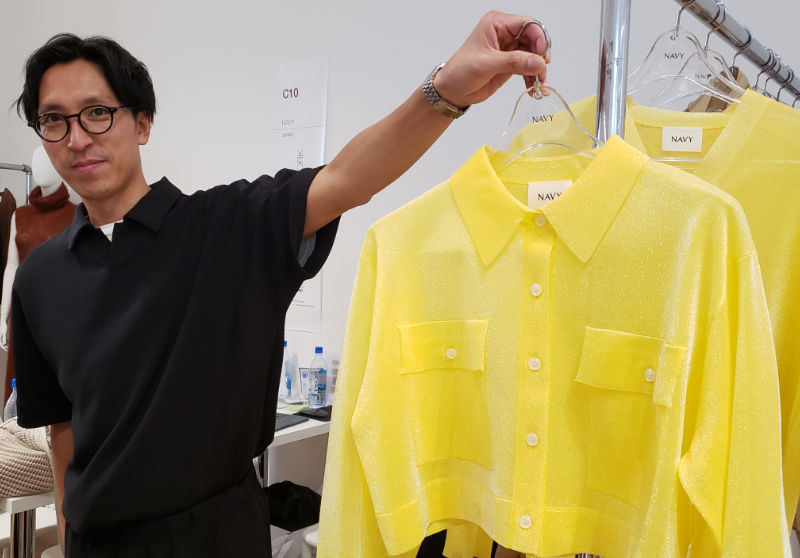
Even more remarkable was the collection seen at Japanese knitter Navy. The company featured a delicate fine gauge polyester knit top that had a luxurious shimmering effect.
Looking Ahead
The industry is starting to adjust to the post-pandemic market, which is one where people are buying more mindfully – in part because inflation has raised prices, but also because ‘more’ is less satisfying than it used to be.
This slowing down of consumption will ultimately help brands to better align inventory with demand, and could help create more stable supply chains.
Consumer demands are slowly evolving towards making quality a higher priority. Where shoppers once complained about quality, but purchased anyway, now they are more willing to walk away from products (even those that are on sale) if they don’t like the quality or are not excited about the design.
Change is never easy, but in this case change could ultimately put many of the stakeholders in the knitwear supply chain in a stronger position.
Most people agree that it’s a tough market right now. After nearly a year of coping with a severe overstock situation, brands are understandably gun shy about pulling the trigger on new orders.
Everyone is looking for something new, something that will get consumers excited – but at the same time, things that can be ‘repurposed’ in a worst case scenario where sales are below forecasts. One exhibitor summed it up saying “We are facing a hostile retail environment.”
Still, there was an atmosphere of optimism as mills and print studios presented their Fall ‘24/25 collections at Premiere Vision New York (July 18-19, 2023). Overall, the fair had a relaxed and friendly vibe creating the perfect environment for buyers and suppliers to discuss opportunities for the coming season.
“Our sales are still good because we get repeat business on the back of our prints having good sell through at retail,” said Michael Allison, Owner at Sprout Design NYC. He noted that in general, the industry was facing a situation where there was “less urgency” and more “on demand buying”.
At Robert Vernet the word was that business right now (and for Fall ‘24/25) is about the same as last year. “Not great, but not disastrous. I’d say it’s stable.”
Most exhibitors all reported making new contacts, a signal that brands continue to have the will to look for new developments – even if they are cautious about buying.
BESTSELLING FABRICS FOR AW '24/25
What we saw at Premiere Vision New York
“The show has been very good and the meetings went really well. Buyers are looking for inspiration,” said Eragh Mihalakis, representing her eponymous design studio. She added that there was a lot more hesitation before buyers placed orders, with brands being a lot more ‘thoughtful’ now.
“We’ve been quite busy. I would certainly say it’s been a good show and we’ve made many new contacts here,” said Jenny Geilke, Co-Founder at Bureaux Bo.
It’s About the Product
Taking a more granular look at the market, it appears that larger brands are being more cautious, while smaller brands are making faster and bolder decisions. While no one is immune to general market conditions, the brands that have focused on product rather than price are continually showing up as strong performers. They know their customer and as long as they give that customer what they want, sales remain reasonably stable.
“The fashion industry is a bit slow right now. There’s more activity from the smaller brands. For the larger brands the process is slower and involves more steps and needs more approvals,” said Luciana Garcia at Augustina Correa.
Like other exhibitors, she noted that she had made “some good contacts” at PV New York, but added that it will “take some time to develop them.”
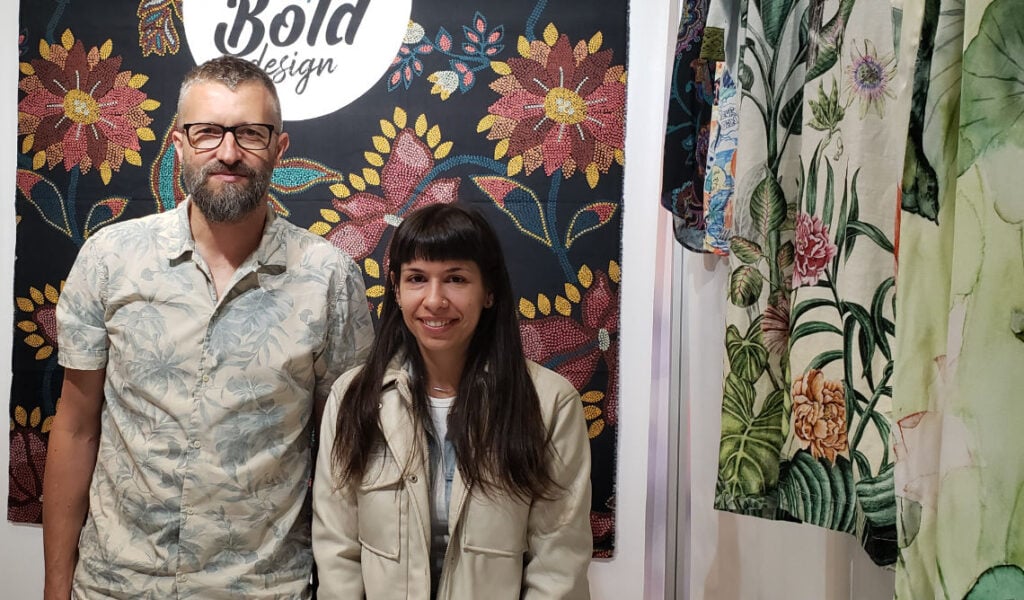
“There’s been a lot of people at the fair, but much more ‘looking than buying’ this season,” said Jorge Bellester at Bold Design. Nonetheless, he was getting a good reaction from buyers.
Though they face a quiet market, mills and print studios seemed confident that business would improve.
Looking Ahead
Despite facing a slow market, people were optimistic that ‘this too would pass’. Unlike in past seasons when a downturn in the market cast a black cloud over the industry, this time it truly is different.
Most suppliers are staying calm and carrying on. There’s a certainty that the present uncertainty will pass and that the market will right itself again.
“We’ve seen times like this before and we’ve always gotten through it,” said Mr. Allison. Other vendors seem to agree.
While no one has put a date on when the market will rebound, there’s a consensus that while Autumn/Winter 24/25 is likely to be disappointing, Spring ‘25 will show that much hoped for improvement.

Best Selling Fabric Directions for AW 2024-25
New fabric developments are giving brands an opportunity to elevate their collections – and create apparel that consumers want to buy!