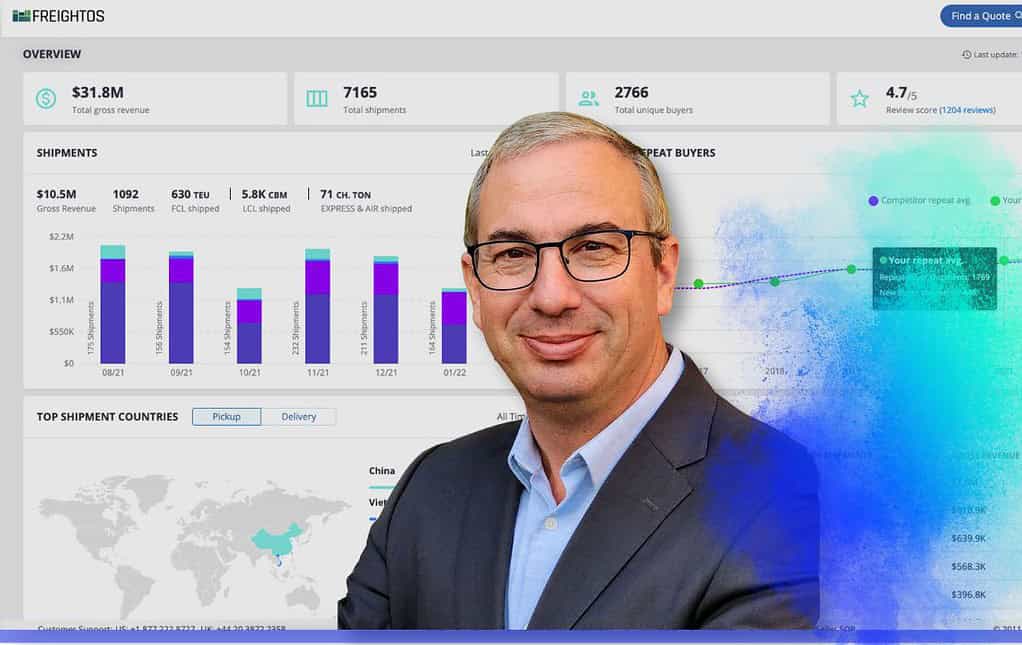
Zvi Schreiber, CEO and Founder of Freightos, the leading logistics marketplace
Leadership Series
How Logistics Tech is Reducing Costs & Boosting Agility
From dynamic pricing to real-time shipment tracking, digital solutions are reducing supply chain risk
Global supply chains are facing another tumultuous year in 2025. With shifting tariffs, uncertain trade routes, and changing consumer demands, sourcing directors are walking a fine line between efficiency and disruption. To gain a sharper view of what’s at play – and what sourcing directors need to consider as they manage their supply chains – we spoke with Zvi Schreiber, founder and CEO of Freightos, we discussed how the logistics industry is adjusting to these challenges—and how companies can adapt.
Freightos is one of the world’s leading digital freight platforms, providing real-time data and shipping solutions to help companies navigate complex logistics needs. For Dr. Schreiber, the key to surviving this uncertain environment isn’t just about scaling—it’s about being agile and responsive.
“Agility is the name of the game in this environment,” Dr. Schreiber said. “The ability to quickly pivot, understand rate fluctuations, and adjust logistics strategies on the fly can mean the difference between profit and loss.”
As manufacturing increasingly shifts away from their dependency on China, sourcing is not only moving out of China but into a wider range of countries. In recent years, brands have expanded the number of countries they source from adding new challenges to their supply chains.
Greater diversification requires greater flexibility. “Supply chain managers need to understand the risks of new regions and be ready to pivot quickly if things don’t go as planned. The more localized a company’s production is, the better equipped it will be to respond to changes,” said Dr. Schreiber.
“Digital platforms allow businesses to adjust their strategies, track shipments in real-time, and remain responsive to disruptions.”
– Dr. Zvi Schreiber, CEO & Founder of Freightos
The Right Containers at the Right Price
One of the biggest challenges in container shipping pricing is the inherent volatility and unpredictability of the market.
Dr. Schreiber points out that prices can fluctuate dramatically, making it difficult for companies to predict shipping costs accurately. “Container shipping pricing is extremely complex. Rates change by the hour, and there are so many factors at play, such as port congestion, fuel costs, and the availability of space,” he explained.
This unpredictability creates significant challenges for businesses, especially those dealing with long-term contracts or planning international shipments.
Shippers must stay informed and agile to react quickly to changes, and they need tools that can help them track and anticipate these price fluctuations.
Data-Driven Digital Bookings
Digital bookings, supported by transparent industry data, for example using the FBX and FAX industry price indexes on Freightos Terminal, are becoming a critical tool to address the challenges of container shipping pricing.
According to Dr. Schreiber, the ability to manage bookings based on real-time data allows businesses to secure more predictable and competitive rates.
“With digital bookings, businesses can leverage dynamic pricing models to instantly respond to changes in the market,” Dr. Schreiber said. By integrating digital platforms that use artificial intelligence and machine learning, companies can better manage the complex pricing landscape, optimizing shipping decisions and improving cost efficiency.
This technology not only saves time but also reduces the risk of overpaying for shipments in an unpredictable market
“With digital bookings, businesses can leverage dynamic pricing models to instantly respond to changes in the market.”
Suez Canal’s Potential Reopening
Another issue facing global supply chains is the potential reopening of the Suez Canal. The trade route’s temporary closure created immense pressure on shipping costs.
“If the canal reopens, we could see a significant drop in ocean freight rates, given that many ships are no longer required to detour around Africa,” he said.
However, Dr. Schreiber is quick to remind us that while rates could fall in the short term, the long-term outlook remains uncertain. “The uncertainty surrounding tariffs and trade restrictions means that even with more shipping routes opening up, we can’t guarantee the same stability for shipping rates across the board.”
“Freight rates are ultimately influenced by many factors,” he noted. “And while the reopening of a key trade route could stabilize some areas, other parts of the supply chain will continue to face volatility,” said Dr. Schreiber.
Air Cargo in The Balance
A central issue in 2025’s supply chain landscape is the continued fluctuation of tariffs. Every time there’s a tariff change, it can shift the cost structure of entire industries overnight,” said Dr. Schreiber.
“Companies are facing a lot of unpredictability right now. The fact that customs is not equipped to handle the additional paperwork and duties is a big concern,” Dr. Schreiber explained. “This uncertainty is only heightened by fluctuating global tariffs and shipping regulations.”
As ecommerce giants face these mounting challenges, Dr. Schreiber sees potential for more traditional sectors to find an advantage. “If ecommerce volumes drop due to changes in the de minimis exemption, we might see some of the air cargo space freed up for other industries,” he suggested. “For companies who can adapt quickly, this could provide an opportunity to save on costs.”
What’s Next for Supply Chains?
Looking ahead to the rest of 2025, Dr. Schreiber expects that the industry will continue to face volatility. “We’re still not through the storm,” he said. “Companies have to prepare for the possibility that more tariffs could come, and new shipping routes could open up, all while navigating new consumer demands and supply chain trends.”
Dr. Schreiber’s advice to companies navigating this turbulent landscape is to embrace the unpredictability. “The key is to stay ahead of the game. Whether it’s shifting manufacturing locations or adjusting to new shipping routes, businesses need to be adaptable,” he said. “The companies that can pivot quickly and keep up with these changes will be the ones that thrive.”
As global trade continues to shift and evolve, Dr. Schreiber remains optimistic about the future of supply chain management. “Despite the challenges, there is incredible potential in the way logistics is transforming. Technology is changing the game, and those who embrace it will be the leaders of the future,” he said.